Bi-Wiring, what exactly is it doing?
Comments
-
-Kevin
HT: Philips 52PFL7432D 52" LCD 1080p / Onkyo TX-SR 606 / Oppo BDP-83 SE / Comcast cable. (all HDMI)B&W 801 - Front, Polk CS350 LS - Center, Polk LS90 - Rear
2 Channel:
Oppo BDP-83 SE
Squeezebox Touch
Muscial Fidelity M1 DAC
VTL 2.5
McIntosh 2205 (refurbed)
B&W 801's
Transparent IC's -
Found this on another forum, apparently there is still a lot to be discovered at the atomic level.Solid, liquid, gas and plasma are the common ways of looking at matter. Scientists are more likely to refer to other more advanced states, like Bose-Einstein condensates, degenerate matter, supersolids, quark-gluon plasma (created in the LHC), et al - here's the complete list https://en.wikipedia.org/wiki/List_of_states_of_matter
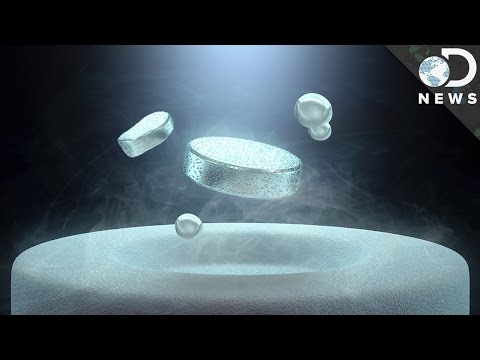
Now comes an important discovery, a new state of matter called Jahn-Teller "metals", a discovery based on the Jahn-Teller Distortion http://en.wikipedia.org/wiki/Jahn%E2%80%93Teller_effect (I know, tough to read). By applying pressure to common insulating molecules, but in the form of actually chemically squeezing in other atoms, they get them to conduct electricity like metals, become magnets, and at 138K (-135C) become superconductors (the current high-temperature superconducting record candidate is 194K - https://www.sciencenews.org/article/high-temperature-superconductivity-record-awaits-confirmation). In the latest discovery, rubidium is injected into Carbon-60 molecules to achieve this effect. Again, one of the key discoveries here is that you DON'T need to apply *external* pressure to achieve superconductivity.
Read this first http://www.sciencealert.com/scientists-have-discovered-a-new-state-of-matter-the-jahn-teller-effect and then watch the dumbed-down version in the video below
Some day, high temperature superconductivity is going to fundamentally transform electronics, and the march is on.Lumin X1 file player, Westminster Labs interconnect cable
Sony XA-5400ES SACD; Pass XP-22 pre; X600.5 amps
Magico S5 MKII Mcast Rose speakers; SPOD spikes
Shunyata Triton v3/Typhon QR on source, Denali 2000 (2) on amps
Shunyata Sigma XLR analog ICs, Sigma speaker cables
Shunyata Sigma HC (2), Sigma Analog, Sigma Digital, Z Anaconda (3) power cables
Mapleshade Samson V.3 four shelf solid maple rack, Micropoint brass footers
Three 20 amp circuits. -
While measurements are nice to have as a reference point, they really are not very useful for explaining why gear, and cables, can sound different with similar measurements. The point is we do not know everything that happens at the atomic level, and have no idea how to measure what we do not yet know. The whole 'flat world' mindset that assumes our current level of knowledge explains everything is just ridiculous.
This is a point I have made many times. To go further, it is what goes on at the atomic and molecular level that drives the noise processes in a cable. The "only L, C, and R matters" crowd either ignore the fact, or are ignorant of the fact, that what comes out of the other end of a cable is a combination of the signal, and its inherent noise and the noise imposed on the signal by the cable. Noise modeling is far more involved than a simple measurement of L, C, and R parameters.
Proud and loyal citizen of the Digital Domain and Solid State Country! -
From page 6 of this thread:I know you won't answer this, but what IC's and speaker cables do you use?
Guess I was correct.Things work out best for those who make the best of the way things work out.-John Wooden -
Monoprice.afterburnt wrote: »They didn't speak a word of English, they were from South Carolina.
Village Idiot of Club Polk -
I actually answered that question, F1 also responded to it. Interestingly enough, I just received a box of interconnects and speaker wire in the mail today.

Obviously not in this thread...at least not in responding to my asking the question. My apologies if it's somewhere in this thread previously and I missed it.
Serious question: Why would you buy new cables if you don't think they make a difference in your system? Are you just using old cables that you feel need to be replaced? What did you get? I'm honestly curious and truly think it might help me (and others) understand where you're coming from.Things work out best for those who make the best of the way things work out.-John Wooden -
Audible noise from cables is typically generated from external sources and not from atomic and molecular level processes in a cable.
One of the main noise sources of audible noise, at the molecular level, is dielectric absorption, where the conductor's insulating material acts as a capacitor and stores energy from the signal and spuriously releases energy back into the signal. I have discussed this in detail in several threads, so I won't rehash it here. There are also many references about it online and in the IEEE Xplore database.
Proud and loyal citizen of the Digital Domain and Solid State Country! -
Yes I know of this phenomena pertaining to capacitors, but I don't think that this is particularly relevant with respect to typical audio cables. The other sources of noise that I mentioned would be magnitudes higher.
Audioholics has an article on this.
http://www.audioholics.com/audio-video-cables/dielectric-absorption-in-cables-debunked
Is there anything really incorrect about their analysis?
The Audioholics article states:
"Thus the dielectric losses at audio frequencies where the cable is terminated into a low impedance load such as a loudspeaker [sic] are insignificant. "
The article does not state that dielectric effects are inaudible. In order to make a case for inaudibility, they would need to show how the noise induced due to DA is below the threshold of human hearing.
The Audioholics article cited a Wikipedia article on "dielectrics". The Wikipedia article on "dielectric absorption" would have been more pertinent and appropriate don't you think?
en.wikipedia.org/wiki/Dielectric_absorption
The title of the Audioholics article leads one to believe that it is a discussion about "dielectric absorption", but the article actually discusses "dielectric loss", which is a different phenomenon than "dielectric absorption". Some people unknowingly think DA and DL are interchangeable terms, but they are not. DA is a contributing factor to DL, but again, they are not the same. Here is a Wikipedia article on "dielectric loss":
en.wikipedia.org/wiki/Dielectric_loss
The third page of the Audioholics article says "loss tangents" are the same thing as "dielectric absorption". The term "loss tangent" applies to "dielectric loss" rather than "dielectric absorption".
Essentially, the author "debunked" the application of dielectric absorption theory to audio cables by talking about a different, but related phenomenon, dielectric loss.Proud and loyal citizen of the Digital Domain and Solid State Country! -
In other words, the author didn't understand what he was talking about, and threw in a bunch of math to confuse the reader, and impress the gullible. Nice. Glad you are around to clear things up. Thanks.Lumin X1 file player, Westminster Labs interconnect cable
Sony XA-5400ES SACD; Pass XP-22 pre; X600.5 amps
Magico S5 MKII Mcast Rose speakers; SPOD spikes
Shunyata Triton v3/Typhon QR on source, Denali 2000 (2) on amps
Shunyata Sigma XLR analog ICs, Sigma speaker cables
Shunyata Sigma HC (2), Sigma Analog, Sigma Digital, Z Anaconda (3) power cables
Mapleshade Samson V.3 four shelf solid maple rack, Micropoint brass footers
Three 20 amp circuits. -
Certain aspects of the first paragraph are enough to raise red flags:
"Before we debate the relevancy of Dielectric Absorption relating to speaker cables, and commonly perpetuated by many exotic cable vendors and cable cult hobbyists, let us first define the roll [sic] of a dielectric."Proud and loyal citizen of the Digital Domain and Solid State Country! -
DarqueKnight wrote: »
Yeah, that takes a lighter........oh wait............
Taken from a recent Audioholics reply regarding "Club Polk" and Polk speakers:
"I'm yet to hear a Polk speaker that merits more than a sentence and 60 seconds discussion."
My response is: If you need 60 seconds to respond in one sentence, you probably should't be evaluating Polk speakers.....
"Green leaves reveal the heart spoken Khatru"- Jon Anderson
"Have A Little Faith! And Everything You'll Face, Will Jump From Out Right On Into Place! Yeah! Take A Little Time! And Everything You'll Find, Will Move From Gloom Right On Into Shine!"- Arthur Lee -
@DarqueKnight = PhD and EE professor.
I thought folks that wish to disprove DarqueKnight's cable articles/findings and informative explanations in posts had to repeat his experiments and measurements to see if they could be duplicated or rebunked. By now I think he would have been exposed by his peers if he was off base. All we see are some links to folks that disagree without the attention to details. Almost like here is something for you to believe in without adequate support to back it up. Thus the house of cards.Salk SoundScape 8's * Audio Research Reference 3 * Bottlehead Eros Phono * Park's Audio Budgie SUT * Krell KSA-250 * Harmonic Technology Pro 9+ * Signature Series Sonore Music Server w/Deux PS * Roon * Gustard R26 DAC / Singxer SU-6 DDC * Heavy Plinth Lenco L75 Idler Drive * AA MG-1 Linear Air Bearing Arm * AT33PTG/II & Denon 103R * Richard Gray 600S * NHT B-12d subs * GIK Acoustic Treatments * Sennheiser HD650 * -
So in the topic of bi-wiring and noise... If noise is generated in the cable (dielectric), the cable becoming the source of noise when the signal passes through, it seems to make sense that having two runs of cable, one for the highs and one for the lows, would have an advantage depending on the characteristics of the noise. However, if the noise source is external, then bi-wiring could be adding a second antenna to pick up that noise. Has anyone had detrimental effects on the sound with bi-wiring?
Can low freq signals induce noise in the cable that would influence the high freq signal and vise versa? If so, then bi-wiring should have an advantage.
Each cable pair carries only part of the signal and delivers it to its respective XO network and driver. The noise delivered to each respective driver section should be less. If we assume that the high freq signal and the low both induce the same amount of noise in each wire pair, then half the noise would be delivered to the high section of the speaker and half to the low section. It may also be true that the noise induced would have frequency dependency which could further improve the situation. For example, if the noise is only induced by higher frequencies, then the signal delivered to the low section should be cleaner.
In a single pair, the entire signal spectrum is flowing through the cable and the max amount of noise would be induced in the cable and delivered to the entire speaker (high and low sections).
Is it all about noise? Is it about resistive and reactive impedance? Both?
Stan
Main 2ch:
Polk LSi15 (DB840 upgrade), Parasound: P/LD-1100, HCA-1000A; Denon: DVD-2910, DRM-800A; Benchmark DAC1, Monster HTS3600-MKII, Grado SR-225i; Technics SL-J2, Parasound PPH-100.
HT:
Marantz SR7010, Polk: RTA11TL (RDO198-1, XO and Damping Upgrades), S4, CS250, PSW110 , Marantz UD5005, Pioneer PL-530, Panasonic TC-P42S60
Other stuff:
Denon: DRA-835R, AVR-888, DCD-660, DRM-700A, DRR-780; Polk: S8, Monitor 5A, 5B, TSi100, RM7, PSW10 (DXi104 upgrade); Pioneer: CT-6R; Onkyo CP-1046F; Ortofon OM5E, Marantz: PM5004, CD5004, CDR-615; Parasound C/PT-600, HCA-800ii, Sony CDP-650ESD, Technics SA 5070, B&W DM601 -
Is it all about noise? Is it about resistive and reactive impedance? Both?
No, but it is a part along with everything else we've been talking about. Which comes down to....cables are more sophisticated in their design, build quality, materials used than just saying "wire is wire". Add to all that the different sound signatures of various metals and/or combinations of them.
Once your wallet allows, you'll see what all these cable threads are about....or not about. I guarantee you though, most musicians, recording studios, higher end stereo shops, don't use monoprice cables, and for good reason.HT SYSTEM-
Sony 850c 4k
Pioneer elite vhx 21
Sony 4k BRP
SVS SB-2000
Polk Sig. 20's
Polk FX500 surrounds
Cables-
Acoustic zen Satori speaker cables
Acoustic zen Matrix 2 IC's
Wireworld eclipse 7 ic's
Audio metallurgy ga-o digital cable
Kitchen
Sonos zp90
Grant Fidelity tube dac
B&k 1420
lsi 9's -
@xcapri79 = claims to be an "engineer" (I'm an engineer too! My title says so!), cites Audioholics, a known FUD site
xcapri79 holds the B.S. degree in electrical engineering and has had a long career in the electrical engineering profession. I have read some of his technical publications. He also knows one of my professors from grad school.
The unfortunate thing about some technically trained people is that they don't understand that instrument measurements cannot tell you how something will be perceived by a human being. For example, there is no measurement tool, other than the human ear, that can tell you the exact placement of images in a stereophonic sound stage. There is no instrument that will measure the apparent front to back depth of a sound stage and the apparent size of space between images. Sound stage performance can't be objectively measured because a stereophonic sound stage is a psychoacoustic illusion created by two or more loudspeakers. The phenomenon only exists in the listener's mind.
Measurements can't predict how an audio component will sound. They can only provide some insight into gross electrical performance. Horsepower and engine size specs won't tell you how comfortable car's ride is. Output power and THD figures won't tell you how good an amp sounds.
Since everyone's ears and brain works just a little bit differently, the same stereophonic illusion may be perceived a little bit differently by different people. A sound stage that I perceive as 20 feet wide may only be perceived as 15 feet wide by someone else. Someone who only focuses on principle instruments might not perceive the lush, but subtle background percussion instruments.
Listening to music is a sensory experience, just like eating, or drinking, or sex. Different people can eat or drink the exact same thing and have different sensory experiences. Different people can have sex with the same person, in exactly the same way, and have different sensory experiences. Sensory experiences can't be reduced to equations and measurements. A descriptive lexicon can be developed so that people can describe things the same way using the same terms, but there is no way to predict that one person's sensory perception will be the same as others.Is it all about noise? Is it about resistive and reactive impedance? Both?
Signal integrity (how close the output matches the input) depends on how much the signal is attenuated (resistive and reactive effects) and how much the signal is corrupted by noise.
Noise also has an apparent attenuative effect. If two different amplifiers play the same signal at the same measured sound level, but one amplifier has 3 dB less noise in the output, that amplifier will sound apparently louder than the other amp simply because more signal is allowed to pass through.
A pervasive source of noise in stereo systems is electrical noise induced by mechanical vibration. Mechanical noise abatement is not something that is quantified in audio equipment specifications. I have done several studies where I measured the effects of different noise abatement methods (isolation products and insulating products like Black Hole and Dynamat) on the quality of the output signal.
Proud and loyal citizen of the Digital Domain and Solid State Country! -
I guarantee you though, most musicians, recording studios, higher end stereo shops, don't use monoprice cables, and for good reason.
They are all part of the grand global conspiracy to induce people to spend huge amounts of cash on esoteric cables. They are all getting kickbacks, hookers, and coke from the high end cable manufacturers.
Proud and loyal citizen of the Digital Domain and Solid State Country! -
DarqueKnight wrote: »I guarantee you though, most musicians, recording studios, higher end stereo shops, don't use monoprice cables, and for good reason.
They are all part of the grand global conspiracy to induce people to spend huge amounts of cash on esoteric cables. They are all getting kickbacks, hookers, and coke from the high end cable manufacturers.
Well I'll be a ****...Ray.....you DO have a sense of humor. LMAO !!
I personally also take issue with the adage that "once a cable transfers the signal correctly, nothing else can be done."
Think about that. That insinuates that all cable manufacturers are selling you broken or sub par cables in their lower lines. Does that mean an AQ Evergreen cable doesn't transfer the signal correctly compared to the SKY, or other top AQ IC. ? Of course not, which is why that saying is bunk in my book.
Too many variables goes into a cable to just say all wire is wire, any SQ improvements perceived is placebo, or other such nonsense.
The way I see it DK, Acoustic zen owes me a boat load of hookers and kickbacks. Same with Analysis Plus, Steve McCormack, Legacy Audio. I simply don't recall anyone who we've suggested better cables to that came back and said they couldn't hear a difference....not one in over 15 years on this forum. Granted, interconnects are easier to hear differences than with digital cables, but it's still there.HT SYSTEM-
Sony 850c 4k
Pioneer elite vhx 21
Sony 4k BRP
SVS SB-2000
Polk Sig. 20's
Polk FX500 surrounds
Cables-
Acoustic zen Satori speaker cables
Acoustic zen Matrix 2 IC's
Wireworld eclipse 7 ic's
Audio metallurgy ga-o digital cable
Kitchen
Sonos zp90
Grant Fidelity tube dac
B&k 1420
lsi 9's -
If that's the case MIT owes Jesse an entire brothel.afterburnt wrote: »They didn't speak a word of English, they were from South Carolina.
Village Idiot of Club Polk -
If that's the case MIT owes Jesse an entire brothel.
.....and enough blow to force him into skinny jeans.HT SYSTEM-
Sony 850c 4k
Pioneer elite vhx 21
Sony 4k BRP
SVS SB-2000
Polk Sig. 20's
Polk FX500 surrounds
Cables-
Acoustic zen Satori speaker cables
Acoustic zen Matrix 2 IC's
Wireworld eclipse 7 ic's
Audio metallurgy ga-o digital cable
Kitchen
Sonos zp90
Grant Fidelity tube dac
B&k 1420
lsi 9's -
LOL....DON'T VISUALIZE THAT....YOU'LL BURN YOUR CORNEA'S OUT !!HT SYSTEM-
Sony 850c 4k
Pioneer elite vhx 21
Sony 4k BRP
SVS SB-2000
Polk Sig. 20's
Polk FX500 surrounds
Cables-
Acoustic zen Satori speaker cables
Acoustic zen Matrix 2 IC's
Wireworld eclipse 7 ic's
Audio metallurgy ga-o digital cable
Kitchen
Sonos zp90
Grant Fidelity tube dac
B&k 1420
lsi 9's -

afterburnt wrote: »They didn't speak a word of English, they were from South Carolina.
Village Idiot of Club Polk -
If that's the case MIT owes Jesse an entire brothel.
AudioQuest owes me the same. Proud and loyal citizen of the Digital Domain and Solid State Country!
 -
now you sound like Mantis! think he has stock in AQ. 2 ch- Polk CRS+ * Vincent SA-31MK Preamp * Vincent Sp-331 Amp * Marantz SA8005 SACD * Project Xperience Classic TT * Sumiko Blue Point #2 MC cartridge
HT - Polk 703's * NAD T-758 * Adcom 5503 * Oppo 103 * Samsung 60" series 8 LCD -
My Shunyata gear is worth every penny. In fact I have two Sigma HC (high current) power cables, and one Sigma Analog power cable on order. Hope they are at home tonight.
While having a degree does indicate a minimum amount of work and intelligence, in and of itself, it doesn’t really mean much. Working in the computer networking industry, I have the opportunity to work with both hardware and software engineers. Some are very sharp, others are okay, and some are dumber than dog doo.
As a generalization, I have found there are two basic types of engineers; those who think they know everything, and those who realize that the more they learn that they really know very little. The ones who think they know everything are usually the source of most problems, especially if they get into management.
Lumin X1 file player, Westminster Labs interconnect cable
Sony XA-5400ES SACD; Pass XP-22 pre; X600.5 amps
Magico S5 MKII Mcast Rose speakers; SPOD spikes
Shunyata Triton v3/Typhon QR on source, Denali 2000 (2) on amps
Shunyata Sigma XLR analog ICs, Sigma speaker cables
Shunyata Sigma HC (2), Sigma Analog, Sigma Digital, Z Anaconda (3) power cables
Mapleshade Samson V.3 four shelf solid maple rack, Micropoint brass footers
Three 20 amp circuits. -
I hate to tell you bro that with a cable that is the goal. You personally can have all the issues you want with it but once a cable transfers the signal correctly , there is NOTHING more is going to do. Thats it man , thats the goal. That is exactly why we wire nuts are trying to achieve.DarqueKnight wrote: »I guarantee you though, most musicians, recording studios, higher end stereo shops, don't use monoprice cables, and for good reason.
They are all part of the grand global conspiracy to induce people to spend huge amounts of cash on esoteric cables. They are all getting kickbacks, hookers, and coke from the high end cable manufacturers.
Well I'll be a ****...Ray.....you DO have a sense of humor. LMAO !!
I personally also take issue with the adage that "once a cable transfers the signal correctly, nothing else can be done."
Think about that. That insinuates that all cable manufacturers are selling you broken or sub par cables in their lower lines. Does that mean an AQ Evergreen cable doesn't transfer the signal correctly compared to the SKY, or other top AQ IC. ? Of course not, which is why that saying is bunk in my book.
Too many variables goes into a cable to just say all wire is wire, any SQ improvements perceived is placebo, or other such nonsense.
The way I see it DK, Acoustic zen owes me a boat load of hookers and kickbacks. Same with Analysis Plus, Steve McCormack, Legacy Audio. I simply don't recall anyone who we've suggested better cables to that came back and said they couldn't hear a difference....not one in over 15 years on this forum. Granted, interconnects are easier to hear differences than with digital cables, but it's still there.
The real question is as follows,
What does it take to get the signal correctly? Thats the million dollar question my brother. When you have been in the business as long as I have , I have asked this question to so many engineers from so many different companies. Some will tell you the truth and some will white lie to protect their vested interest in many of these wire companies.
I will have to speak up and say MOST high end companies wires are nothing but snake oil, fancy wire wrapped up in very pretty jackets. I hate that I know that but in many ways I'm glad I do. There is only so many things you can do with a conductor but its the care and engineering behind it that really makes the differences we all seek and are willing to pay top dollar for.
I have been reviewing cables on this forum for decades. If you have read any of them, I study them more mentally then most. When I discovered differences in the way cables perform in my systems and the systems I Install Professionally, I had to learn everything I could from anyone who would teach me.
If you remember, once I went Audioquest, I kinda started to fall off the mental path of keep searching for the perfect conductor of any kind. Once I learned from some of the companies I have been to over the decades and the quality that goes into some and not into others, I found a home where much truth be told.
Listen , you will never ever find cheap cables in my systems ever. They are compromised due to quality of materials used. Most of them are not built to spec and many of them fail.
What I also find is that most on this forum who likes to research wire and everything seem to not understand the fundamental goals of each conductor. There is a lot of truth in many of the things that have been posted on this thread about cables even without which I believe no experience from the poster. But some of the information that has been presented has a lot of truth to it. Can be very misleading but if you are a student of the game you must at least listen.
I'm just gonna give you an example of a truth that can be taken the wrong way ok.
Body Builders Eat eggs.
Eggs are baby chickens.
Therefore Body Builders eat babies.
Can you see where I'm going with this?
Anyway I also have to say it's mental to argue with anyone about wire who has a opinion by just reading about it online and not testing it for themselves or learning everything before forming such strong opinions either way.
Look at it this way, if you find value in your cable choices and your very happy with what they do, then that game is done. Down the road you might want to try others and see things but at the end of the day when you sit in front of your rig and it makes you smile weather you have snake oil cables , correctly built cables or something in-between, thats really all that matters.
I honestly also think there is NO END to this conversation ever. As long as someone agrees and disagrees , this debate will never ever have an ending.
I personally lost the desire to make anyone see the light or convince them of what I have learned , found etc. I'll tell you my professional opinion and what you do with it is your business. You can believe in my or not , for me it doesn't matter. You do what you want with my info, if you ask I will tell but thats it.
Dan
My personal quest is to save to world of bad audio, one thread at a time. -
I am sure I missed the answer to this question in previous 7 pages or question is invalid, still gonna ask...do different frequencies in the music travel through the speaker wire in different strands at the same speed, in random strands and/or they pass through all strands at the same speed, or different frequencies travel at different speeds?
-
I am sure I missed the answer to this question in previous 7 pages or question is invalid, still gonna ask...do different frequencies in the music travel through the speaker wire in different strands at the same speed, in random strands and/or they pass through all strands at the same speed, or different frequencies travel at different speeds?
All frequencies of electromagnetic radiation (light, radio waves, etc.) travel at the speed of light in free space. Through a conductor, the speed of electromagnetic radiation is slowed a bit. How much it is slowed depends on the refraction index of the conductor at a particular frequency.
A particular frequency component in a signal cannot "choose" a particular wire strand in a cable. Only a filter can route a particular frequency component in a signal.
Proud and loyal citizen of the Digital Domain and Solid State Country! -
Dang....I created a monster.lol
Spot on KKKKKen. I'll send ya a Blackhawks hockey puck. HT SYSTEM-
Sony 850c 4k
Pioneer elite vhx 21
Sony 4k BRP
SVS SB-2000
Polk Sig. 20's
Polk FX500 surrounds
Cables-
Acoustic zen Satori speaker cables
Acoustic zen Matrix 2 IC's
Wireworld eclipse 7 ic's
Audio metallurgy ga-o digital cable
Kitchen
Sonos zp90
Grant Fidelity tube dac
B&k 1420
lsi 9's -
Or to state DK's excellent explanation in other words and as the venrable Latin maxim puts it: "De gustibus non est disputandum."Family Room, Innuos Statement streamer (Roon Core) with Morrow Audio USB cable to McIntosh MC 2700 pre with DC2 Digital Audio Module; AQ Sky XLRs to CAT 600.2 dualmono amp, Morrow Elite Speaker Cables to NOLA Baby Grand Reference Gold 3 speakers. Power source for all components: Silver Circle Audio Pure Power One with dedicated 20 amp circuit to main panel.
Exercise Room, Innuos Streamer via Cat 6 cable connection to PS Audio PerfectWave MkII DAC w/Bridge II, AQ King Cobra RCAs to Perreaux PMF3150 amp (fully restored and upgraded by Jeffrey Jackson, Precision Audio Labs), Supra Rondo 4x2.5 Speaker Cables to SDA 1Cs (Vr3 Mods Xovers and other mods.), Dreadnaught with Supra Rondo 4x2.5 interconnect cables by Vr3 Mods. Power for each component from dedicated 20 amp circuit to main panel, except Innuos Statement powered from Silver Circle Audio Pure Power One. -
Disagree.
The best cable is one that transfers a signal fully intact.Yes, actually the WHOLE object is to pass a signal unaltered, when dealing with speaker cables. It is not a purest mentality, but a logical mentality. Cables do nothing more than "Pass a signal"
There is no audio cable in existance (created with the technology we posess) that will pass an audio signal (made up of electricity) fully intact. There will be degredation to the signal no matter what wire (brand, metal(s), dialectric, configuration, and termination) is used. This includes both analog and digital cables.
That said, different cable configurations (geometry), dialectrics, metal(s), and terminations can degrade the signal less (or more). With lower degredation, the better the audio that ends up at your speakers, amp, DAC, pre-amp, etc.
This is why some cables sound better than others.Post edited by headrott on
Taken from a recent Audioholics reply regarding "Club Polk" and Polk speakers:
"I'm yet to hear a Polk speaker that merits more than a sentence and 60 seconds discussion."
My response is: If you need 60 seconds to respond in one sentence, you probably should't be evaluating Polk speakers.....
"Green leaves reveal the heart spoken Khatru"- Jon Anderson
"Have A Little Faith! And Everything You'll Face, Will Jump From Out Right On Into Place! Yeah! Take A Little Time! And Everything You'll Find, Will Move From Gloom Right On Into Shine!"- Arthur Lee


 https://www.youtube.com/watch?v=OIALYmFpq0c




This discussion has been closed.