Why SACD failed
Comments
-
This content has been removed.
-
This content has been removed.
-
Ah, but a fine and resolute system can bring out the best in an SACD and DVD-A. Not on all recordings but the ones that do?
Whoa buddy.....hold on to your hat 'cause you're in for a treat!
One point I would like to add is that SACD is not something that one must play loud to enjoy the benefits from it.
Tom~ In search of accurate reproduction of music. Real sound is my reference and while perfection may not be attainable? If I chase it, I might just catch excellence. ~ -
When I first started with SACD, my player was a Sony NVP-NS500V DVD/SACD/CD player that I got for $180.00. I paired it with a Technics HT receiver, used as a headphone amp, and a pair of Grado SR60 headphones. So, really, nothing fancy. Even then, I can hear the difference between SACD and CD. It's not night and day difference, but it is certainly noticeable.
I still haven't invest in an expensive SACD player. My best performer is the Pioneer Elite DV-79DVi DVD/SACD/CD player. Its MSRP was $1000.00 but it was being cleared out at $150.00 new because it doesn't do Blu-ray. I am saving it just for playing SACDs.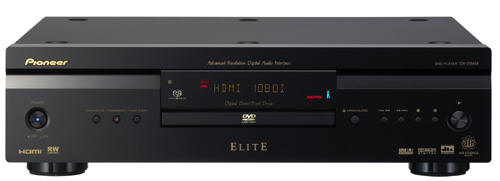
Today, you can pick up a Sony Blu-ray player that can do SACD for $100.00. -
DonnerUndBlitzen wrote: »Does your old DVD player also play SACDs? Or, just CDs?
Yes, My Sony DVP-NS3100ES does play SACD very well. I have a couple of SACD I picked up at the Sony family store and a few others from other places. With over 2k in CD's I only picked up my favorite of ones I had. Rush 2112 never came out on SACD, bummer.
I go to garage sales and estate sales and don't find much quality audio gear. Only time I saw SACD they were all classical which I don't like that much.When I was a kid my parents told me to turn it down. Now I'm an adult and my kids tell me to turn it down.
Family Room:LG QNED80 75", Onkyo RZ50 Emotiva XPA3 GEN3 Oppo BDP-93,Sony UBP-X800BM. Main: Polk LsiM 705Center: Polk LSiM 704CFront High/Rear High In-Ceiling Polk 80F/X RT Surrounds: Polk S15 Sub: HSU VTF3-MK5
Bed Room; Marantz SR5010, BDP-S270Main: Polk Signature S20Center: Polk Signature S35Rear: Polk R15 Sub: SVS SB2000
Working Warehouse; Yamaha A-S301, Sony DVP-NS3100ES for disc Plok TSX550T SVS PB2000 Mini tower PC with 400GB of music -
Well, yes and no. Though Apple lossless started as a proprietary format, it kinda isn't anymore. ITunes comes on any Windows machine now, and any dac or pretty much anything with a digital connection can play it. My android phone plays it through my sonos app. So while flac is open based, Apple lossless can play on just about anything flac can these days.
I hear what you're saying but I think Apple was basically forced to open up their software or risk being blackballed by the rest of the world as they attempted to create somewhat of a monopoly with iTunes. That's why I bought a Sansa instead of an iPod several years ago when they were the rage. As a consumer I try to avoid monopolies if possible.
One thing that hasn't changed is that Apple retains the patent and intellectual property rights to ALAC while FLAC is unpatented and free to the masses which means all updates and future enhancements/improvements are also free without restrictions.
That's why FLAC is better and the way to go if you are creating a digital library. FLAC is also a little faster than ALAC but the two are essentially the same performance-wise. There really is no advantage to going with ALAC over FLAC. -
I must admit to some amazement when I see articles that mention the "failure" of SACD. Such articles mention, often with a barely restrained lewd, salacious, glee, that SACD "never caught on with the masses" and that "SACD failed to replace CDs".
Such nonsense, as with all audiophile naysayer nonsense, is rooted in a failure to understand, or rooted in a desire to lie about, or to misrepresent certain historical truths. For SACD, these truths are:
1. SACD was NEVER intended to be a mass market, "consumer" format. The first SACD player, the Sony SCD-1, had a retail price of $5,000 in 1999 ($7,346 in 2017 dollars). Five thousand dollar disc players were, and still are not, mass market items.
2. There was never a huge marketing campaign behind SACD. SACD was introduced as an audiophile alternative to the Redbook CD. CDs were never intended as a high resolution playback format. When the music industry switched from vinyl to CDs in the early 1980s, audiophiles screamed "bloody murder" because the format was a huge step backward in sound quality. Audiophile outrage was finally addressed by the introduction of the SACD in 1999.
3. Although some seem to take extreme pleasure in gloating over SACD's "failure", simple reasoning and common sense would indicate that it would have made NO SENSE WHATSOEVER for Sony/Philips to have expected SACD to replace CD. Why? Because, as far as audiophiles are concerned, most recordings are of average sound quality at best, and some are outright trash with respect to sound quality. What sense does it make to put a recording with average or trash sound quality on a high resolution medium? SACD is for those RELATIVELY FEW recordings that were well recorded and well mastered to begin with. Such recordings, if they are carefully and thoughtfully transferred, certainly benefit from a higher resolution medium.
4. There was never any hope, or reasonable expectation, by record companies that people would want to replace their CD collections with SACD versions. The master tapes of most recordings are poor to average in quality, and putting poor to average recordings on a higher resolution format only illuminates and spotlights the sonic flaws. I replaced the "sonic gems" in my CD collection with SACD version (if the SACD version was available and better), just as I replaced the "visual gems" in my DVD collection with Blu-ray versions (if the blu-ray version was available and better). However, the vast majority of my CD and DVD collections do not warrant repurchasing in a higher resolution format.
5. In their haste and zeal to take another dig at audiophiles, some naysayers reveal their ignorance of the definition of "failure" as it applies to business and merchandising. A business and merchandising failure is a product or service that is not sustainable due to a lack of revenue and profit. While it is true that SACD new issues and reissue titles are a trickle compared to CD, it is illogical and irrational to say that something designed for a niche market is a failure solely because it never caught on with the masses.Proud and loyal citizen of the Digital Domain and Solid State Country! -
Ya' know...I was just about to say that!
Weird coincidence, eh?
LOL
Nice write up bro'. I can't dispute anything you wrote and I doubt anyone who knows the history behind SACD's would either.
Tom~ In search of accurate reproduction of music. Real sound is my reference and while perfection may not be attainable? If I chase it, I might just catch excellence. ~ -
I was introduced to SACD by ear. I had gone to the local audio shop and they played a "CD" that I thought was outstanding. I wanted to know what it was, so I asked the salesman. He stated that it was some lady by the name of Rebecca Pidgeon and that it was on "The world's greatest audiophile recordings". The song was "Spanish Harlem".
So I went home and started looking for this album because I wanted needed to hear this on my rig. As I went to go look for the album, I discovered that the format was this thing called "SACD". What in the? SACD? I had never heard about that format before.
So I get back online and on another forum, asked folks what the heck an "SACD" was. F1nut chimed in and informed me that I would need to get another source that was SACD compatible in order to hear it in my system. I'll put it to you this way, it sounded sooooo good, that I didn't blink an eye and immediately purchased an SACD player and the album.
This was one decision I never regretted.
This was also my introduction to SACD. I hadn't heard of it before, I hadn't ever heard it mentioned or even referenced before (at that point in my audio journey). All I knew is that the sound alone perked my interest SO much off that one song, I was hooked from that point forth.
Here is the album that song was on;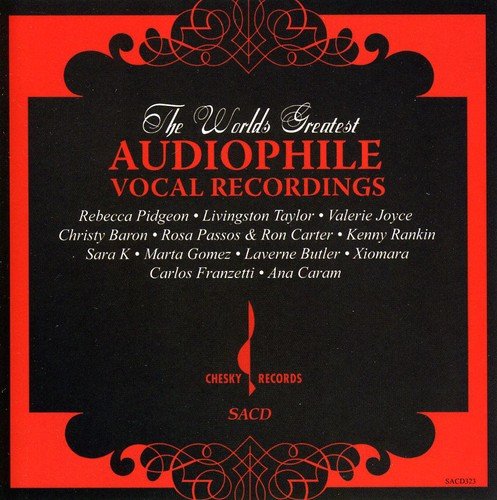
Even today, this song (Spanish Harlem) on SACD remains one of my reference tracks.
Tom~ In search of accurate reproduction of music. Real sound is my reference and while perfection may not be attainable? If I chase it, I might just catch excellence. ~ -
Spanish Harlem is also one of my go to reference songs. I have that SACD and Rebecca's DSD recording of it.2-channel: Modwright KWI-200 Integrated, Dynaudio C1-II Signatures
Desktop rig: LSi7, Polk 110sub, Dayens Ampino amp, W4S DAC/pre, Sonos, JRiver
Gear on standby: Melody 101 tube pre, Unison Research Simply Italy Integrated
Gone to new homes: (Matt Polk's)Threshold Stasis SA12e monoblocks, Pass XA30.5 amp, Usher MD2 speakers, Dynaudio C4 platinum speakers, Modwright LS100 (voltz), Simaudio 780D DAC
erat interfectorem cesar et **** dictatorem dicere a -
Thank Tom,
I just googled it up. just beautiful, that on a youtube in my junk PC speakers.
I just ordered it.When I was a kid my parents told me to turn it down. Now I'm an adult and my kids tell me to turn it down.
Family Room:LG QNED80 75", Onkyo RZ50 Emotiva XPA3 GEN3 Oppo BDP-93,Sony UBP-X800BM. Main: Polk LsiM 705Center: Polk LSiM 704CFront High/Rear High In-Ceiling Polk 80F/X RT Surrounds: Polk S15 Sub: HSU VTF3-MK5
Bed Room; Marantz SR5010, BDP-S270Main: Polk Signature S20Center: Polk Signature S35Rear: Polk R15 Sub: SVS SB2000
Working Warehouse; Yamaha A-S301, Sony DVP-NS3100ES for disc Plok TSX550T SVS PB2000 Mini tower PC with 400GB of music -
You are quite welcome sir. Enjoy!
'Round Midnight and Once Upon a Summertime are also great tracks on that album for evaluation / listening.
Tom~ In search of accurate reproduction of music. Real sound is my reference and while perfection may not be attainable? If I chase it, I might just catch excellence. ~ -
From Wikipedia............
"Super Audio CD (SACD) is a read-only optical disc for audio storage, introduced in 1999. It was developed jointly by Sony and Philips Electronics, and intended to be the successor to their Compact Disc (CD) format. While the SACD format can offer more channels (e.g. surround sound), and a longer playing time than CD, research published in 2007 found no significant difference in audio quality between SACD and standard CD at ordinary volume levels.
Having made little impact in the consumer audio market, by 2007, SACD was deemed to be a failure by the press. A small market for SACD has remained, serving the audiophile community.
Comparison with CD
In the audiophile community, the sound from the SACD format is thought to be significantly better than that of CD. For example, one supplier claims that "The DSD process used for producing SACDs captures more of the nuances from a performance and reproduces them with a clarity and transparency not possible with CD."
In September 2007, the Audio Engineering Society published the results of a year-long trial, in which a range of subjects including professional recording engineers were asked to discern the difference between SACD and a compact disc audio (44.1 kHz/16 bit) conversion of the same source material under double blind test conditions. Out of 554 trials, there were 276 correct answers, a 49.8% success rate corresponding almost exactly to the 50% that would have been expected by chance guessing alone. When the level of the signal was elevated by 14 dB or more, the test subjects were able to detect the higher noise floor of the CD quality loop easily.
The authors commented:
Now, it is very difficult to use negative results to prove the inaudibility of any given phenomenon or process. There is always the remote possibility that a different system or more finely attuned pair of ears would reveal a difference. But we have gathered enough data, using sufficiently varied and capable systems and listeners, to state that the burden of proof has now shifted. Further claims that careful 16/44.1 encoding audibly degrades high resolution signals must be supported by properly controlled double-blind tests.
Following criticism that the original published results of the study were not sufficiently detailed, the AES published a list of the audio equipment and recordings used during the tests.
Comparison with DVD-A
Double-blind listening tests in 2004 between DSD and 24-bit, 176.4 kHz PCM recordings reported that among test subjects no significant differences could be heard.[43] DSD advocates and equipment manufacturers continue to assert an improvement in sound quality above PCM 24-bit 176.4 kHz. Despite both formats' extended frequency responses, it has been shown people cannot distinguish audio with information above 21 kHz from audio without such high-frequency content."
https://en.wikipedia.org/wiki/Super_Audio_CD
-
2-channel: Modwright KWI-200 Integrated, Dynaudio C1-II Signatures
Desktop rig: LSi7, Polk 110sub, Dayens Ampino amp, W4S DAC/pre, Sonos, JRiver
Gear on standby: Melody 101 tube pre, Unison Research Simply Italy Integrated
Gone to new homes: (Matt Polk's)Threshold Stasis SA12e monoblocks, Pass XA30.5 amp, Usher MD2 speakers, Dynaudio C4 platinum speakers, Modwright LS100 (voltz), Simaudio 780D DAC
erat interfectorem cesar et **** dictatorem dicere a -
Gatecrasher wrote: »From Wikipedia............
"Super Audio CD (SACD) is a read-only optical disc for audio storage, introduced in 1999. It was developed jointly by Sony and Philips Electronics, and intended to be the successor to their Compact Disc (CD) format.
From Sony's press release for the SCD-1:
"Sony plans to offer its first Super Audio CD player model [SCD-1] to audiophiles and music lovers who seek the purest sound quality attainable, allowing them to fully enjoy the rich musicality the Super Audio CD and its ability to provide the full and faithful reproduction of a music source."
http://www.sony.net/SonyInfo/News/Press_Archive/199904/99-002/
No, SACD was not intended to be a successor to CD for the masses. It was intended to be a successor to CD for audiophiles who had long been disappointed by the limitations and compromises of the compact disc.Gatecrasher wrote: »From Wikipedia............
While the SACD format can offer more channels (e.g. surround sound), and a longer playing time than CD, research published in 2007 found no significant difference in audio quality between SACD and standard CD at ordinary volume levels.
I would not go so far as to generalize the AES as an "anti-audiophile" organization, but their anti-audiophile members are very vocal and influential within the organization. The blind testing methods they promote for stereophonic audio evaluations are not grounded in scientific validity. The study cited above had numerous procedural flaws.Gatecrasher wrote: »From Wikipedia............
Having made little impact in the consumer audio market, by 2007, SACD was deemed to be a failure by the press. A small market for SACD has remained, serving the audiophile community.
"...SACD was deemed to be a failure by the press." Well, again, I don't see a rational basis for deeming something to be a failure when its market penetration did not go beyond the market it was developed for. SACD was certainly not as big of a success in the audiophile community as was hoped, but it was not, and is not, a failure by any reasonable economic measure.
Comparing the retail prices of Sonys first SACD players to a couple of "nice" CD players of the same time period provides some insight:
SACD Players -
1999 - SCD-1, $5,000
1999 - SCD-777ES, $3,500
2001 - SCD-C333ES, $1,200
2001 - SCD-C775, $400
2001 - SCD-XE670, $300
CD Players -
1999-2001 CDP-XE330, $175
2001-2002 CDP-CE375, $120
My point is that, during the time of Sony's market introductions of their SACD players, the retail price of the cheapest SACD player was nearly triple the cost of mass market CD player.
From this perspective, it does not appear that Sony had any intention, or reasonable expectation, that mass market consumers would be willing to pay a premium for an SACD player, especially when such consumers, and their audio systems, were not oriented toward higher performance stereophonic playback.Proud and loyal citizen of the Digital Domain and Solid State Country! -
This content has been removed.
-
What did they consider ordinary volume levels? Regardless, the fact that SACD was noted as sounding better at a louder level proves that it is the superior format.
How anyone could not hear the difference is beyond me.
Political Correctness'.........defined
"A doctrine fostered by a delusional, illogical minority and rabidly promoted by an unscrupulous mainstream media, which holds forth the proposition that it is entirely possible to pick up a t-u-r-d by the clean end."
President of Club Polk -
My cynical side says that copy protection was a big motivator for Sony to develop SACD. Better sound just helped them sell it.Lumin X1 file player, Westminster Labs interconnect cable
Sony XA-5400ES SACD; Pass XP-22 pre; X600.5 amps
Magico S5 MKII Mcast Rose speakers; SPOD spikes
Shunyata Triton v3/Typhon QR on source, Denali 2000 (2) on amps
Shunyata Sigma XLR analog ICs, Sigma speaker cables
Shunyata Sigma HC (2), Sigma Analog, Sigma Digital, Z Anaconda (3) power cables
Mapleshade Samson V.3 four shelf solid maple rack, Micropoint brass footers
Three 20 amp circuits. -
DonnerUndBlitzen wrote: »If you don't like their report and study, shoot the messenger and say they were biased. Maybe those that are biased have good reason and they've looked carefully into these matters and drawn the correct conclusions. Their bias does not equal sinister motives.
Ignorance does not have to be mean spirited or sinister to be detrimental. I have provided a link to the paper. You can read it and decide for yourself rather than blindly speculating.What did they consider ordinary volume levels? Regardless, the fact that SACD was noted as sounding better at a louder level proves that it is the superior format.
How anyone could not hear the difference is beyond me.
Once you read the paper, you will understand completely. In summary, they took the output of an SACD player and fed it to an ABX switchbox. They then tapped into the SACD output, fed that into a downconverter which converted it to 44.1/16 bit output, then fed that into the ABX switchbox.
Subjects were then asked to compare the sound of the SACD direct output to that of the SACD output degraded to 44.1/16 bit audio. Here is a diagram of the test setup: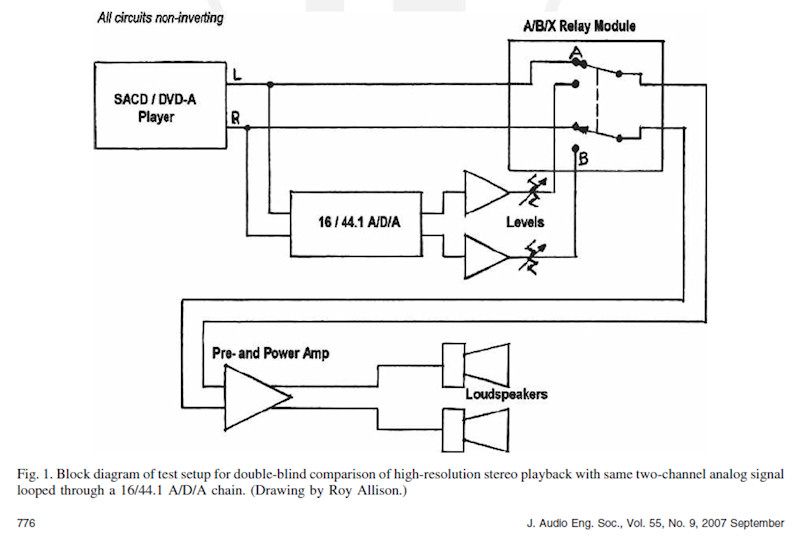
The paper can be accessed at this link:
https://pdfs.semanticscholar.org/1105/0b42c641807bbcf24ba7f6e11af49f135e8f.pdf
This is "interesting":
"Though our tests failed to substantiate the claimed advantages of high-resolution encoding for two-channel audio, one trend became obvious very quickly and held up throughout our testing: virtually all of the SACD and DVD-A recordings sounded better than most CDs—sometimes much better. Had we not “degraded” the sound to CD quality and blind-tested for audible differences, we would have been tempted to ascribe this sonic superiority to the recording processes used to make them. Plausible reasons for the remarkable sound quality of these recordings emerged in discussions with some of the engineers currently working on such projects. This portion of the business is a niche market in which the end users are preselected, both for their aural acuity and for their willingness to buy expensive equipment, set it up correctly, and listen carefully in a low-noise environment."
Therefore, these researchers admitted that SACD and DVD-A recordings sounded superior, but then they devised a test where an SACD output and a downconverted version of that SACD output were fed to an ABX switchbox. From that apparatus, they formed the conclusion that the SACD output and its downconverted deriviative were indistinguishable out of the ABX switchbox.
The study lacks the following important components:
1. The audio equipment used.
2. The performance specifications, particularly noise performance, of the ABX switchbox and what effects it had on the signals being passed through it.
3. The amount of time subjects were given to listen to musical selections. Most tests of this nature favor switching between short snippets of songs.
4. What was each subject's proficiency and experience in stereophonic sound localization and stereophonic sound characterization? Just saying that someone is an "audiophile", "sound engineer", or "experienced listener" does not provide insight into their stereophonic perception capabilities.
5. What steps were taken to assess the presence, or lack, of sonic effects from the A/D/A converter on the SACD direct signal stream?
My Experiences
I recently transferred most of my vinyl record collection to single rate DSD digital files using a PS Audio NuWave analog to digital converter. I had the choice of DSD double rate (5.6448 M), DSD single rate (SACD quality 2.8224 M), 192k PCM, 176.4k PCM, 96k PCM, 88.2k PCM, or 44.1k PCM. I made test recordings of songs to help me determine which sample rate to use. I was initially biased in favor of the lower PCM sample rates because PCM offered the option of editing out pops, clicks, and other surface noise whereas with DSD I was stuck with whatever was on the record. Furthermore, PCM files were much smaller in size than DSD files and required less drive storage space.
In terms of overall clarity, sound stage, image weight, and tactile sensation, DSD was the clear winner...and I was hoping to get by with 44.1/16 PCM.
Reference:
http://forum.polkaudio.com/discussion/174885/the-turntable-retirement-project/p1Proud and loyal citizen of the Digital Domain and Solid State Country! -
So, they admit the test was rigged. Thanks Ray, I don't need to read any more of it.Political Correctness'.........defined
"A doctrine fostered by a delusional, illogical minority and rabidly promoted by an unscrupulous mainstream media, which holds forth the proposition that it is entirely possible to pick up a t-u-r-d by the clean end."
President of Club Polk -
Facts are a ****.
btw, anyone sick of their SACD's please PM me.
-
(emphasis added)My cynical side says that copy protection was a big motivator for Sony to develop SACD. Better sound just helped them sell it.
I am sure (OK, I find it very easy to believe) that this was a factor. -
Go to know facts from Ray, as usual. I think we are missing the terminology in most reports. Like "Mass marketed".....which if you base failure or success on that alone then no doubt it failed.
Like Ray points out though, was it intended to be mass marketed ? Personally I think they were hoping for it, but it never materialized. I don't think either we can deny copy protection didn't at least play a part. I don't think any manufacturer of anything creates stuff in hopes it doesn't catch on....right ?
Does it matter though ? Rock on and enjoy SACD as long as you can if that floats your boat. Heck, we still enjoy older formats too like Vinyl and R2R.
My view....if SACD's claim to fame is DSD, and DSD today can be done even further digitally, tell me again why a disc is needed ?HT SYSTEM-
Sony 850c 4k
Pioneer elite vhx 21
Sony 4k BRP
SVS SB-2000
Polk Sig. 20's
Polk FX500 surrounds
Cables-
Acoustic zen Satori speaker cables
Acoustic zen Matrix 2 IC's
Wireworld eclipse 7 ic's
Audio metallurgy ga-o digital cable
Kitchen
Sonos zp90
Grant Fidelity tube dac
B&k 1420
lsi 9's -
My view....if SACD's claim to fame is DSD, and DSD today can be done even further digitally, tell me again why a disc is needed ?
Because some of us want to have physical media. None of this I have it in LA LA land stuff. IF I choose to put it in cyber space great, IF cyber space flakes out I have a physical copy to replace it with MY CHOICE to do as I wish NOT some corporation deciding my course of action. I used to find it exciting to go to a friends house and look through their albums and CD's and got great pleasure from checking it out. YEA BOY its so exciting to just look at words on a screen. GIVE me something tangible for my dollars.
-
SACDs are just one more thing the CIA doesn't need to know about me.

-
If cyber space flakes out its highly likely we won't even have electricity in this scenario at all.afterburnt wrote: »They didn't speak a word of English, they were from South Carolina.
Village Idiot of Club Polk -
My view....if SACD's claim to fame is DSD, and DSD today can be done even further digitally, tell me again why a disc is needed ?
Because some of us want to have physical media. None of this I have it in LA LA land stuff. IF I choose to put it in cyber space great, IF cyber space flakes out I have a physical copy to replace it with MY CHOICE to do as I wish NOT some corporation deciding my course of action. I used to find it exciting to go to a friends house and look through their albums and CD's and got great pleasure from checking it out. YEA BOY its so exciting to just look at words on a screen. GIVE me something tangible for my dollars.
I hear ya on the physical media, don't blame you either. If cyber space takes a dump though, so will everything else and if that's the case, SACD will be the last thing on your mind.
In less you liken yourself to the band that kept playing as the Titanic was sinking.
I hear ya though, same reason some like a physical book over an E-reader.
HT SYSTEM-
Sony 850c 4k
Pioneer elite vhx 21
Sony 4k BRP
SVS SB-2000
Polk Sig. 20's
Polk FX500 surrounds
Cables-
Acoustic zen Satori speaker cables
Acoustic zen Matrix 2 IC's
Wireworld eclipse 7 ic's
Audio metallurgy ga-o digital cable
Kitchen
Sonos zp90
Grant Fidelity tube dac
B&k 1420
lsi 9's -
If cyber space flakes out its highly likely we won't even have electricity in this scenario at all.
Guess I need to be just a little clearer. "Cyber Space" Server, Hard Drive, thumb drive or Cloud based. All of those can flake we still have juice to run stuff. -
Of course the SACD player can also flake out. At least having duplicate files is trivial. Try copying your SACDs to have backups.Lumin X1 file player, Westminster Labs interconnect cable
Sony XA-5400ES SACD; Pass XP-22 pre; X600.5 amps
Magico S5 MKII Mcast Rose speakers; SPOD spikes
Shunyata Triton v3/Typhon QR on source, Denali 2000 (2) on amps
Shunyata Sigma XLR analog ICs, Sigma speaker cables
Shunyata Sigma HC (2), Sigma Analog, Sigma Digital, Z Anaconda (3) power cables
Mapleshade Samson V.3 four shelf solid maple rack, Micropoint brass footers
Three 20 amp circuits. -
DarqueKnight wrote: »
This is "interesting":
"Though our tests failed to substantiate the claimed advantages of high-resolution encoding for two-channel audio, one trend became obvious very quickly and held up throughout our testing: virtually all of the SACD and DVD-A recordings sounded better than most CDs—sometimes much better. Had we not “degraded” the sound to CD quality and blind-tested for audible differences, we would have been tempted to ascribe this sonic superiority to the recording processes used to make them. Plausible reasons for the remarkable sound quality of these recordings emerged in discussions with some of the engineers currently working on such projects. This portion of the business is a niche market in which the end users are preselected, both for their aural acuity and for their willingness to buy expensive equipment, set it up correctly, and listen carefully in a low-noise environment."
Therefore, these researchers admitted that SACD and DVD-A recordings sounded superior, but then they devised a test where an SACD output and a downconverted version of that SACD output were fed to an ABX switchbox. From that apparatus, they formed the conclusion that the SACD output and its downconverted deriviative were indistinguishable out of the ABX switchbox.
http://forum.polkaudio.com/discussion/174885/the-turntable-retirement-project/p1
I think you may be misunderstanding what they meant. I did also at first.
They cherry picked really great recordings to use to make most SACD's.
I think they mean, at first they attributed the Great sound, to being SACD< but in fact, it was simply just a lot of really great recordings that were picked to make the Various SACD's they happened to use.
Re-read it again, I read it 3 times, till I got what they meant also. It is worded very oddly.
Not arguing with you, I came to your same conclusion at first also...lol







 https://youtu.be/IQO0VIljAns

![[Deleted User]](https://w4.vanillicon.com/40bc09a87daec053937ab0249c85e591_100.png)


