Best Of
Re: Cheap tube integrateds
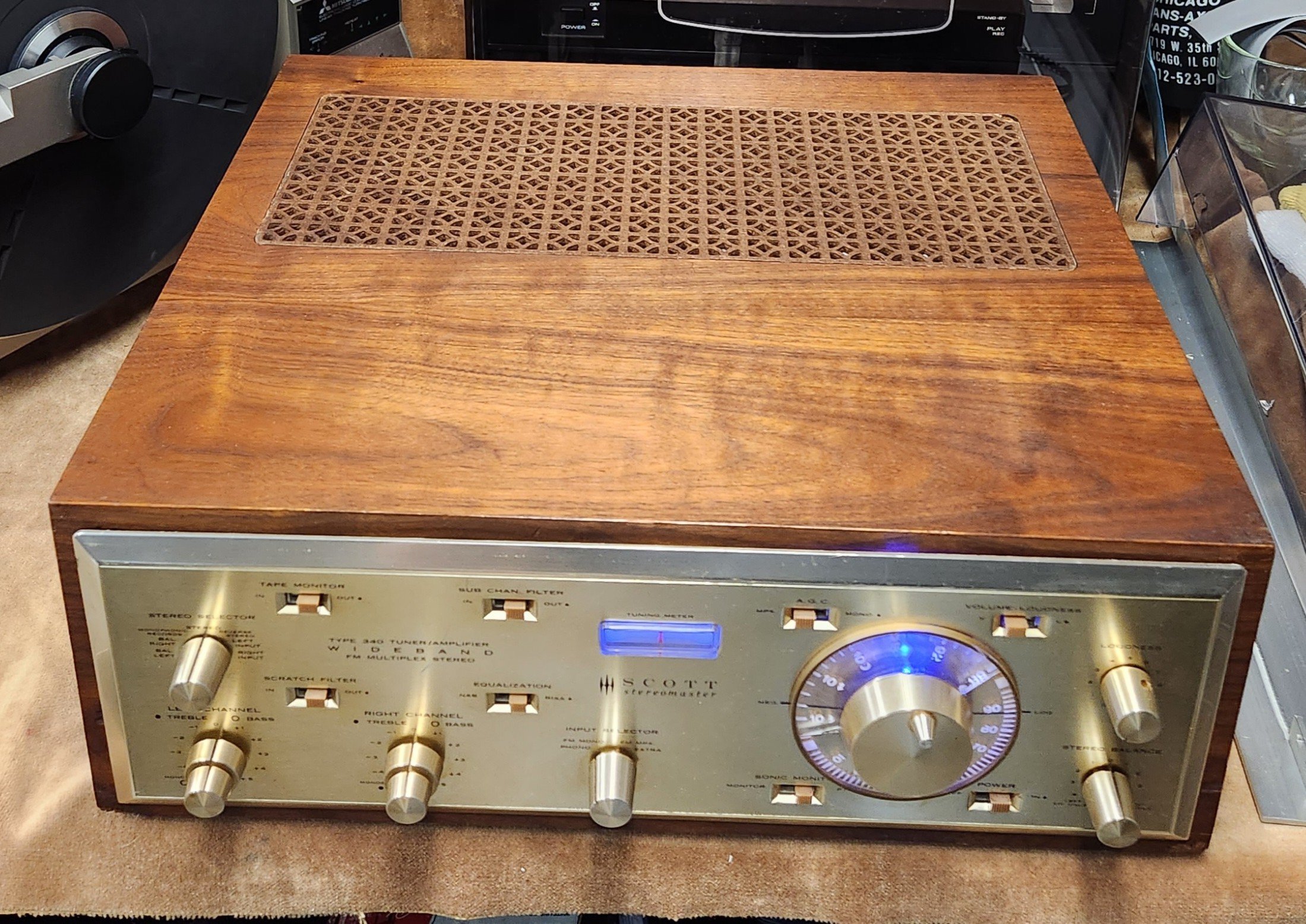
Scotts have a nice sweet sound IMO! Just a thought about older tube gear. I'm guessing a Scott 2xx or other tube gear of that era might be reactive to modern voltages we have today. Like the Scott 340 ('62-'63) and 399 ('59-'60, pre FM stereo) that I refurbed for Ed. They were designed at 115/117 line. Line voltage at our house can be 125VAC at times. Power transformer output increased at 125vac so tube heater and plate voltages exceeded max levels which would shorten tube life.
Two choices. One could increase resistance on all circuits affected at max line voltage. I opted for choice 2. I assembled a switchable bucking transformer to reduce line voltage. It displayed line in and out. Voltage choices were line out with two stages of reduction. The transformer selected had an amp rating to support both the 335 FM multiplexer and 399 receiver, like 4 or 5 amp IIRC.
Scott knew FM stereo broadcast was near, so they built a FM multiplexer for the 399. Prior to stereo, the 399 was designed for simulcast. One channel on AM, the other on FM. The 399 sent the FM signal to the 335 multiplexer which returned R and L channels back to receiver.
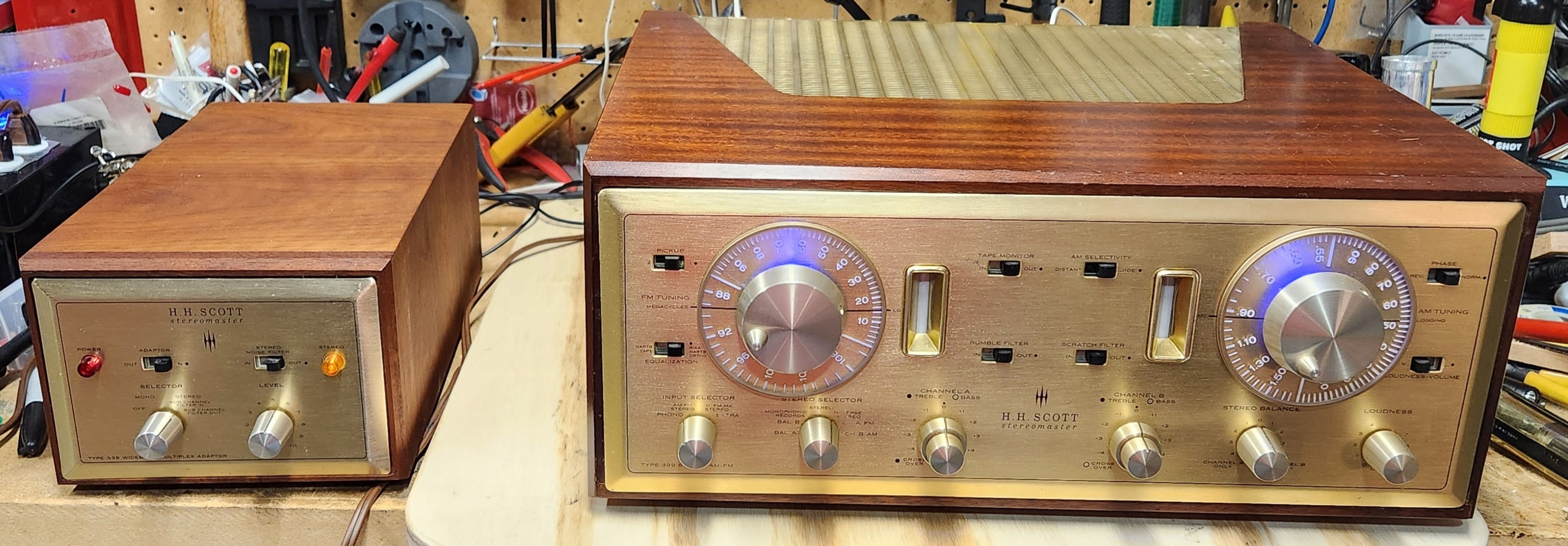
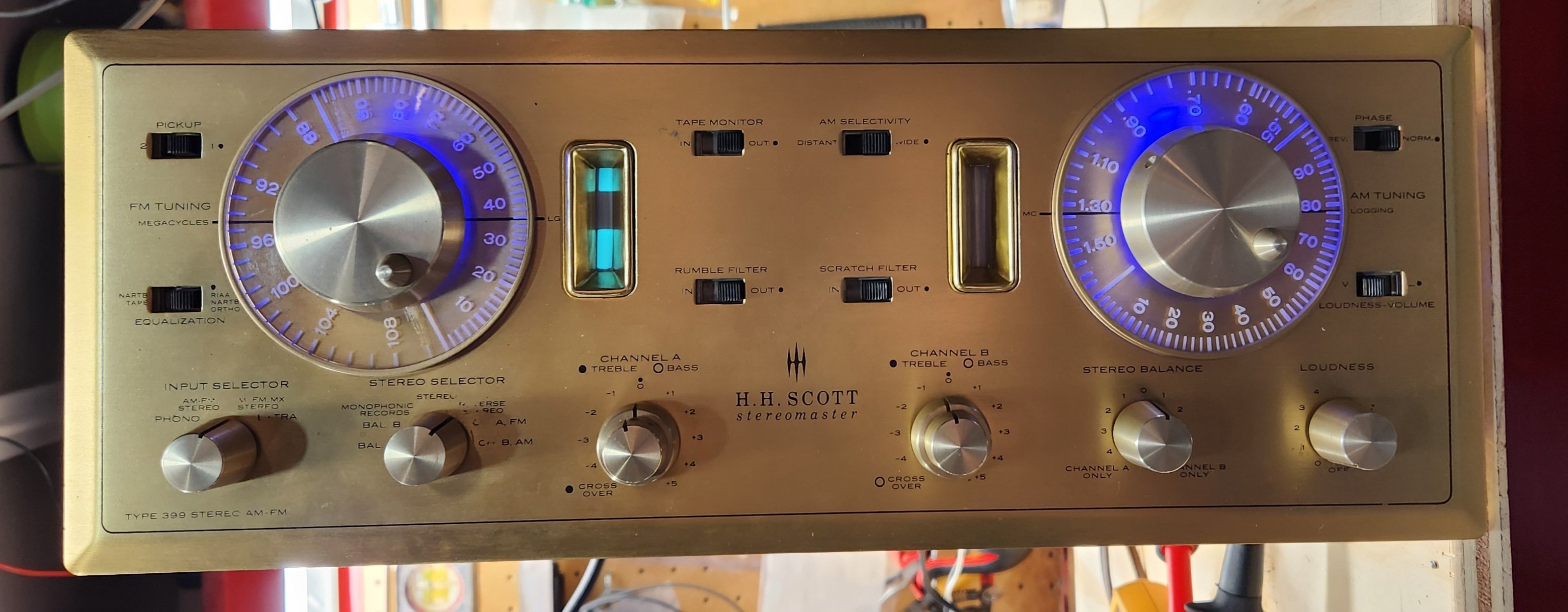
Above pic set to phono. It sported magic eye tubes for tuning. The input switch had an AM/FM and AM/FM MX Stereo setting.
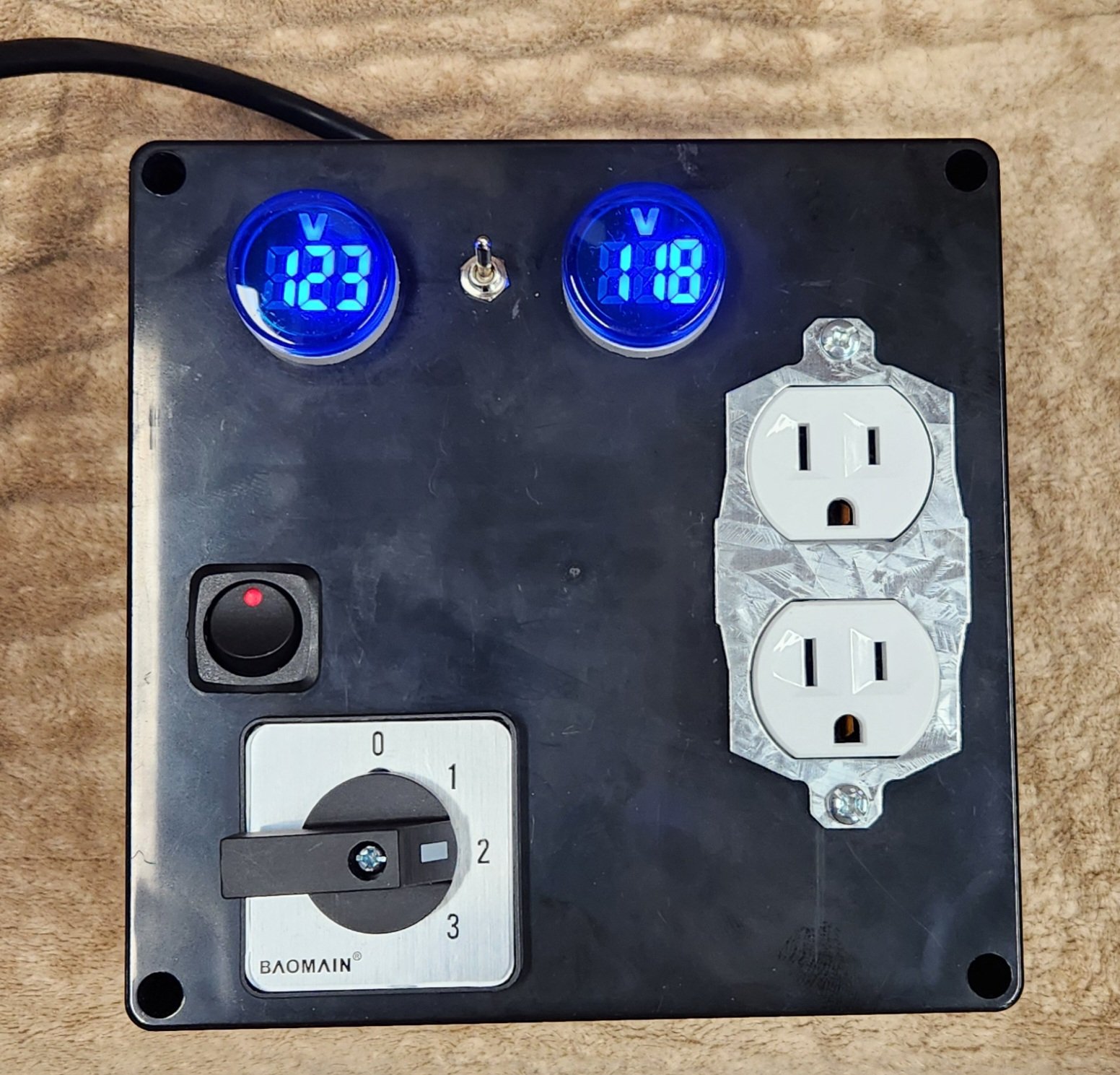
Two choices. One could increase resistance on all circuits affected at max line voltage. I opted for choice 2. I assembled a switchable bucking transformer to reduce line voltage. It displayed line in and out. Voltage choices were line out with two stages of reduction. The transformer selected had an amp rating to support both the 335 FM multiplexer and 399 receiver, like 4 or 5 amp IIRC.
Scott knew FM stereo broadcast was near, so they built a FM multiplexer for the 399. Prior to stereo, the 399 was designed for simulcast. One channel on AM, the other on FM. The 399 sent the FM signal to the 335 multiplexer which returned R and L channels back to receiver.
Above pic set to phono. It sported magic eye tubes for tuning. The input switch had an AM/FM and AM/FM MX Stereo setting.
 SCompRacer
5 ·
Re: SDA SRS 1.2TL Breakdown
Philtraère wrote: »Why ?
And if I find 6 original SL3000 ?
Replace all 8 with the RD-0198-1, they are much better tweeters. Trust me! I had 6 sl3000 in my 2.3tl, the 198's are MUCH smoother more coherent tweeters in every way. I wouldn't have believed it if it wasn't for my own ears.
 pitdogg2
1 ·

Re: Post a picture.....any picture...part deux...
I guess, depending on one's sensibilities, I could also put this in the You're Doing it Wrong thread... but I think it's kinda cool... so I am putting it here. 
 BLACK PICKUP TRUCK by J.Paul, on Flickr
BLACK PICKUP TRUCK by J.Paul, on Flickr mhardy6647
4 ·
Re: Polk L800 help
Perfect. I will try all of this tonight
Thank you so much for your help
Thank you so much for your help
 warlocks1
1 ·
Re: Speaker Jumpers
Shameless plug...I've got some really nice WBT binding posts listed here.
 F1nut
F1nut
1 ·

Re: Just in another place with this hobby.
I wonder if gynecologist suffer the same.
 motorhead43026
8 ·
Re: Just in another place with this hobby.
pearsall001 wrote: »Hey Dan all is good!! No biggie.
Oh & by the way I have a boat anchor sitting here with your name written all over it! I can deliver it next week... what day works for you. Lol!!
Damn! Dan's into boats too!? No Wonder he's got no money!
Bust
Out
Another
Thousand
pitdogg2
2 ·
Re: Polk L800 help
Here is Scott's reply:
I'm having trouble parsing the information, but I'll do my best to try to help.
>
> I'm going to assume that the amplifiers are not balanced output. That should be confirmed before proceeding. Here are a few things you can do to make sure the speakers are wired properly:
>
> 1) Connect the left speaker to the left output of the amp. Leave the right speaker unplugged. Do not attach the interconnect between the two speakers. Play pink noise at a reasonable volume. You should hear sound from the woofers and the right/inner tweeter/mid array (the stereo array) and not the left/outer mid/tweeter array (the dimensional array). If the left array plays instead, then that is a right speaker, not a left speaker.
> 2) Repeat the process with the right speaker. The left array should make sound and the right array shouldn't. The woofers should make sound.
> 3) Assuming that both speaker's stereo arrays are functioning, connect both speakers to the amp and play the noise. There should be noise from both speakers. If the noise is mono then there should be a center image. Play some music and the speakers should behave as a normal stereo pair.
>
> That should establish the stereo arrays as working properly. We can now move on to the dimensional arrays. The interconnect sends the positive amp connection to the opposite speaker which is then connected to the negative input of the dimensional array.
>
> 4) Unplug both speakers from the amp. Connect the interconnect between the two speakers. Plug the positive connection for the left channel of the amp into the left speaker's positive input. Plug the negative connection from the left channel of the amp to the right speaker's positive input. Leave the right channel of the amp unconnected. Play the pink noise. There should be sound coming from the left speaker's dimensional array only (the left or outer array).
> 5) Repeat the process with right speaker by connecting the amp positive output to the right speaker's positive input and the negative to the left speaker's positive input. The right dimensional array should now make sound.
>
> If all of that works and there are no polarity issues, then the speaker should operate properly. Great care should be taken to make sure not to short the amp to itself during the process.
>
> As I said earlier, I'm not entirely sure what the complaint is. Hope this helps.
>
> Scott
>
I'm having trouble parsing the information, but I'll do my best to try to help.
>
> I'm going to assume that the amplifiers are not balanced output. That should be confirmed before proceeding. Here are a few things you can do to make sure the speakers are wired properly:
>
> 1) Connect the left speaker to the left output of the amp. Leave the right speaker unplugged. Do not attach the interconnect between the two speakers. Play pink noise at a reasonable volume. You should hear sound from the woofers and the right/inner tweeter/mid array (the stereo array) and not the left/outer mid/tweeter array (the dimensional array). If the left array plays instead, then that is a right speaker, not a left speaker.
> 2) Repeat the process with the right speaker. The left array should make sound and the right array shouldn't. The woofers should make sound.
> 3) Assuming that both speaker's stereo arrays are functioning, connect both speakers to the amp and play the noise. There should be noise from both speakers. If the noise is mono then there should be a center image. Play some music and the speakers should behave as a normal stereo pair.
>
> That should establish the stereo arrays as working properly. We can now move on to the dimensional arrays. The interconnect sends the positive amp connection to the opposite speaker which is then connected to the negative input of the dimensional array.
>
> 4) Unplug both speakers from the amp. Connect the interconnect between the two speakers. Plug the positive connection for the left channel of the amp into the left speaker's positive input. Plug the negative connection from the left channel of the amp to the right speaker's positive input. Leave the right channel of the amp unconnected. Play the pink noise. There should be sound coming from the left speaker's dimensional array only (the left or outer array).
> 5) Repeat the process with right speaker by connecting the amp positive output to the right speaker's positive input and the negative to the left speaker's positive input. The right dimensional array should now make sound.
>
> If all of that works and there are no polarity issues, then the speaker should operate properly. Great care should be taken to make sure not to short the amp to itself during the process.
>
> As I said earlier, I'm not entirely sure what the complaint is. Hope this helps.
>
> Scott
>
 SeleniumFalcon
3 ·