Does high quality digital cables matter?
Options
Comments
-
DarqueKnight wrote: »If the listener did not know whether he was listening to the stock or modified preamplifier, would his spatial maps have been any different? If so, why? If not, why not? Do you think that knowledge of a modification would cause a trained listener to imagine that sounds had changed positions in the sound stage?
Why couldn't a company producing audio reproduction equipment used highly trained listeners, in a SBT fashion, in late stage voicing of the product? That is after it went through the normal 'bench engineering and measurement' iterations it goes to on listening tests and compared to a prior generation or competitor product?
Wouldn't engineers and developers want as unbiased feedback as possible?
So well trained individuals become a tool like an O-scope or DMM? -
This does not make any sense.
Consider the source.Habanero Monk wrote: »Why couldn't a company producing audio reproduction equipment used highly trained listeners, in a SBT fashion, in late stage voicing of the product? That is after it went through the normal 'bench engineering and measurement' iterations it goes to on listening tests and compared to a prior generation or competitor product?
Some companies do. Wireworld blind tests their cables. I assume Philips uses blind test in their product development, since they developed the Golden Ears Challenge.Habanero Monk wrote: »Wouldn't engineers and developers want as unbiased feedback as possible?
Of course. The part we disagree on is that blinding is the only way to reduce and remove bias. I continue to refer you to the peer-reviewed scientific literature regarding training as the best method to address consumer bias.
With regard to the Philips Golden Ear Challenge, it would have made no difference to me if I knew that the poorer sounding sample cost $10,000 and the best sounding sample cost $1. I have evaluation threads going back over 10 years on this forum where a more expensive, more prestigious, more physically appealing product did not outperform a lower cost alternative when measured by objective criteria. Examples:
Shunyata-Anaconda-Zitron-Power-Cable-First-Impressions
Posts #5 and #14 of this thread:
Cryogenically-Treated-Power-Port-PremierHabanero Monk wrote: »So well trained individuals become a tool like an O-scope or DMM?
Yes, but even scopes and meters will have variations in measurement, but all properly functioning scopes and meters will provide measurements close to each other.
Also be mindful of the fact that the trained ear is more sensitive than any oscilloscope or meter. A meter can't pinpoint sound images in a sound field. A meter can't gauge the height, width, and depth boundaries of a sound stage. A meter can't measure tactile sensation on the body. A meter can't "listen" to a passage of stereophonic music and catalog and characterize all the sounds in the sound stage.Proud and loyal citizen of the Digital Domain and Solid State Country! -
DarqueKnight wrote: »Also be mindful of the fact that the trained ear is more sensitive than any oscilloscope or meter. A meter can't pinpoint sound images in a sound field. A meter can't gauge the height, width, and depth boundaries of a sound stage. A meter can't measure tactile sensation on the body. A meter can't "listen" to a passage of stereophonic music and catalog and characterize all the sounds in the sound stage.
I guess sensitivity to a stimulus is dependent on what is being measured no? A meter isn't meant to gauge those items. On the other hand a measurement mic can deduce polarity, off axis-response, CSD, perform FFT much better/quicker then we could by ear. While I have setup systems and found something off it took a measurement system to show me where the problem exactly was. And none of those tools needed to know what was in the chain either.
So each tool for a specific job.
I wonder why wireworld, Phillips would perform these tests blind. -
DarqueKnight wrote: »
The listener was trained in voice frequency description. Was blinding necessary? If so, why? If no, why not? How would seeing the singe influence the trained listener's evaluation of the singer's vocal range since the listener would only be focusing on how a singer sounded?
I wouldn't say the test was "invalid". Nor would I assume that the visual observation of the singers biased the trained listeners report/observations. I would merely suggest that bias from viewing the singers is possibility (even if remote). For example, if I saw a very small man (horse jockey), I might assume (or perceive) his vocal range to be slightly higher and vice versa (I might assume a gigantic man has a deeper voice). Pop psychology is full of these weird findings, where people view bearded men, or people with glasses slightly different than others.
I very much agree that "training" would reduce any bias, and it certainly COULD eliminate it altogether. However, I would maintain that blinding is a sure fire way to reduce bias, and could be done relatively easy. The bottom line though, is that in this case, I'd rely on the study findings. Were there any differences in blinded vs. unblinded trials.DarqueKnight wrote: »What if one singer was a world famous bass singer, but an unknown local singer had the deepest voice. Do you think a trained listener would say the famous singer had the deepest voice, even though his ears indicated that the unknown singer had the deepest voice?
Is it likely? I speculate no. But he might.
The point is taken that some outcome measures would be more susceptible to the famous singer than others (e.g. "liking", quality, preference etc.)DarqueKnight wrote: »If the listener did not know whether he was listening to the stock or modified preamplifier, would his spatial maps have been any different? If so, why? If not, why not?
I think it depends on how well the mod worked. Obviously, a dramatic change in performance (which resulted in a change in perceived sound) would likely result in a "change" in soundstage. I think it would be up to the subject as to whether or not is was better or worse.DarqueKnight wrote: »Do you think that knowledge of a modification would cause a trained listener to imagine that sounds had changed positions in the sound stage?
Absolutely. I think if you told a subject: "Now you'll be listening to a modded amplifier, that is different", his/her perception would change. However, that is just like, my opinion man. If the data showed otherwise, my bias is toward the data.Polk Fronts: RTi A7's
Polk Center: CSi A6
Polk Surrounds: FXi A6's
Polk Rear Surround: RTi4
Sub: HSU VTF-3 (MK1)
AVR: Yamaha RX-A2010
B&K Reference 200.7
TV: Sharp LC-70LE847U
Oppo BDP-103 -
Habanero Monk wrote: »I guess sensitivity to a stimulus is dependent on what is being measured no?
And also dependent on the training of a subject to perceive and measure that stimulus.Habanero Monk wrote: »A meter isn't meant to gauge those items. On the other hand a measurement mic can deduce polarity, off axis-response, CSD, perform FFT much better/quicker then we could by ear.
That is why my stereo equipment evaluations have listening and quantitative measurement results.Habanero Monk wrote: »While I have setup systems and found something off it took a measurement system to show me where the problem exactly was. And none of those tools needed to know what was in the chain either.
I don't need to know the identity of a piece of stereo equipment to evaluate it. I just don't need the added effort to set up a blind test because it is irrelevant. I don't mistrust my ears.Habanero Monk wrote: »So each tool for a specific job.
Right! Tests are tools also. Therefore your comment could be rephrased as "each test for a specific job", per established rules of sensory science.Habanero Monk wrote: »I wonder why wireworld, Phillips would perform these tests blind.
They might tell if you ask. Let us know what you find out.
Now, What About Television?
Another question comes to mind in that vein: If blinding in required to remove trained evaluator bias in stereo equipment evaluations, why is blinding not required to remove trained evaluation bias in television evaluations?
Apparently, there is no concern that television evaluators will be biased by the knowledge of aesthetics, brand name and price, hence the absence of blind trials for televisions. Conversely, there is concern that stereo evaluators will be biased by the knowledge of aesthetics, brand name and price.
Some people claim that blinding is ABSOLUTELY REQUIRED to eliminate bias in stereo component selection. However when we look at how television performance is evaluated, those tests are non-blind and use experienced and trained evaluators. There is no controversy over the need for blind tests. Here are some links to well known television "shoot-outs":
cnet.com-how-we-test
2010-value-electronics-flat-panel-shootout
Panasonic Wins 2010 HDTV Shootout
sharp-elite-wins-2011-value-electronics-hdtv-shootout
2009-tweaktv-value-electronics-hdtv-shoot-out.html
The common thread through the television tests above is the utilization of evaluators trained in television performance metrics. Hence, this quote from CNET, taken from the first link above:
"We've come up with a set of tools and procedures designed to arrive at unbiased results by utilizing industry-accepted video-quality evaluation tools, objective testing criteria, and trained experts."
In television evaluations, trained evaluators place competing televisions side-by-side and measure their performance. There is no attempt to hide brands, even though it could easily be done by framing each set with poster board. Among videophiles (serious, trained viewers) there is no demand for blind tests to avoid bias and being tricked.Television evaluators seem to have discovered a way to eliminate the effect of visual bias in their evaluations: EYE TRAINING!!!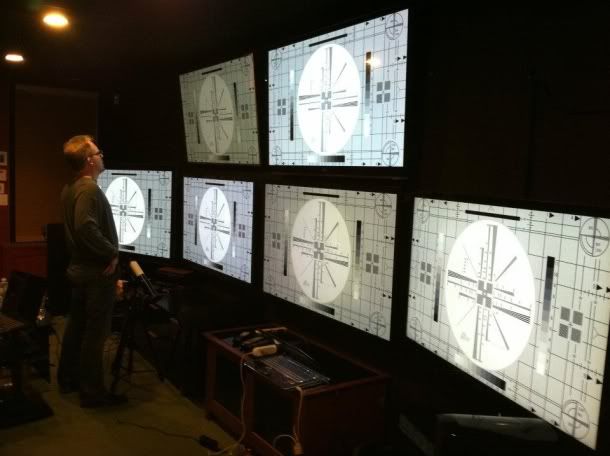
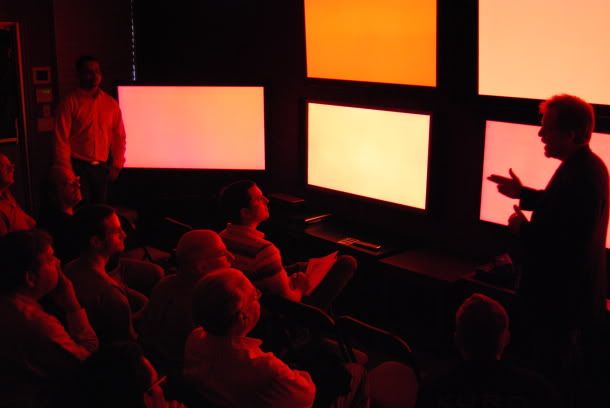
Interestingly, blind tests are sometimes used in television comparisons: when the evaluator is a random, untrained consumer. The link below is an example:
LG TV Consumer Blind Test
Now, if we are fair, we must ask ourselves, "if blind testing is not required for serious evaluation of televisions, why would it be required for serious evaluation of stereo systems?" Is the ear more susceptible to bias and trickery than the eye? No, we know that the eye is the primary human sense organ and that it is highly susceptible to being "tricked". That is why eyewitness testimony is considered unreliable by the justice system.
In the video world, serious viewers are advised to adopt a set of performance evaluation practices that will assure fair, accurate and competent trials. Videophiles are advised to train themselves on picture quality settings and to invest in inexpensive video calibration software. Similar to this, music lovers/serious listeners/audiophiles were advised near the beginning of the availability of home stereo systems to " become sophisticated in the art of sound localization" and to "play the same records many times and thus become familiar with the more subtle artistic and technical effects of stereo sound"Proud and loyal citizen of the Digital Domain and Solid State Country! -
For the record, I think blind tests should be used in all sorts of things (even TVs). Heck, someone published a study this week that under blinded conditions, it turns out that people who self-identified as "gluten intolerant" or "gluten sensitive" reported the same symptoms regardless of whether their food contained gluten or not.
Do you know if anyone has experimentally examined the effects of training? For example, in the TV example, we'd have the "trained" evaluators examine a series of TVs while nob-blinded, then they would do it again under blinded conditions. Assuming the training is consistent and legitimate,the TVs should be rated similarly each time.
I vaguely recall a study done last year of "expert" wine tasters who (presumably) were trained in wine evaluation. However, when they blinded the trained testers, some of them rated the exact same wine very differently during the second taste.Polk Fronts: RTi A7's
Polk Center: CSi A6
Polk Surrounds: FXi A6's
Polk Rear Surround: RTi4
Sub: HSU VTF-3 (MK1)
AVR: Yamaha RX-A2010
B&K Reference 200.7
TV: Sharp LC-70LE847U
Oppo BDP-103 -
For the record, I think blind tests should be used in all sorts of things (even TVs).
As the information I provided indicated, blind tests are used in TV evaluations: for naProud and loyal citizen of the Digital Domain and Solid State Country! -
DarqueKnight wrote: »I don't need to know the identity of a piece of stereo equipment to evaluate it. I just don't need the added effort to set up a blind test because it is irrelevant. I don't mistrust my ears.
While I trust my ears also, I like to verify.DarqueKnight wrote: »Right! Tests are tools also. Therefore your comment could be rephrased as "each test for a specific job", per established rules of sensory science.
Here's the thing though: Sensory science that you have referenced hasn't stipulated that blinded evaluation is taboo though. I've read some of the research papers including the article on using synthesized voices for phone system attendants. It didn't debunk any blinded testing.
We have a research library here so I think I can get anything that would be behind a paywall. Also there are some really old references that I don't know if they are valid for todays standards. One was about phonographic reproduction vs listening to the same at the live venue it was recorded in. Still nothing devaluing a blind test.
I think you are always going to have some push back by others that are just as smart and in the field. Dr. Olive sure thinks sighted tests are bunk and I think he makes a very solid case in his sighted vs blinded testing.
And before you bring up the monophonic that is a vertical that Toole/Olive spoke to: Comparing speakers. They had a preference for monophonic comparison and not lining up pairs.
Now, What About Television?
I think blinded comparison would be apt for TV's. I think especially apt if you are going to make a significant purchase. Get them calibrated and then compare.
I feel sorry for the buying public that walks into a BB, HH Greg, and just makes a purchase of the brightest set that they have pumped up. But that's on them.
Now only if Pioneer was still producing the Kuro. It would nice to have that option available but the market has spoken. -
Habanero Monk wrote: »Here's the thing though: Sensory science that you have referenced hasn't stipulated that blinded evaluation is taboo though.
Why do you (and others) keep repeating this nonsense? I never said blind testing is taboo. I said sensory science says blind testing for certain types of stimuli is inappropriate. Notice the parts in red below:DarqueKnight wrote: »I want to clarify that I have no problem with blind tests for certain kinds of audio, such as simple narrow bandwidth monophonic signals. As I stated in my A-Historical-Overview-of-Stereophonic-Blind-Testing thread, blind tests were routinely used by Bell Labs researchers for telephone line and equipment tests. It must be noted that the end users for such equipment were untrained listeners (the general public).
When Bell Labs began developing home stereo systems, the consumer segment was sophisticated trained listeners who were (or who would become) proficient at sound localization and characterization of complex, multi-dimensional sound fields. Simple discrimination tests are not adequate or appropriate for evaluating multi-dimensional stimuli. There are too many distractive elements in a stereo sound field. If a listener, whether trained or not, is asked to simply tell if there is a difference, it is very likely that a distractive element noticed in one trial, but not noticed in a subsequent trial, might be erroneously labeled as a "difference". That is why it is important to learn to catalog, categorize, and quantify all the sonic elements in sound stage. I often do not become aware of differences until I compare notes and sound stage maps among listening trials. I don't listen for differences. I listen to hear and document everything in the sound stage.
I have nothing against blind tests when they are appropriately used. My position, which is based on standard principles of sensory science and Bell Labs technical specifications for stereo, is that blind tests are unnecessary and inappropriate for the kinds of stimuli generated by stereophonic sound fields and they are unnecessary and inappropriate for the trained and experienced listeners required to evaluate stereophonic system and equipment performance.Habanero Monk wrote: »I've read some of the research papers including the article on using synthesized voices for phone system attendants. It didn't debunk any blinded testing.
Phone system signals are narrowband monophonic. Stereo system signals are wideband stereophonic. Again:DarqueKnight wrote: »I want to clarify that I have no problem with blind tests for certain kinds of audio, such as simple narrow bandwidth monophonic signals. As I stated in my A-Historical-Overview-of-Stereophonic-Blind-Testing thread, blind tests were routinely used by Bell Labs researchers for telephone line and equipment tests. It must be noted that the end users for such equipment were untrained listeners (the general public).Habanero Monk wrote: »We have a research library here so I think I can get anything that would be behind a paywall. Also there are some really old references that I don't know if they are valid for todays standards. One was about phonographic reproduction vs listening to the same at the live venue it was recorded in. Still nothing devaluing a blind test.
You seem to have a persecution complex regarding the validity of blind tests for stereo. Saying something is used inappropriately is not devaluing it. Saying a fork should not be used as a knife is not devaluing the fork.
Since you don't know whether the standards are still valid today, perhaps you should really try to understand them rather than jumping to conclusions?
The law relating force to mass and acceleration (F=ma) was published by Isaac Newton in the 1600's. Maxwell published his equations describing electric and magnetic fields in the 1800s. Those are some REALLY OLD references. Is it your belief that a scientific principle becomes invalid at a certain age?Habanero Monk wrote: »I think you are always going to have some push back by others that are just as smart and in the field. Dr. Olive sure thinks sighted tests are bunk and I think he makes a very solid case in his sighted vs blinded testing.
Is that the same Dr. Olive who did all the famous monophonic tests? Are you aware that this is a stereo audio forum?
I don't mind push back at all, especially when people are making some sense and can scientifically justify their views. I have corresponded briefly with Dr. Olive about this subject and I have corresponded at length with Dr. Olive's mentor, Dr. Floyd Toole on this subject.
One thing you keep in mind about me is that I have no stereo equipment to sell. I am not receiving a paycheck from a corporation that makes stereo equipment. The corporate entity (Harmon International) that Pays Dr. Olive (and Dr. Toole prior to his retirement) is not a high end audiophile company. Harmon is more focused on pro audio now. Some of their brands used to be highly regarded audiophile brands, but that is not the case now. I wouldn't expect a pro audio company's employees to have a lot of interest in teaching the general public about critical evaluation skills for stereo. They would essentially be teaching their potential customers to evaluate and choose other, higher performing, brands.
Regardless of what anyone else thinks, I am still waiting on the scientific justification for using blind discrimination tests for stereophonic sound. Do you have any?Habanero Monk wrote: »And before you bring up the monophonic that is a vertical that Toole/Olive spoke to: Comparing speakers. They had a preference for monophonic comparison and not lining up pairs.
OK. What relevance do Toole and Olive's monophonic tests have to stereophonic system performance?Habanero Monk wrote: »I think blinded comparison would be apt for TV's.
Sure. Think whatever you like. I just said there is no scientific justification for blind testing TV's and stereos with trained subjects. I welcome you to present the credible scientific evidence against that.Proud and loyal citizen of the Digital Domain and Solid State Country! -
Hey Darque Knight,
Aren't you the guy who cooks his wires in an oven? Just wondering.Too many good quotes to list..waiting for some fresh ammo.
-
Hey Darque Knight,
Aren't you the guy who cooks his wires in an oven? Just wondering.
Try the microwave..... -
Hey Darque Knight,
Aren't you the guy who cooks his wires in an oven? Just wondering.
On the chance you are serious, I hope to God he does not answer this.
Much of this thread has turned into a nightmare of a Ping-Pong match; like the kind where you're "opponent" is just like practicing against a folded table, in that you will never win, and at best can only hope for a tie.So, are you willing to put forth a little effort or are you happy sitting in your skeptical poo pile?
http://audiomilitia.proboards.com/ -
I am dead serious, and the moment he answers it will be a clear win. Tell me, do you actually know anyone else who cooks their wires?
The more interesting question is this: At the end of the day is "Stereophonic Audio" an outdated, antiquated system of sound reproduction? Serious question.Too many good quotes to list..waiting for some fresh ammo. -
Hey Darque Knight,
Aren't you the guy who cooks his wires in an oven? Just wondering.
What a stupid question. What does that have to do with anything?
If that question doesn't meet the definition of trolling then nothing does.Lumin X1 file player, Westminster Labs interconnect cable
Sony XA-5400ES SACD; Pass XP-22 pre; X600.5 amps
Magico S5 MKII Mcast Rose speakers; SPOD spikes
Shunyata Triton v3/Typhon QR on source, Denali 2000 (2) on amps
Shunyata Sigma XLR analog ICs, Sigma speaker cables
Shunyata Sigma HC (2), Sigma Analog, Sigma Digital, Z Anaconda (3) power cables
Mapleshade Samson V.3 four shelf solid maple rack, Micropoint brass footers
Three 20 amp circuits. -
I am dead serious, and the moment he answers it will be a clear win. Tell me, do you actually know anyone else who cooks their wires?
Sure, in a sense we all do, every time we listen to our rigs. Most folks refer to it as burn-in, but the Cable Cooker is, as far as I know, a way to simply speed up that process.
Now all the naysayers who would never even consider trying this for themselves will dismiss it as heresy.So, are you willing to put forth a little effort or are you happy sitting in your skeptical poo pile?
http://audiomilitia.proboards.com/ -
Sure, in a sense we all do, every time we listen to our rigs. Most folks refer to it as burn-in, but the Cable Cooker is, as far as I know, a way to simply speed up that process.
Now all the naysayers who would never even consider trying this for themselves will dismiss it as heresy.
Exacly what I was thinking.........
Taken from a recent Audioholics reply regarding "Club Polk" and Polk speakers:
"I'm yet to hear a Polk speaker that merits more than a sentence and 60 seconds discussion."
My response is: If you need 60 seconds to respond in one sentence, you probably should't be evaluating Polk speakers.....
"Green leaves reveal the heart spoken Khatru"- Jon Anderson
"Have A Little Faith! And Everything You'll Face, Will Jump From Out Right On Into Place! Yeah! Take A Little Time! And Everything You'll Find, Will Move From Gloom Right On Into Shine!"- Arthur Lee -
You guys have all missed my point..in that DK *literally* cooks his wires..IN an oven.
I'm not talking about regular old fashioned usage based burn in. Notice how quiet he's been since I asked that rhetorical question? Crickets.Too many good quotes to list..waiting for some fresh ammo. -
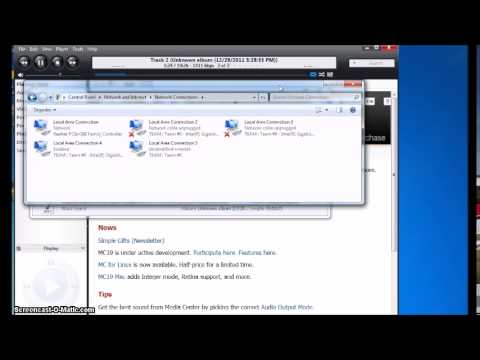
The computer is setup, installed, and tested out. Using JRiver as the media player. I can play a song, switch out any of the three cables and there is zero drop in playback.
-
Switching out cables? I thought the concept was to not have any interaction with the physical cables once everything was set up? 3 identical NICs to allow for 3 cables that meet spec and simply enabling/disabling the associate NIC to "switch" cables. This eliminates the possibility of a cable not being seated fully.
As an aside, either of those weekends in July work fine.
I didn't want to assume anything which is why I posted where I am at with all this. Some people may have wanted to see only one physical cable connected.
It's pretty easy actually and I didn't have any problems seating the cable. -
You guys have all missed my point..in that DK *literally* cooks his wires..IN an oven.
I'm not talking about regular old fashioned usage based burn in. Notice how quiet he's been since I asked that rhetorical question? Crickets.
....and your missing the point on why he won't answer you. Dear lord....if it wasn't so sad, it would be funny.HT SYSTEM-
Sony 850c 4k
Pioneer elite vhx 21
Sony 4k BRP
SVS SB-2000
Polk Sig. 20's
Polk FX500 surrounds
Cables-
Acoustic zen Satori speaker cables
Acoustic zen Matrix 2 IC's
Wireworld eclipse 7 ic's
Audio metallurgy ga-o digital cable
Kitchen
Sonos zp90
Grant Fidelity tube dac
B&k 1420
lsi 9's -
I thought the concept was to not have any interaction with the physical cables once everything was set up?
Having no cable eliminates the possibility of any interaction caused by the physcial cables
It also proves all you cable queens wrong, but I'll wait till later to hear about that one.Too many good quotes to list..waiting for some fresh ammo. -
Here is the demonstration video:
-
Having no cable eliminates the possibility of any interaction caused by the physcial cables
That is along my thoughts. If I physically remove the cable then there can't be any shenanigans declared. I mean the fargin' cable is just hanging there. -
I may have missed it, but is there a third party to verify cables are hooked/unhooked?Polk Fronts: RTi A7's
Polk Center: CSi A6
Polk Surrounds: FXi A6's
Polk Rear Surround: RTi4
Sub: HSU VTF-3 (MK1)
AVR: Yamaha RX-A2010
B&K Reference 200.7
TV: Sharp LC-70LE847U
Oppo BDP-103 -
That was my effort to make it unnecessary.
3 cables, 3 identical NICs with no physical interaction with the cables.
Unplugging/plugging cable over 30 times increases the risks of a cable not being seated correctly. Period. I have seen it countless times when cable monkeys are terminating and shoving cables into patch panels, 1 or 5 inevitably end up not fully seated.
Anyway, the layout was agreed to very early on in this discussion. Let's not go changing things up now.
Just offering you the option of knowing only one is connected. I'm fine with it either way. -
As I think back on my elementary and high school years, in some classes there was always one or two individuals, the "class clowns", who could not perform academically and who made attempts to disrupt the academic process as a way of diverting attention away from their intellectual inadequacy. They really wanted to participate in intellectual class discussions and they were quite envious of the articulate and academically gifted students who could. Since they were unable to rise to the level of class discussions, and since they were starved for attention, their only recourse was to attempt to dumb things down to their level.
They would sit in the back and mock the good students and they would ask the teacher stupid questions that had nothing to do with the subject matter. Sometimes they were tolerated for the occasional laughs they generated. More often, other means were used to mitigate the problem. The sad thing is that the class clowns never caught on to the fact that people were laughing at them and not with them.Proud and loyal citizen of the Digital Domain and Solid State Country! -
DarqueKnight wrote: »As I think back on my elementary and high school years, in some classes there was always one or two individuals, the "class clowns", who could not perform academically and who made attempts to disrupt the academic process as a way of diverting attention away from their intellectual inadequacy. They really wanted to participate in intellectual class discussions and they were quite envious of the articulate and academically gifted students who could. Since they were unable to rise to the level of class discussions, and since they were starved for attention, their only recourse was to attempt to dumb things down to their level.
They would sit in the back and mock the good students and they would ask the teacher stupid questions that had nothing to do with the subject matter. Sometimes they were tolerated for the occasional laughs they generated. More often, other means were used to mitigate the problem. The sad thing is that the class clowns never caught on to the fact that people were laughing at them and not with them.
Also what I was thinking.......
Taken from a recent Audioholics reply regarding "Club Polk" and Polk speakers:
"I'm yet to hear a Polk speaker that merits more than a sentence and 60 seconds discussion."
My response is: If you need 60 seconds to respond in one sentence, you probably should't be evaluating Polk speakers.....
"Green leaves reveal the heart spoken Khatru"- Jon Anderson
"Have A Little Faith! And Everything You'll Face, Will Jump From Out Right On Into Place! Yeah! Take A Little Time! And Everything You'll Find, Will Move From Gloom Right On Into Shine!"- Arthur Lee -
Been thinking about disabling the NIC's. We are only talking 30 runs. This needs to be beyond any reproach.
The best way to go forward is a true open air connection. If the NIC is logically disabled but physically connected I don't want anyone saying that there could still be noise or something to that affect entering into the equation.
The likely hood of having a problematic re-connection in 30 tries is minuscule in deference to the point being made that the cables need to be truly physically removed.
So yes, for the sake of testing integrity, and to answer a common complaint the cable advocates will have, I am going to reverse just a bit on how the NIC's get enabled / disabled.
I've already done at least 30-50 connections playing around with this. -
While, I can appreciate the trouble you are going through to set up this blind test and make sure it's fair, efficient, and "get rid of the bias". Isn't it easier to simply listen for yourself and judge for yourself to distinguish any differences between Ethernet (or any other cable(s))? Or, is/are your motive(s) not as pure as you are trying to make it out to be?
Taken from a recent Audioholics reply regarding "Club Polk" and Polk speakers:
"I'm yet to hear a Polk speaker that merits more than a sentence and 60 seconds discussion."
My response is: If you need 60 seconds to respond in one sentence, you probably should't be evaluating Polk speakers.....
"Green leaves reveal the heart spoken Khatru"- Jon Anderson
"Have A Little Faith! And Everything You'll Face, Will Jump From Out Right On Into Place! Yeah! Take A Little Time! And Everything You'll Find, Will Move From Gloom Right On Into Shine!"- Arthur Lee -
Yes. As I said many posts ago, this is a BS test. All it can demonstrate is that in this test scenario one person can or can not tell a difference between the cables used. No matter which way it turns out the result can not be used beyond this particular setup.Lumin X1 file player, Westminster Labs interconnect cable
Sony XA-5400ES SACD; Pass XP-22 pre; X600.5 amps
Magico S5 MKII Mcast Rose speakers; SPOD spikes
Shunyata Triton v3/Typhon QR on source, Denali 2000 (2) on amps
Shunyata Sigma XLR analog ICs, Sigma speaker cables
Shunyata Sigma HC (2), Sigma Analog, Sigma Digital, Z Anaconda (3) power cables
Mapleshade Samson V.3 four shelf solid maple rack, Micropoint brass footers
Three 20 amp circuits.







 https://www.youtube.com/watch?v=kOp3WtOeDnE
This discussion has been closed.