Eico 667 Tube & Transistor Tester
Options

SCompRacer
Posts: 9,399
Some say the EICO 667 is a decent, mid-tier dynamic conductance tube and transistor tester that works well for basic good-or-bad screening. Got this from Carl, been sitting for months waiting for me to look inside it. Panel is in nice condition. No tubes inside this tester...as doc hardy might say, it's a soiled state tube tester. 
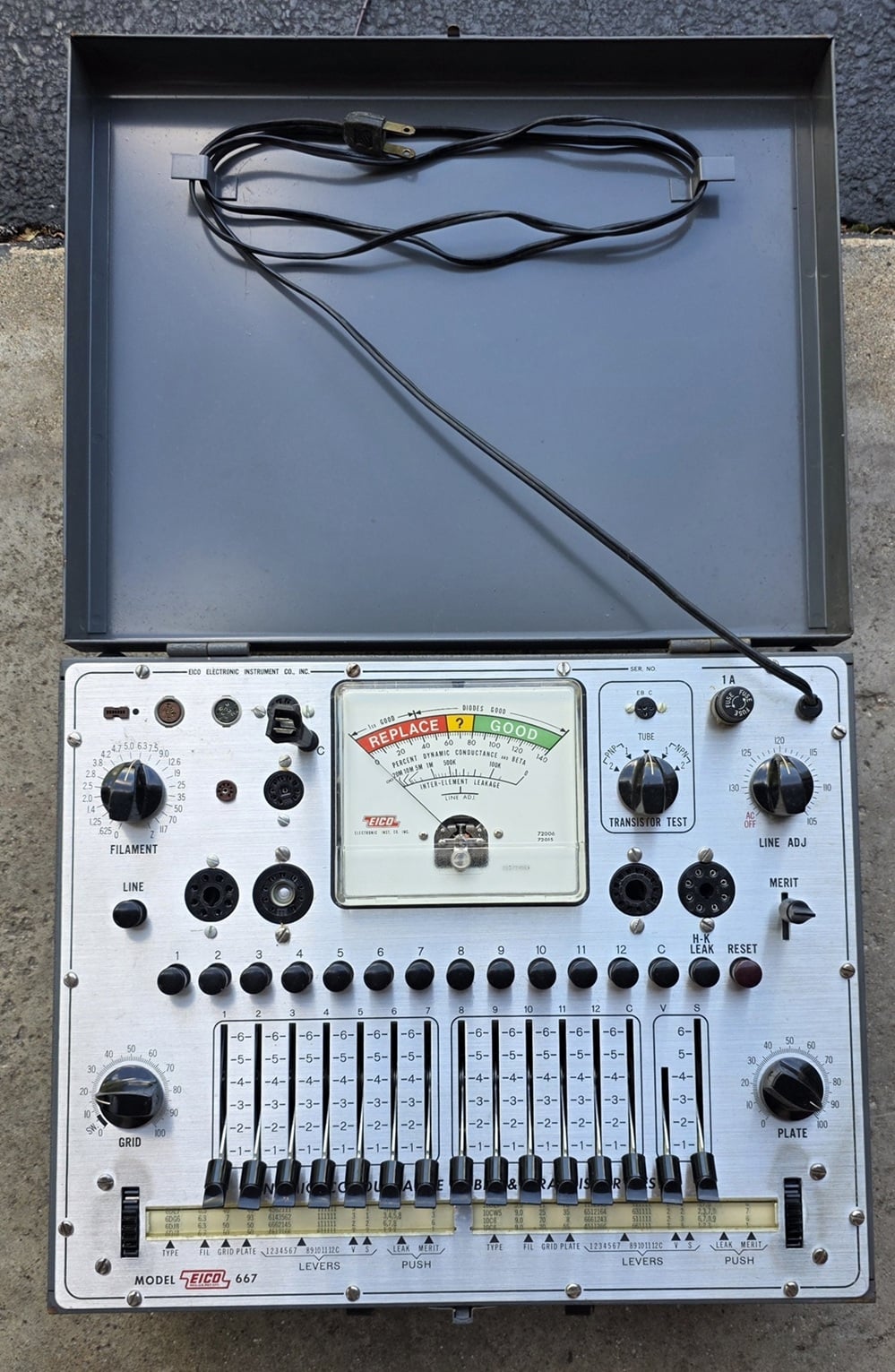
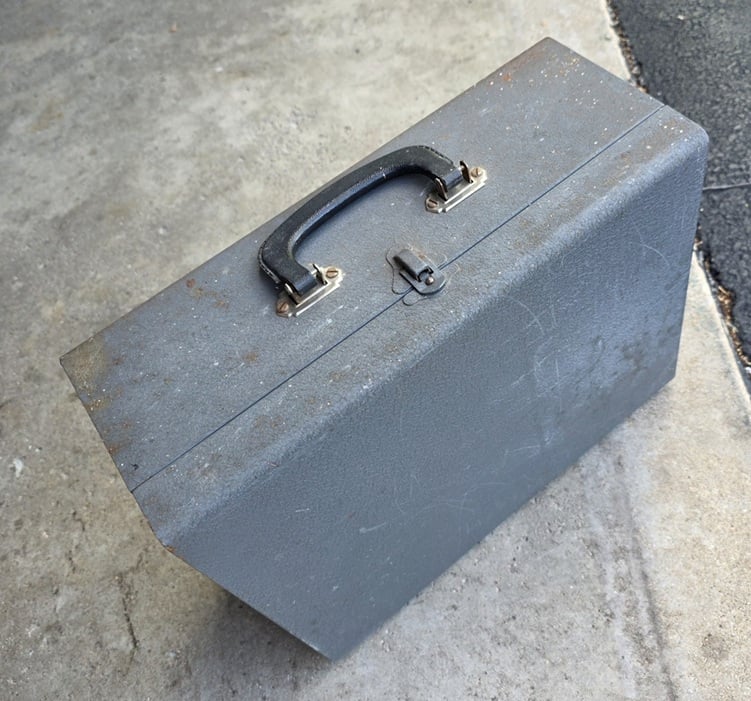
The cabinet isn't too shabby but could use a repaint.
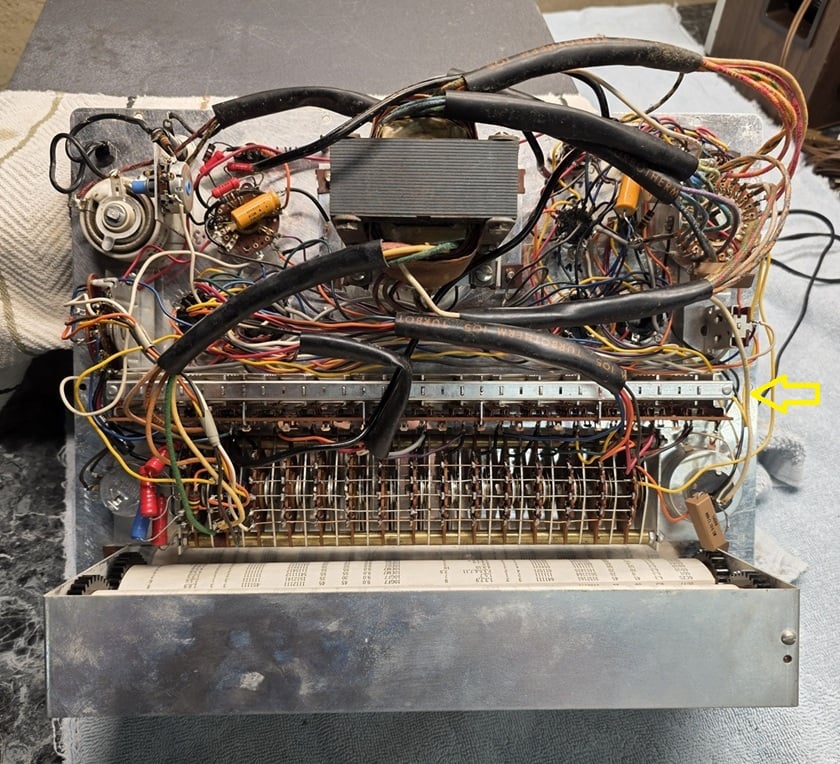
Some of the 1 through 12 and C buttons were sticking and would not reset. The switch actuators are all aluminum passing through an aluminum bar along with the reset bar, so no rust to deal with and no debris on them. I found if I pushed the U channel bar actuators pass through down (arrow points to it), they all reset properly. So I gave that bar a little over bend downward and that fixed it.
The front panel is very thin and flexes easily from weight of transformer when removed from cabinet.
Some slide and rotary switches to clean so I removed the tube data roll chart assembly.
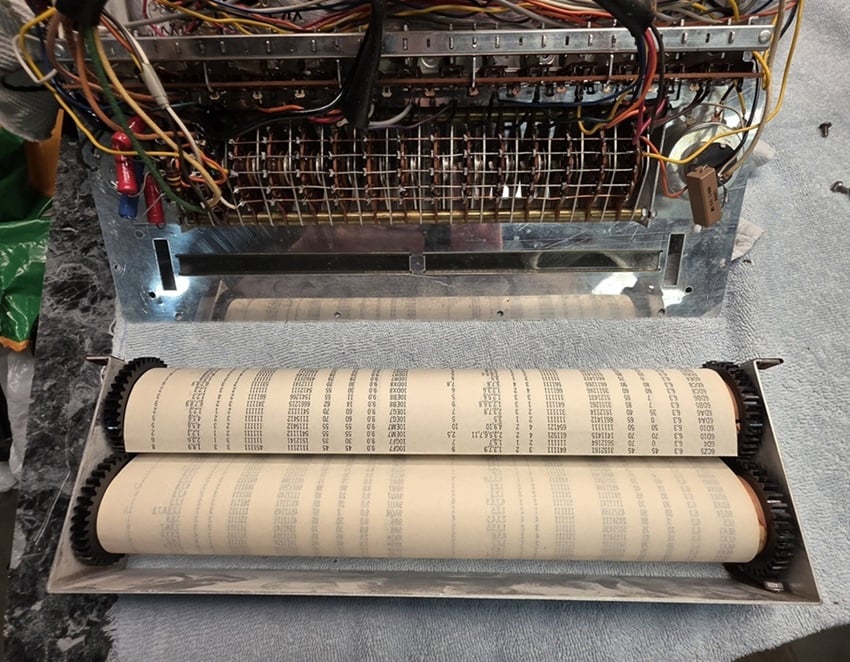
I taped over the plastic tube chart windows. I rolled some paper towel strips around a screwdriver and taped the ends. They help absorb the DeOxit runoff. I use canned air to blow excess cleaner out.
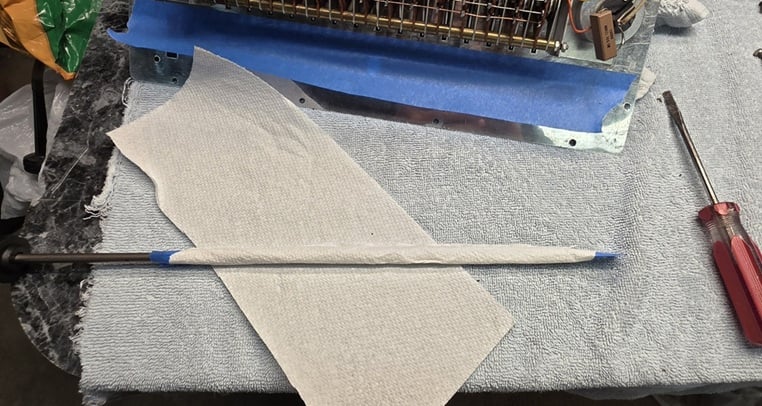
Hard to see but I inserted the rolled up paper towel under the slide switches. I don't like to spray DeOxit in some situations as it can make a mess to clean up. I spray some in a small container and use an eye dropper to apply it. The open slide switches actuated by the front panel buttons are above the shiny bar at bottom of pic.
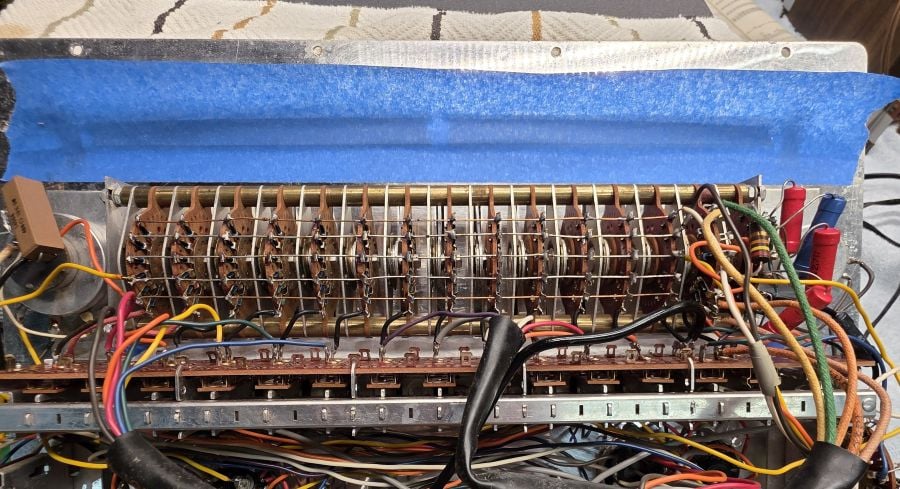
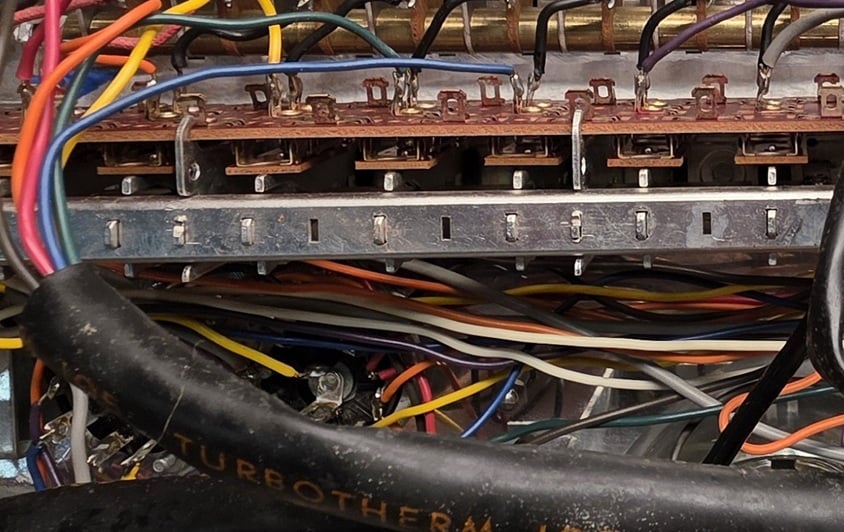
I used an in circuit capacitor tester on the caps and found nothing no go, so I powered it up. Press line button and turn the line adjust voltage knob until the needle is on the line.
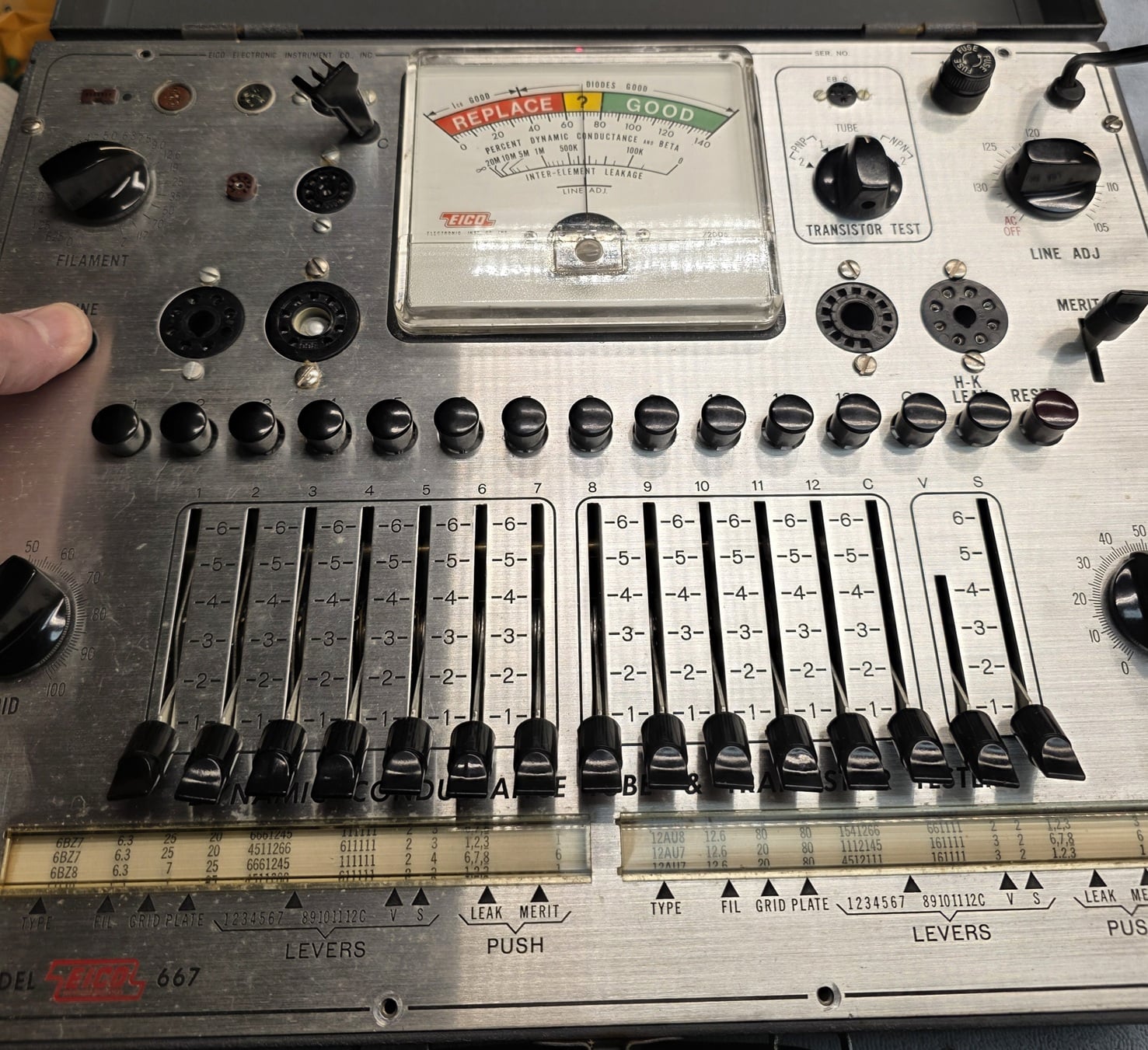
I straighten tube pins if needed before testing.
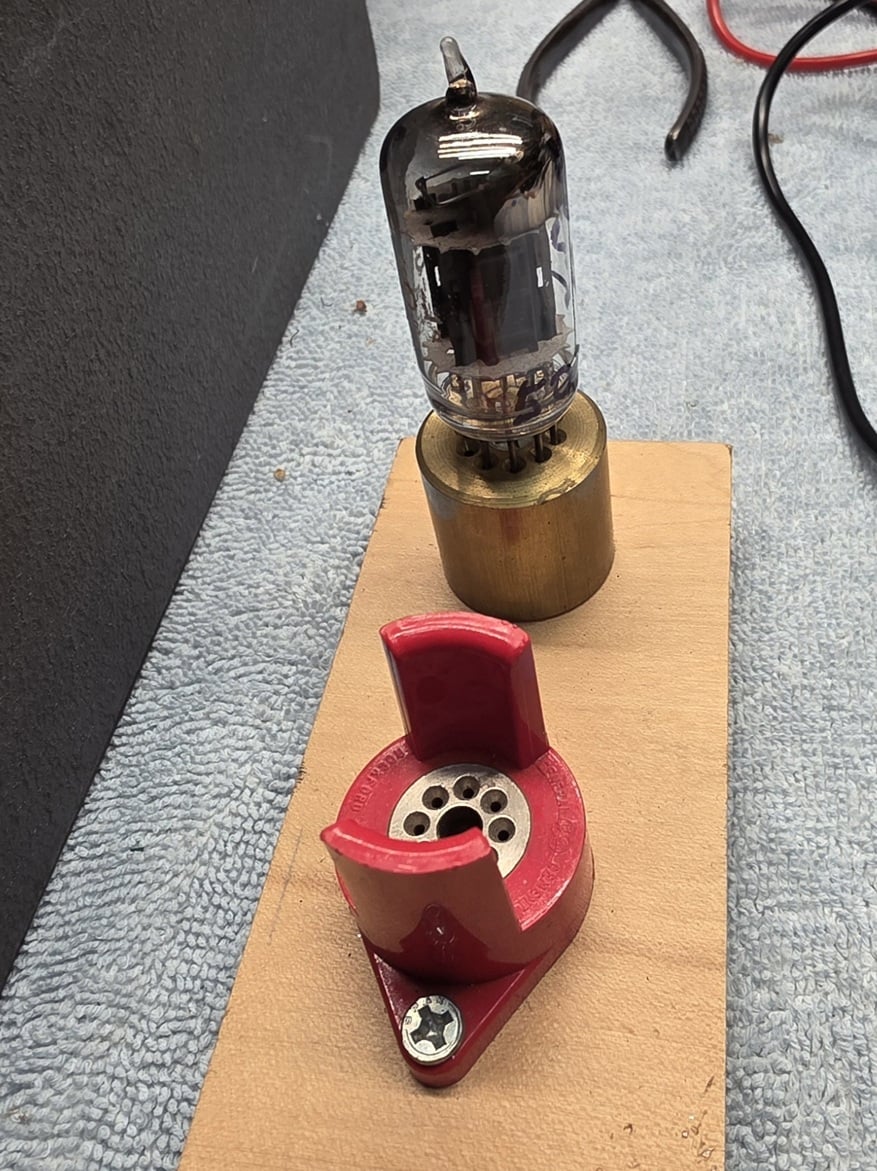
Testing an Amperex 12AU7. I've read at Antique Radio forum the chart has errors. They also mentioned a mod to monitor the plate current while the merit test is being performed using an external ammeter. It requires breaking into a circuit and installing two banana jacks. If not using amp meter you have to insert a jumper to use tester. I'll have to research that further. If I do perform that mod, I'll use tip jacks that would accept standard multimeter probes.
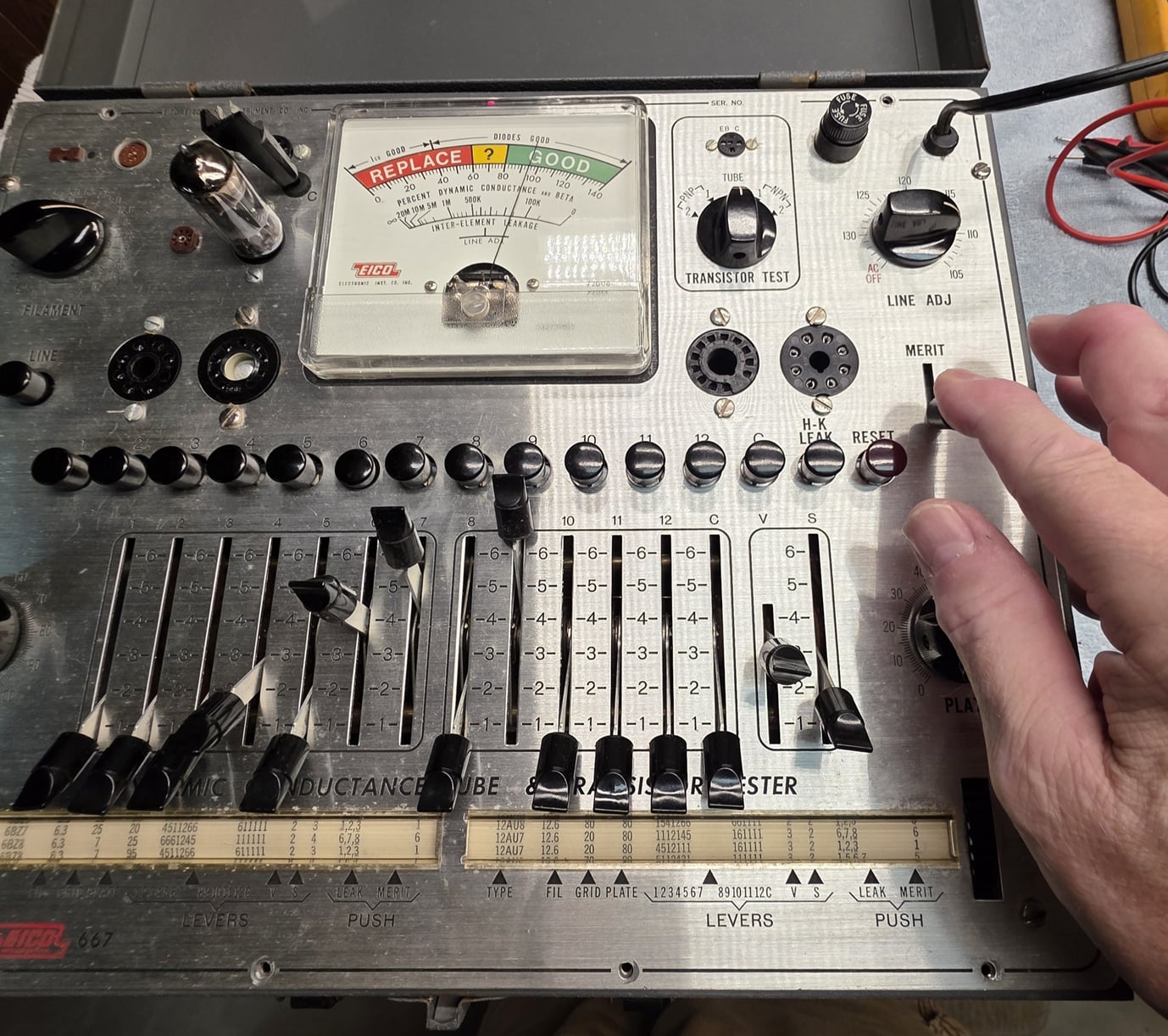
I found later tube charts, schematics and manuals to look through.
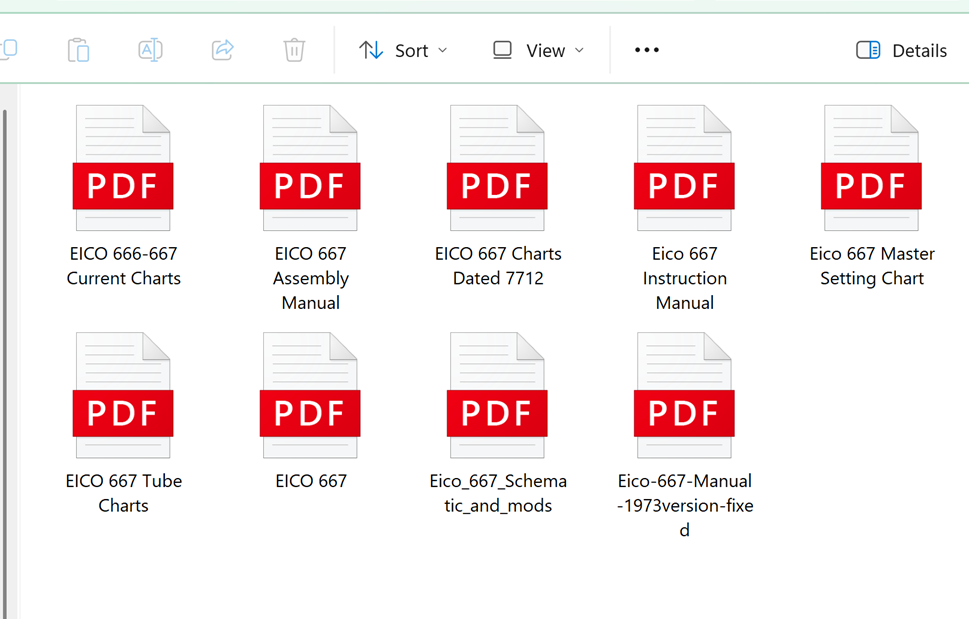
The cabinet isn't too shabby but could use a repaint.
Some of the 1 through 12 and C buttons were sticking and would not reset. The switch actuators are all aluminum passing through an aluminum bar along with the reset bar, so no rust to deal with and no debris on them. I found if I pushed the U channel bar actuators pass through down (arrow points to it), they all reset properly. So I gave that bar a little over bend downward and that fixed it.
The front panel is very thin and flexes easily from weight of transformer when removed from cabinet.
Some slide and rotary switches to clean so I removed the tube data roll chart assembly.
I taped over the plastic tube chart windows. I rolled some paper towel strips around a screwdriver and taped the ends. They help absorb the DeOxit runoff. I use canned air to blow excess cleaner out.
Hard to see but I inserted the rolled up paper towel under the slide switches. I don't like to spray DeOxit in some situations as it can make a mess to clean up. I spray some in a small container and use an eye dropper to apply it. The open slide switches actuated by the front panel buttons are above the shiny bar at bottom of pic.
I used an in circuit capacitor tester on the caps and found nothing no go, so I powered it up. Press line button and turn the line adjust voltage knob until the needle is on the line.
I straighten tube pins if needed before testing.
Testing an Amperex 12AU7. I've read at Antique Radio forum the chart has errors. They also mentioned a mod to monitor the plate current while the merit test is being performed using an external ammeter. It requires breaking into a circuit and installing two banana jacks. If not using amp meter you have to insert a jumper to use tester. I'll have to research that further. If I do perform that mod, I'll use tip jacks that would accept standard multimeter probes.
I found later tube charts, schematics and manuals to look through.
Salk SoundScape 8's * Audio Research Reference 3 * Bottlehead Eros Phono * Park's Audio Budgie SUT * Krell KSA-250 * Harmonic Technology Pro 9+ * Signature Series Sonore Music Server w/Deux PS * Roon * Gustard R26 DAC / Singxer SU-6 DDC * Heavy Plinth Lenco L75 Idler Drive * AA MG-1 Linear Air Bearing Arm * AT33PTG/II & Denon 103R * Richard Gray 600S * NHT B-12d subs * GIK Acoustic Treatments * Sennheiser HD650 *
Comments
-
-
Thanks, but I'll pass. I read if it has ****, tubes or tires, you're eventually gonna have trouble with it. Salk SoundScape 8's * Audio Research Reference 3 * Bottlehead Eros Phono * Park's Audio Budgie SUT * Krell KSA-250 * Harmonic Technology Pro 9+ * Signature Series Sonore Music Server w/Deux PS * Roon * Gustard R26 DAC / Singxer SU-6 DDC * Heavy Plinth Lenco L75 Idler Drive * AA MG-1 Linear Air Bearing Arm * AT33PTG/II & Denon 103R * Richard Gray 600S * NHT B-12d subs * GIK Acoustic Treatments * Sennheiser HD650 *
-
I was just looking at tube testers yesterday. I have some old Philco radios and a McIntosh MC-40 that I want to restore, or at least see if they are worth restoring.Stan
Main 2ch:
Polk LSi15 (DB840 upgrade), Parasound: P/LD-1100, HCA-1000A; Denon: DVD-2910, DRM-800A; Benchmark DAC1, Monster HTS3600-MKII, Grado SR-225i; Technics SL-J2, Parasound PPH-100.
HT:
Marantz SR7010, Polk: RTA11TL (RDO198-1, XO and Damping Upgrades), S4, CS250, PSW110 , Marantz UD5005, Pioneer PL-530, Panasonic TC-P42S60
Other stuff:
Denon: DRA-835R, AVR-888, DCD-660, DRM-700A, DRR-780; Polk: S8, Monitor 5A, 5B, TSi100, RM7, PSW10 (DXi104 upgrade); Pioneer: CT-6R; Onkyo CP-1046F; Ortofon OM5E, Marantz: PM5004, CD5004, CDR-615; Parasound C/PT-600, HCA-800ii, Sony CDP-650ESD, Technics SA 5070, B&W DM601 -
What brand and model number testers? I had sold my Brent Jesse Hickok 6000 to Aaron and had to borrow it to repair Ed the SRT kings Scott 340 and Scott 399 tube receivers along with the tubed 335 FM stereo multiplexer.
The 399 had 23 tubes and was FM mono. It was designed for simulcast FM, one channel on AM, the other on FM. The 399 was the most challenging thing this hobbyist fixed. I had to source an FM signal generator and fix that before learning complex to me FM alignment. Someone had got into the 335 and really messed it up.
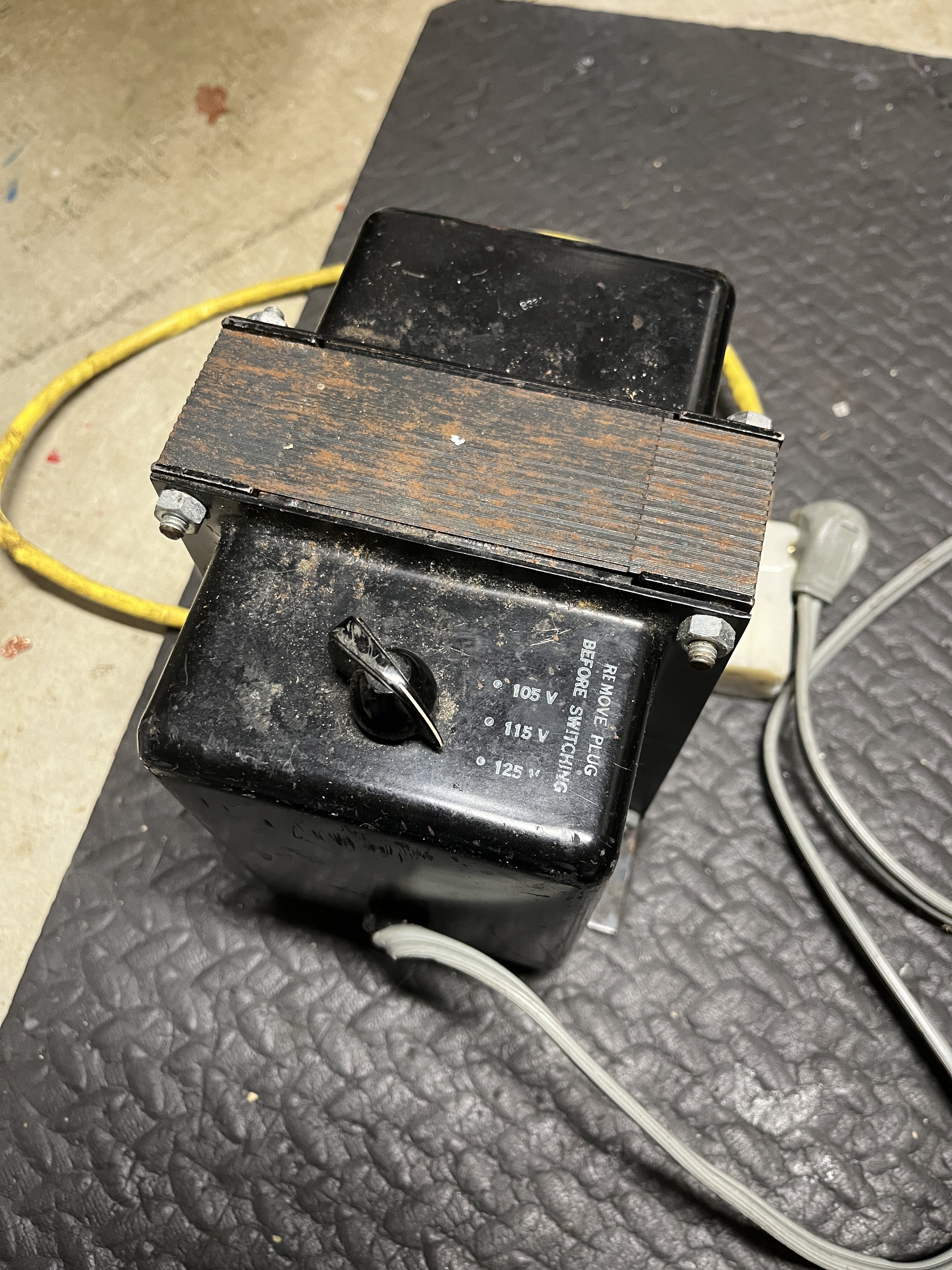
What you run into on old tube gear designed for 115/117vac running at todays higher line voltages (I can peak at 125vac here) are higher tube heater and plate voltages that greatly exceed max specs. If you replace old selenium rectifiers with modern diodes, you have to reduce the resulting higher rectified voltage. A variac is a must so you can adjust to max line voltage you'll see if line voltage is down at time you are working on it.
The Hickok 6000 is a mutual conductance tester. They measure dynamic gain and amplification. Great for tube matching. A good/bad tester like this Eico is better than nothing if you have tube gear. Mutual conductance testers are typically more expensive than a good/bad one.
I found while my Eico works, it needs some work. While the precision resistors are 1%, there are a few old carbon that need replacing along with a couple capacitors. The Antique Radio forum had some great info and mods regarding this Eico 667 and the previous model 666. Salk SoundScape 8's * Audio Research Reference 3 * Bottlehead Eros Phono * Park's Audio Budgie SUT * Krell KSA-250 * Harmonic Technology Pro 9+ * Signature Series Sonore Music Server w/Deux PS * Roon * Gustard R26 DAC / Singxer SU-6 DDC * Heavy Plinth Lenco L75 Idler Drive * AA MG-1 Linear Air Bearing Arm * AT33PTG/II & Denon 103R * Richard Gray 600S * NHT B-12d subs * GIK Acoustic Treatments * Sennheiser HD650 *
 -
Oooo, good info about the line voltage. I hadn't thought of that. My father had a Hickok 800A and gave it away along with his Sylvania tube caddy full of various tubes . Apparently, he forgot that I wanted them :'( .
Hickoks are generally too expensive for my present use. I may look for an Eico, Heathkit or something mainly to get a good / bad indication.Stan
Main 2ch:
Polk LSi15 (DB840 upgrade), Parasound: P/LD-1100, HCA-1000A; Denon: DVD-2910, DRM-800A; Benchmark DAC1, Monster HTS3600-MKII, Grado SR-225i; Technics SL-J2, Parasound PPH-100.
HT:
Marantz SR7010, Polk: RTA11TL (RDO198-1, XO and Damping Upgrades), S4, CS250, PSW110 , Marantz UD5005, Pioneer PL-530, Panasonic TC-P42S60
Other stuff:
Denon: DRA-835R, AVR-888, DCD-660, DRM-700A, DRR-780; Polk: S8, Monitor 5A, 5B, TSi100, RM7, PSW10 (DXi104 upgrade); Pioneer: CT-6R; Onkyo CP-1046F; Ortofon OM5E, Marantz: PM5004, CD5004, CDR-615; Parasound C/PT-600, HCA-800ii, Sony CDP-650ESD, Technics SA 5070, B&W DM601 -
Sad about losing out on that 800A!
I ended up assembling a bucking transformer for the 399/335 combo rather than add resistance for the highest possible AC and resulting drop in performance at lowest line voltage. It shows line in voltage and offers Ed three choices. Stay with actual line in and two steps of reduction while displaying line out voltage. You just have to use a transformer that will supply the amperage the load consumes. One has to also watch tube heater voltage as well and keep it within 5% +- though some accept 10%. Ken, SeleniumFalcon, reminded me of that as I was concentrating on the plate voltage. He pointed me to an article or study showing significant reduction of tube life with 10% +- heater voltage.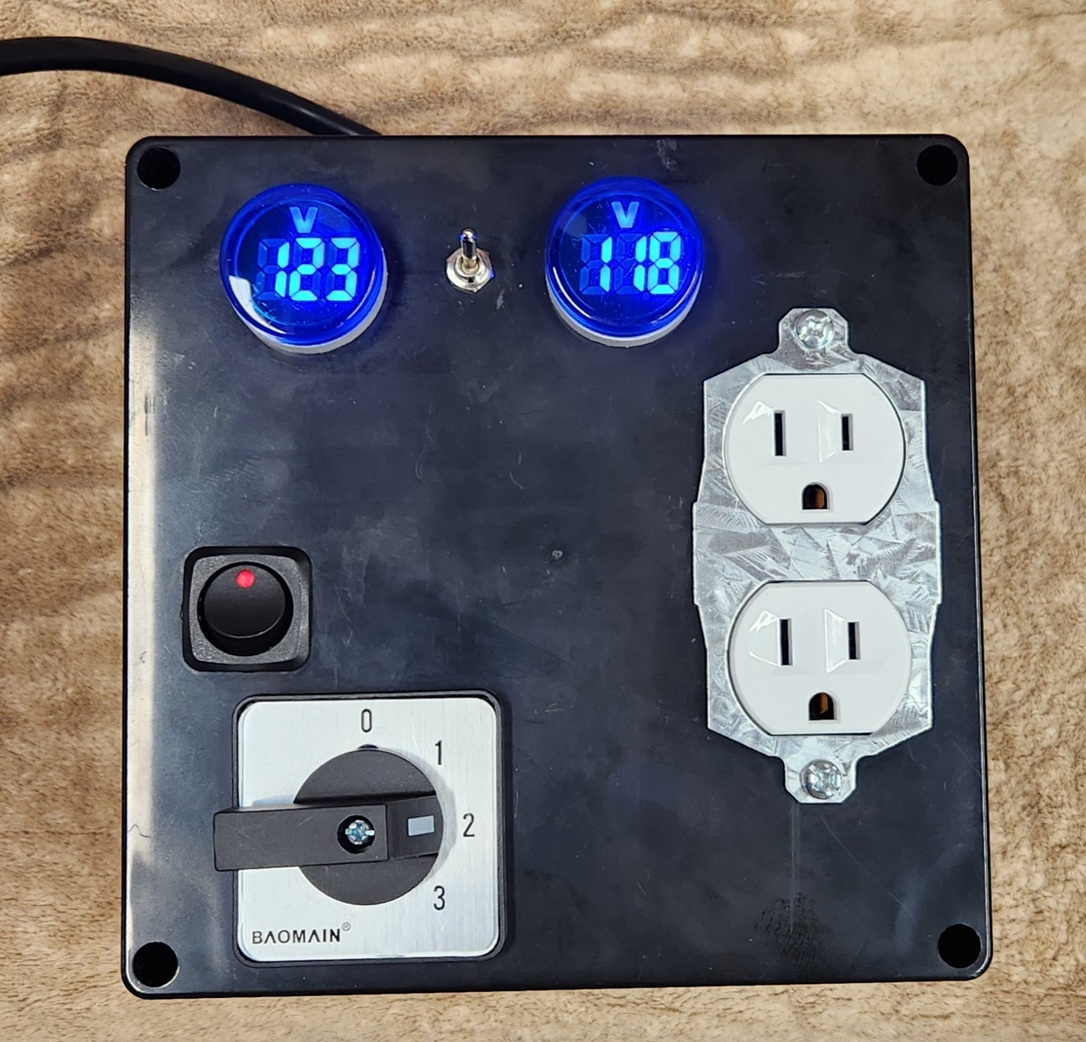
Salk SoundScape 8's * Audio Research Reference 3 * Bottlehead Eros Phono * Park's Audio Budgie SUT * Krell KSA-250 * Harmonic Technology Pro 9+ * Signature Series Sonore Music Server w/Deux PS * Roon * Gustard R26 DAC / Singxer SU-6 DDC * Heavy Plinth Lenco L75 Idler Drive * AA MG-1 Linear Air Bearing Arm * AT33PTG/II & Denon 103R * Richard Gray 600S * NHT B-12d subs * GIK Acoustic Treatments * Sennheiser HD650 * -
Five carbon resistors need replacing, tested well beyond their 5%/10% tolerance. The cement were close but I'll replace them with 5W wire wound. The 1% all lived up to their tolerance. It has been suggested to replace the two 10uf caps with 22uf/47uf. Based on soldering job in some places I believe this was a kit.
Tube/transistor rotary switch and R18 Line Cal pot.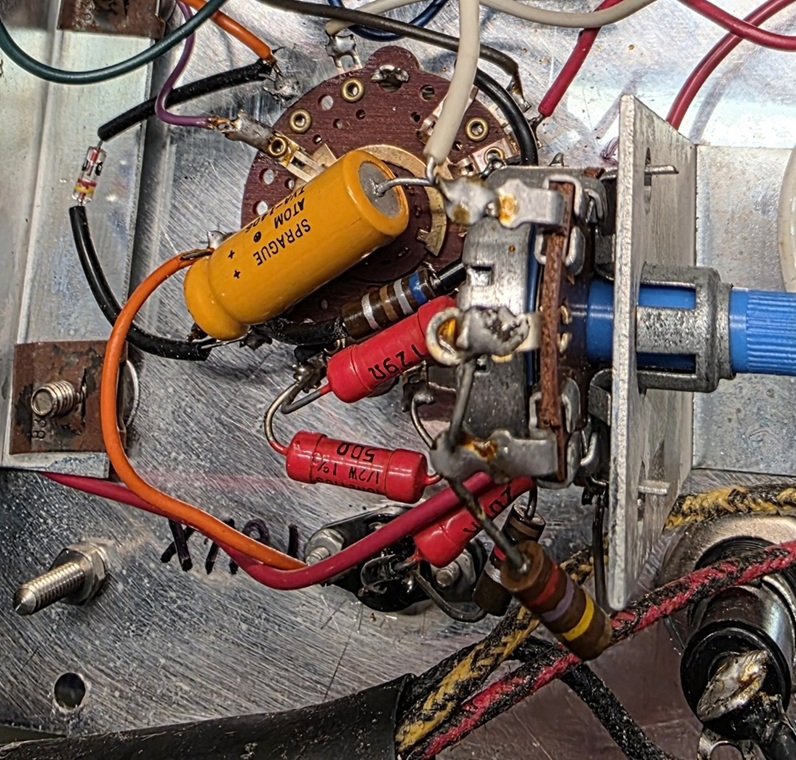
By R7 Leakage Cal pot.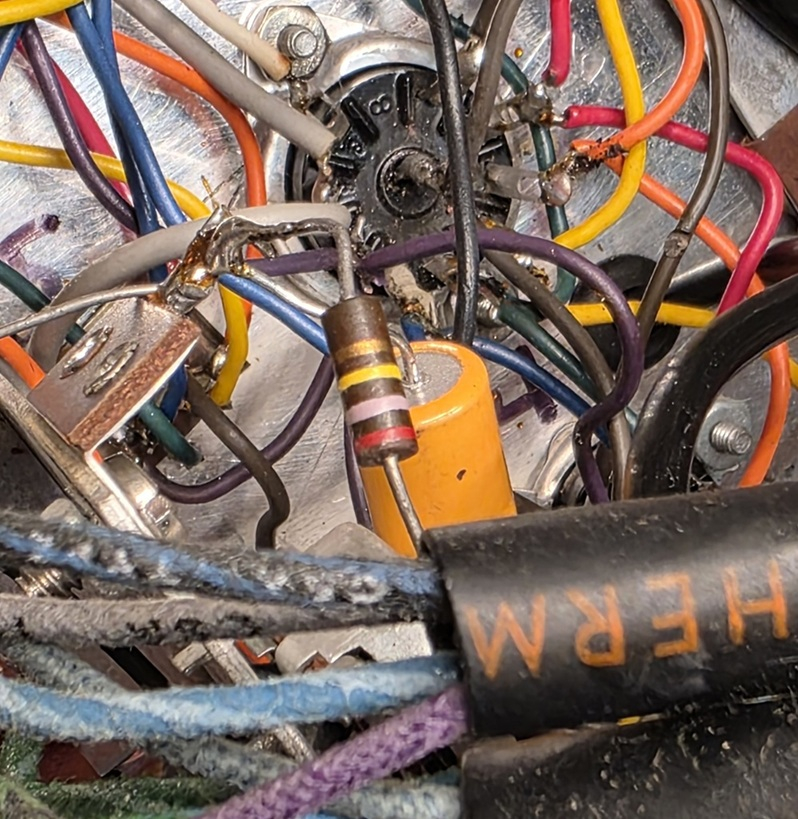
At end of rotary gang switches.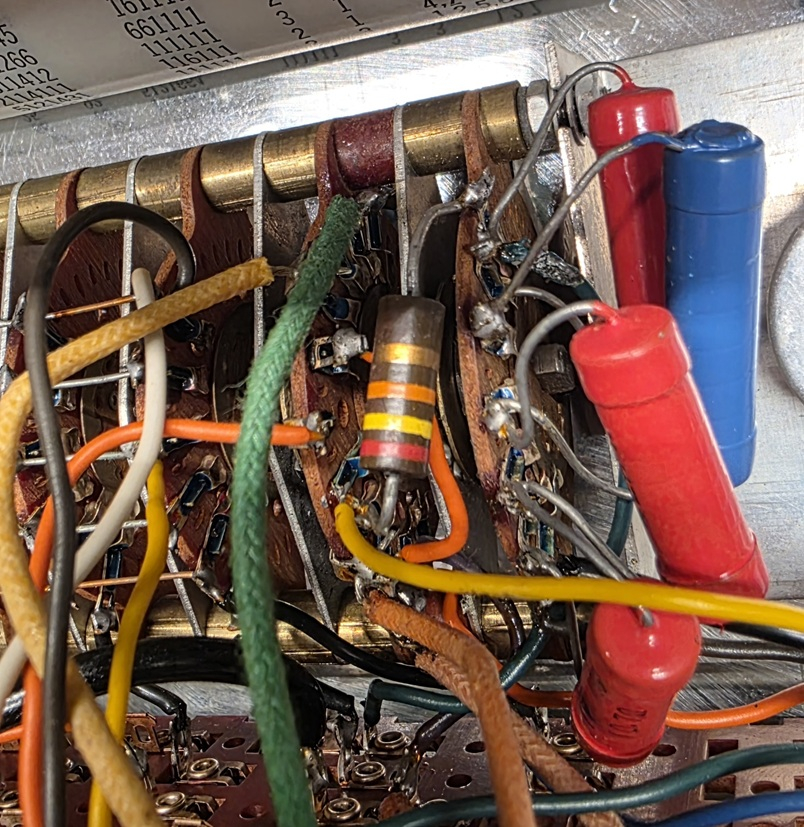
Across the grid pot.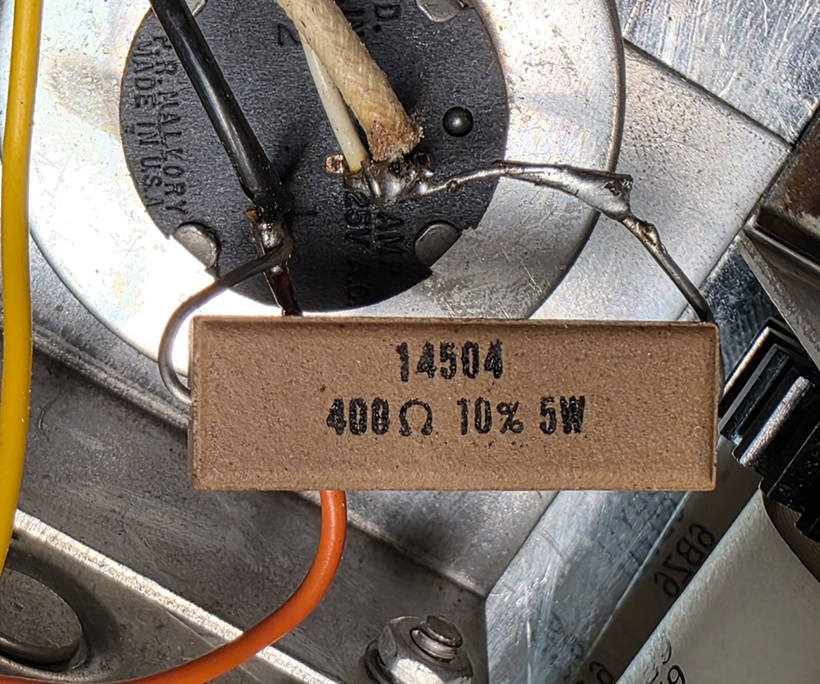
Across the filament selector.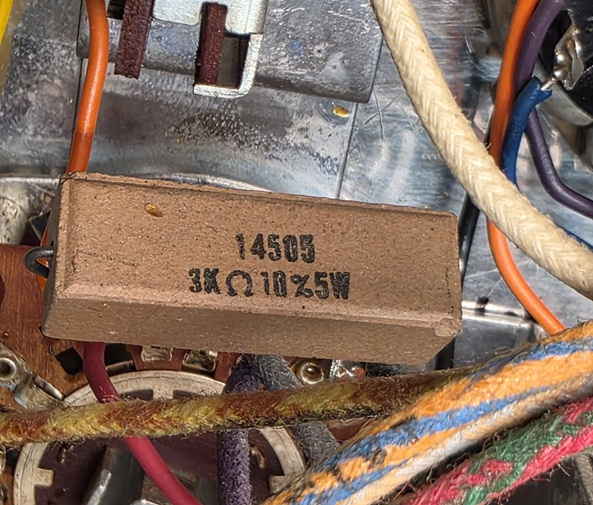
Salk SoundScape 8's * Audio Research Reference 3 * Bottlehead Eros Phono * Park's Audio Budgie SUT * Krell KSA-250 * Harmonic Technology Pro 9+ * Signature Series Sonore Music Server w/Deux PS * Roon * Gustard R26 DAC / Singxer SU-6 DDC * Heavy Plinth Lenco L75 Idler Drive * AA MG-1 Linear Air Bearing Arm * AT33PTG/II & Denon 103R * Richard Gray 600S * NHT B-12d subs * GIK Acoustic Treatments * Sennheiser HD650 * -
This might do the job.
Stan
Main 2ch:
Polk LSi15 (DB840 upgrade), Parasound: P/LD-1100, HCA-1000A; Denon: DVD-2910, DRM-800A; Benchmark DAC1, Monster HTS3600-MKII, Grado SR-225i; Technics SL-J2, Parasound PPH-100.
HT:
Marantz SR7010, Polk: RTA11TL (RDO198-1, XO and Damping Upgrades), S4, CS250, PSW110 , Marantz UD5005, Pioneer PL-530, Panasonic TC-P42S60
Other stuff:
Denon: DRA-835R, AVR-888, DCD-660, DRM-700A, DRR-780; Polk: S8, Monitor 5A, 5B, TSi100, RM7, PSW10 (DXi104 upgrade); Pioneer: CT-6R; Onkyo CP-1046F; Ortofon OM5E, Marantz: PM5004, CD5004, CDR-615; Parasound C/PT-600, HCA-800ii, Sony CDP-650ESD, Technics SA 5070, B&W DM601


