Digital Interconnect Cables - What's Your Experience?
Comments
-
That supports my premise, I think. I understand the delivery of the information is essentially the same, but the source of transmission is binary and has limits of what is acceptable and what is not. The file is perfect, or it is un-readable. Once it is processed by a DAC, and on it's way to another source, whether 're-read' or ended in a signal determines it's eventual sound signature.
To get back to the original question. Can one USB cable transfer binary information with a better sound quality than another? Have not seen anything to make me think otherwise.
-
The file is perfect, or it is un-readable. Once it is processed by a DAC, and on it's way to another source, whether 're-read' or ended in a signal determines it's eventual sound signature.
This is a popular misconception. However, a "perfect" digital file, meaning one in which the differences between high and low are clearly distinguishable, will still have varying amounts of noise corruption in every bit.
As I stated previously in this thread, there is no such thing as a "digital" signal that consists only of high and low pulses. A "digital" signal is actually an analog signal with quasi-digital waveform characteristics. Since a digital signal is actually an analog signal, it is subject to the same noise corruption mechanisms as any other analog signal. However, a digital signal will be less affected by some noise mechanisms that affect signal amplitude.To get back to the original question. Can one USB cable transfer binary information with a better sound quality than another? Have not seen anything to make me think otherwise.
I started this thread with the same question. So far, I have not heard a difference among the USB cables I have auditioned, but it is theoretically possible. The key thing to grasp is that real world "binary information" does not consist of just high (1) and low (0) square wave pulses. There are deformations in the waveform which are analog in nature and there is noise being transmitted along with the digital signal. That noise can be transmitted all the way through the DAC and have an audible effect on sound quality.
Proud and loyal citizen of the Digital Domain and Solid State Country! -
A file transfer is a transfer of binary information. Any information sent over USB, coax, HDMI, SATA, IDE, or optical is all the same, whether it's a MP3, FLAC, video, power point presentation, or word document: 1's and 0's.Don't think so. The coax is transporting a converted signal, whereas usb transfers files. Never seen a dig coax out of a hard drive. My point is that we are talking about file transfer, not a DAC converted signal.afterburnt wrote: »They didn't speak a word of English, they were from South Carolina.
Village Idiot of Club Polk -
http://www.soundonsound.com/sos/feb08/articles/digitalaudio.htm
http://www.soundonsound.com/sos/jun98/articles/digital2.html
Pretty in depth article. Talks about cable induced clock pulse differences, such as DK was observing.afterburnt wrote: »They didn't speak a word of English, they were from South Carolina.
Village Idiot of Club Polk -
From your first link.
"Another source of jitter (the strongest source these days) is cable-induced. If you pass digital signals down a long cable (or fibre), the nice square-wave signals that enter degrade into something that looks more like shark fins at the other end, with slowed rise and fall times. This is caused by the cable's capacitance (or the fibre's internal light dispersion), so the longer the cable, the worse the degradation becomes. That's why digital cables need to be wide-bandwidth, low-capacitance types."Lumin X1 file player, Westminster Labs interconnect cable
Sony XA-5400ES SACD; Pass XP-22 pre; X600.5 amps
Magico S5 MKII Mcast Rose speakers; SPOD spikes
Shunyata Triton v3/Typhon QR on source, Denali 2000 (2) on amps
Shunyata Sigma XLR analog ICs, Sigma speaker cables
Shunyata Sigma HC (2), Sigma Analog, Sigma Digital, Z Anaconda (3) power cables
Mapleshade Samson V.3 four shelf solid maple rack, Micropoint brass footers
Three 20 amp circuits. -
That supports my premise, I think. I understand the delivery of the information is essentially the same, but the source of transmission is binary and has limits of what is acceptable and what is not. The file is perfect, or it is un-readable. Once it is processed by a DAC, and on it's way to another source, whether 're-read' or ended in a signal determines it's eventual sound signature.
To get back to the original question. Can one USB cable transfer binary information with a better sound quality than another? Have not seen anything to make me think otherwise.
Why would one digital cable (AES/EBU, Coaxial, USB, or Ethernet (Cat.5, 6, etc) be unaffected by the laws of physics? They are all transporting the digital signal(s) in the same fashion. All digital cable types use some type of transporting material (i.e. Metals such as copper, silver, gold, platinum, etc.; or more exotic materials like liquid ceramic). Regardless of what medium is used to transport the digital signal, all electrons are subject to the affects of natural laws.
There are design aspects of the geometry, metallurgy (i.e. PCOCC as an example), and dialectric(s) used that can affect the amount of noise introduced and the speed at which the digital signal travels through the digital cable. This can affect the quality of the digital signal the DAC receives and thus the quality of the audio you hear. To think this is not true of ANY digital cable is a falsehood. This is not to say that some digital cables don't reduce the amount of affects on digital signals, but ALL cables affect the digital signal. To think otherwise would be disregarding physical laws.
Taken from a recent Audioholics reply regarding "Club Polk" and Polk speakers:
"I'm yet to hear a Polk speaker that merits more than a sentence and 60 seconds discussion."
My response is: If you need 60 seconds to respond in one sentence, you probably should't be evaluating Polk speakers.....
"Green leaves reveal the heart spoken Khatru"- Jon Anderson
"Have A Little Faith! And Everything You'll Face, Will Jump From Out Right On Into Place! Yeah! Take A Little Time! And Everything You'll Find, Will Move From Gloom Right On Into Shine!"- Arthur Lee -
Makes sense and I am a neophyte in this regard. Just asking questions and trying to wrap my head around the difference between file transfer and a processed signal.
When using my ext hard drive, the files get loaded to my bluray through the usb. The DAC in the blurry converts the signal and goes to the AVR via HDMI.
So am I to assume that different USB cables can do a better job of transferring the files that make an audible difference? I don't know and am not disputing anything, just interested, and a bit skeptical. -
If your Bluray player is connected to your AVR via HDMI then you are using the DAC in your AVR. HDMI does not carry an analog signal.When using my ext hard drive, the files get loaded to my bluray through the usb. The DAC in the blurry converts the signal and goes to the AVR via HDMI.afterburnt wrote: »They didn't speak a word of English, they were from South Carolina.
Village Idiot of Club Polk -
Makes sense and I am a neophyte in this regard. Just asking questions and trying to wrap my head around the difference between file transfer and a processed signal.
Two people have already explained that there is not a difference between a file transfer and the digital signal processed by a media server or a DAC. They are both digital signals consisting of high and low pulses.So am I to assume that different USB cables can do a better job of transferring the files that make an audible difference?
Yes you can assume that. Any time a signal goes through a cable, it is changed in some way. Whether the change is audible depends on the type and degree of change, the resolution of your audio gear, your ears, listening room, and the characteristics of the recording.Proud and loyal citizen of the Digital Domain and Solid State Country! -
Just curious DK, when a file hits your BDP 2 from your storage device, does it convert the signal in anyway or does it simply pass it on ? Some convert to analog then re-digitalize the signal, stripping out the jitter and re-clocking before sending it out again. It does have to read the signal in order to store it, is that all done in the digital domain ?
That could be a good thing or a bad thing, depending. I would think though, the less monkeying around with a signal, the better.HT SYSTEM-
Sony 850c 4k
Pioneer elite vhx 21
Sony 4k BRP
SVS SB-2000
Polk Sig. 20's
Polk FX500 surrounds
Cables-
Acoustic zen Satori speaker cables
Acoustic zen Matrix 2 IC's
Wireworld eclipse 7 ic's
Audio metallurgy ga-o digital cable
Kitchen
Sonos zp90
Grant Fidelity tube dac
B&k 1420
lsi 9's -
Just curious DK, when a file hits your BDP 2 from your storage device, does it convert the signal in anyway or does it simply pass it on ? Some convert to analog then re-digitalize the signal, stripping out the jitter and re-clocking before sending it out again. It does have to read the signal in order to store it, is that all done in the digital domain ?
The BDP-2 does not do any signal conversion. It only provides a low noise path for the signal to be output as either AES/EBU, coax, or USB. It also provides an efficient means for storing and managing large music libraries.The computer geek in me argues that it shouldn't make any different as long as it passes, it should be identical.
It doesn't make a difference with digital data that is not particularly sensitive to noise and time relationships. An email data stream only cares about maintaining the difference between high and low pulses. A voice, video, or music data stream cares about the shape of pulses and the time relationships between pulses.The computer guy in me says Bits are Bits and you can't change that.
The audiophile in me has heard otherwise.
If bits were just bits, telecommunications and computer networking companies would not have different digital network design criteria for data-only networks compared to those that transport time sensitive traffic such as voice and video.
Proud and loyal citizen of the Digital Domain and Solid State Country! -
At this point, a self-proclaimed expert needs to step-in and assure you guys that what you are hearing is impossible. In fact, it is because you are delusional that you think you hear a difference.

Zltful, thanks for the CAT5/CAT6 info. When I read about audiophile Ethernet cables I would wonder if just going to CAT6 or CAT7 would improve the sound.Lumin X1 file player, Westminster Labs interconnect cable
Sony XA-5400ES SACD; Pass XP-22 pre; X600.5 amps
Magico S5 MKII Mcast Rose speakers; SPOD spikes
Shunyata Triton v3/Typhon QR on source, Denali 2000 (2) on amps
Shunyata Sigma XLR analog ICs, Sigma speaker cables
Shunyata Sigma HC (2), Sigma Analog, Sigma Digital, Z Anaconda (3) power cables
Mapleshade Samson V.3 four shelf solid maple rack, Micropoint brass footers
Three 20 amp circuits. -
Usually an electrical engineer.At this point, a self-proclaimed expert needs to step-in and assure you guys that what you are hearing is impossible. In fact, it is because you are delusional that you think you hear a difference..
afterburnt wrote: »They didn't speak a word of English, they were from South Carolina.
Village Idiot of Club Polk -
I think most electrical engineers who have some knowledge of signal theory understand that a signal is going to be changed by passing through a conductor and that the change may or may not be audible.
There is actually an audiophile community within the Institute of Electrical and Electronics Engineers whose members have published many papers relating to stereophonic performance and perception.
Proud and loyal citizen of the Digital Domain and Solid State Country! -
As in this?I read someone say that once they invested significantly in improving the power aspect, differences in cabling became less apparent.
...or amplifier power?afterburnt wrote: »They didn't speak a word of English, they were from South Carolina.
Village Idiot of Club Polk -
Dk, as far as your original statement of not hearing differences in cables, I read someone say that once they invested significantly in improving the power aspect, differences in cabling became less apparent. This could have been what you were experiencing.
Yes, I made the same observation and comment. I also wondered in this thread if the differences in USB cables that others so easily hear is due to them using (electrically) noisy computers.
Yes, as in power quality treatment. In my case, in my two channel system, I have:
1. A PS Audio P10 ac regenerator for source components and preamplifiers.
2. Three dedicated 20 amp power circuits, each terminated with a passive power conditioner.
3. Low noise power cables.
4. Audio grade fuses.
Proud and loyal citizen of the Digital Domain and Solid State Country! -
Great stuff and thanks for putting up with me DK. Seems like, once again, it is the sum of the parts, from outlet to speaker.
-
Oh I am definitely delusional. At least my wife says so each time I drag her to look at the Magico Q5s.

Take her to see the new Q7 at $230,000, and she will love the Q5.
Lumin X1 file player, Westminster Labs interconnect cable
Sony XA-5400ES SACD; Pass XP-22 pre; X600.5 amps
Magico S5 MKII Mcast Rose speakers; SPOD spikes
Shunyata Triton v3/Typhon QR on source, Denali 2000 (2) on amps
Shunyata Sigma XLR analog ICs, Sigma speaker cables
Shunyata Sigma HC (2), Sigma Analog, Sigma Digital, Z Anaconda (3) power cables
Mapleshade Samson V.3 four shelf solid maple rack, Micropoint brass footers
Three 20 amp circuits. -
Note page 3 especially, addressing the interface/cable relationship with jitter:
http://www.stereophile.com/reference/1093jitter/index.htmlSource: Bluesound Node 2i - Preamp/DAC: Benchmark DAC2 DX - Amp: Parasound Halo A21 - Speakers: MartinLogan Motion 60XTi - Shop Rig: Yamaha A-S501 Integrated - Source: Rotel CD14MkII CD Player - Speakers: Elac Debut 2.0 B5.2 -
Live in ?? Dude....more like "buried" in.HT SYSTEM-
Sony 850c 4k
Pioneer elite vhx 21
Sony 4k BRP
SVS SB-2000
Polk Sig. 20's
Polk FX500 surrounds
Cables-
Acoustic zen Satori speaker cables
Acoustic zen Matrix 2 IC's
Wireworld eclipse 7 ic's
Audio metallurgy ga-o digital cable
Kitchen
Sonos zp90
Grant Fidelity tube dac
B&k 1420
lsi 9's -
Note page 3 especially, addressing the interface/cable relationship with jitter:
http://www.stereophile.com/reference/1093jitter/index.html
That's why I'm getting a separate word clock for my next DAC.
Proud and loyal citizen of the Digital Domain and Solid State Country! -
In regards to my Yamaha Aventage:There's also a DAC on Pure Ground circuitry and Ultra Low Jitter PLL circuitry to help optimise sound imaging.
Anybody know what PLL is? Is this something that is real world beneficial or just marketing?
EDIT: I just found this: http://truecircuits.com/images/pdfs/maneatis96b.pdf but it might as well be in Japanese.afterburnt wrote: »They didn't speak a word of English, they were from South Carolina.
Village Idiot of Club Polk -
I have never owned any systems that were above mid-fi, and have found that different S/PDIF cables can make a more than subtle difference. I have no experience with USB connected DACs . However, I would expect that cables would make far less difference for an an asynchronous USB connected DAC (which applies to most high and medium end DACs nowadays) as the DAC is in charge of the clock and jitter is vastly reduced. S/PDIF is a flawed interface from the start, as nobody back then even considered word clock jitter when it was designed, let alone the effects cable differences (particularly capacitance) or cable induced noise could have on it.
-
I don't think there is any one connection that doesn't have some sort of flaw attached, or possibility of one.
Music, from that first pluck of a guitar string to the first breath into those horns is by nature analog. Anything done after degrades the sound to some degree I would imagine. Nuthin' like sitting 10 feet away from a sax in a smoke filled bourbon smelling room in my book.
Master analog tapes...R2R....Vinyl.....is about as good as it gets portraying that musical environment. Anyone who grew up with it, knows the difference between digital. The closest we've yet to come is SACD or DSD files now, but then we still rely on cables and circuits to carry everything to the speakers, which by itself is another animal.
That's why the purist in audio will tell you do no harm....keep it simple stupid, less is more. The longer a signal stays in the digital domain, the more harm is done.
BUT.....we live in a world of convenience and that ideology of the purists doesn't fit well into modern lifestyles. So we compensate by adding personal flavor enhancers, tube buffers, different cables,dacs, speakers, rolling tubes, etc. In essence, we try to replace what has been taken out of the music, tone/flesh/air/weight, breath of dimension and so forth.
If a cable helps me get there, so be it. If a pre amp helps me get there, or some other piece of gear....so be it. The very first thought that should enter ones mind in any of these cable debates is....how does it sound to you. How it manages to do it is irrelevant to me, regardless of known scientific faults. Nothing else matters except the sound to your ears.HT SYSTEM-
Sony 850c 4k
Pioneer elite vhx 21
Sony 4k BRP
SVS SB-2000
Polk Sig. 20's
Polk FX500 surrounds
Cables-
Acoustic zen Satori speaker cables
Acoustic zen Matrix 2 IC's
Wireworld eclipse 7 ic's
Audio metallurgy ga-o digital cable
Kitchen
Sonos zp90
Grant Fidelity tube dac
B&k 1420
lsi 9's -
Digital coax - yes, subtle but noticeable with proper listening. About on par with hearing the differences between a switching power supply vs. linear power supply on my Squeeze Touch. Once you hear the differences, you can't go back.
USB - no, I haven't been able to discern any differences. But to be fair I haven't gone as high up the chain.
H9"Appreciation of audio is a completely subjective human experience. Measurements can provide a measure of insight, but are no substitute for human judgment. Why are we looking to reduce a subjective experience to objective criteria anyway? The subtleties of music and audio reproduction are for those who appreciate it. Differentiation by numbers is for those who do not".--Nelson Pass Pass Labs XA25 | EE Avant Pre | EE Mini Max Supreme DAC | MIT Shotgun S1 | Puritan Audio PSM136 Pwr Condtioner & Classic PC's | Legend L600 | Roon Nucleus 1 w/LPS - Tubes add soul! -
Further Study: USB Cables And System Master Clock
I was getting ready for another round of USB cable trials, but the arrival of the Revelation Audio Labs Prophecy Cryo-Silver Reference DualConduit USB cables caused a "slight" change of plans. I have both the dual-A plug and single-A plug versions of the RAL USB cable. Both versions have the signal and power wires in a separate cable. The dual-A plug version allows the disconnection of the power leg after the DAC has set up the USB connection. Removing the power leg is claimed to improve performance by lowering the noise floor. That claim was immediately confirmed.
I wasn't going to do another USB cable shootout until my dCS Debussy DAC arrived. My current DAC, the DAC section of a Cary Audio CD 306 Pro Version SACD player, does not have a USB input. With the assistance of dCS's North American general manager, I recently found a good deal on a used recertified current version dCS Puccini U-Clock master clock that came with full three year warranty.
The U-Clock acts as both a system master clock, for up to four digital components, and as a USB-to-SPDIF converter. The USB-to-SPDIF converter is particularly useful to me since the USB output of the BDP-2 is the lowest in sound quality among its output types (SPDIF is best, then AES)
I had never used an external master clock before, but I had modified a Sony CD player (CDP-XA7ES) and a Denon CD player (DCD-1650AR) with upgrade master clock kits. There were substantial performance improvements in both cases.
I can't currently get the full benefit (significant jitter reduction) of the U-Clock because all digital components in my system would have to be connected to it. The CD 306 does not have a word clock input. Out of curiosity, I wanted to see if the U-Clock alone would facilitate sonic differentiation in USB cables. It did.
The U-Clock conforms to the "Grade 1" AES11-2003 standard for master clocks and has a frequency deviation of no more than +/- 1 part per million. Grade 2 clocks have a frequency deviation of no more than 10 parts per million. The class of master clocks above AES Grade 1 are "atomic frequency standard" clocks, such as the Esoteric G-01 ($22,900). The G-01 has a frequency deviation of +/- 0.05 parts per billion. In cost comparison, the U-Clock's MSRP is $5,500.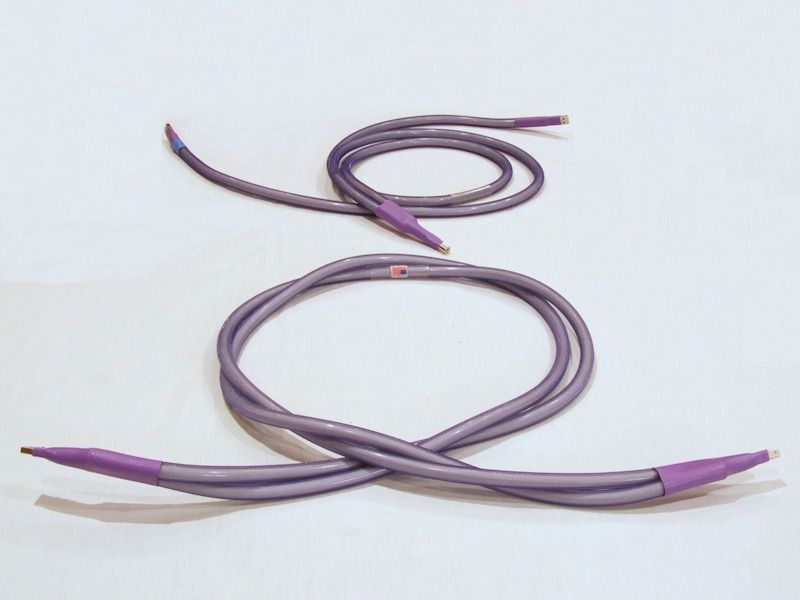
Figure 1. RAL USB cables: single-A plug version in foreground, dual-A plug version in rear.
Prior to this test, I had tried the following USB cables with a Cary Audio DMC-600SE DAC:
1. Generic computer grade USB cable #1 (free).
2. Generic computer grade USB cable #2 (free).
3. AudioQuest Coffee ($279).
4. AudioQuest Carbon ($129).
5. AudioQuest Forest ($35).
6. Pangea USB-PC ($35).
I didn't hear a difference among any of the above in the previous test.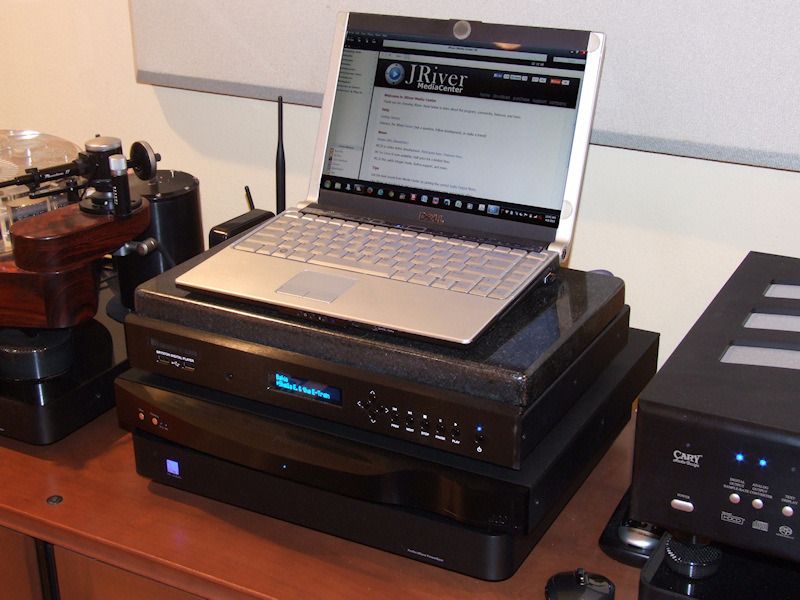
Figure 2. Center bottom to top: PS Audio PowerBase isolation platform, dCS Puccini U-Clock, Bryston BDP-2, granite slab for vibration damping, Dell M1330 laptop computer running JRiver Media Center.
The current test included the following USB cables:
1. Generic computer grade USB cable #1 (free).
2. Generic computer grade USB cable #2 (free).
3. Pangea USB-PC cable ($35).
4. RAL USB single-A plug cable.
5. RAL USB dual-A plugs cable.
Digital sources were a Dell M1330 laptop computer running JRiver Media Center and a Bryston BDP-2 digital file player. Either the BDP-2 or the M1330 were connected to the U-Clock's USB input. One of the U-Clock's two coaxial outputs was connected to the coaxial input of the CD 306's DAC section.
The most surprising result was the tremendous improvement in sound quality of files played from the laptop, which were previously "unlistenable" compared to files played from the BDP-2. I could also discern a moderate improvement in clarity, detail, and image weight when I went from the generic USB cables to the Pangea. The RAL cables were an order of magnitude better than the Pangea and generic cables. In addition to sounding clearer and more detailed than the Pangea and generic USB cables, the RAL USB cables also sounded apparently louder.
The RAL single-A plug cable sounded identical to the RAL dual-A plug cable, until I pulled out the power leg (the leg with the name label). Pulling out the power leg resulted in a further apparent increase in sound level, and a further increase in overall clarity, detail, and image weight. I had planned on ordering a few more USB cables to evaluate, but they were all single-A plug designs, and I am not going back to that.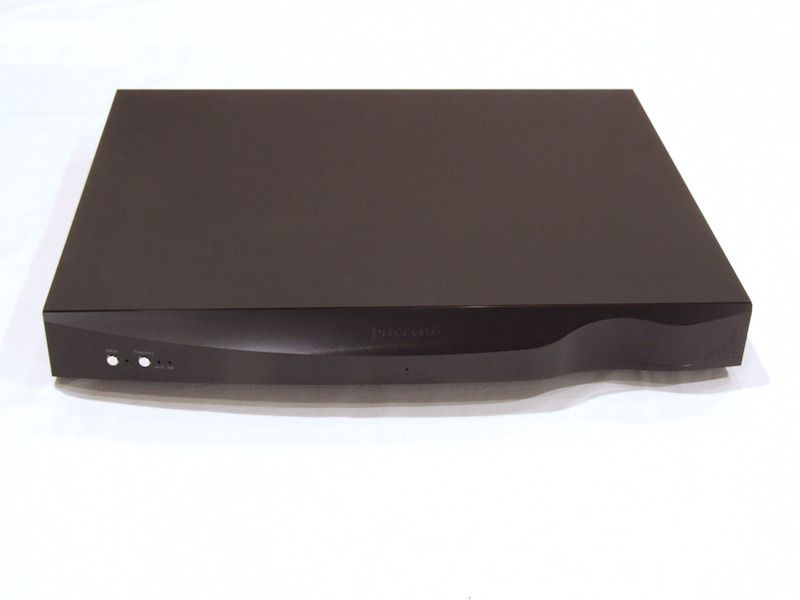
Figure 3. dCS Puccini U-Clock front. The curved fascia is styled to match the Puccini SACD player.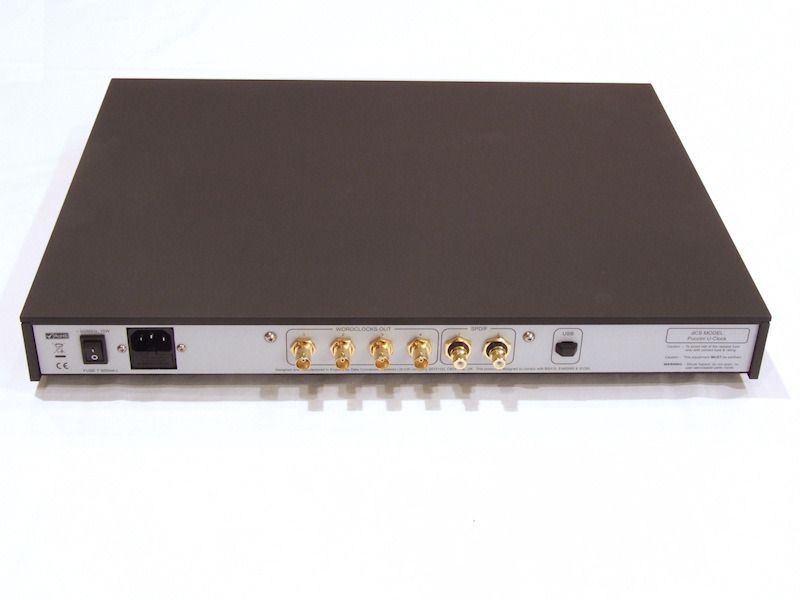
Figure 4. dCS Puccini U-Clock rear.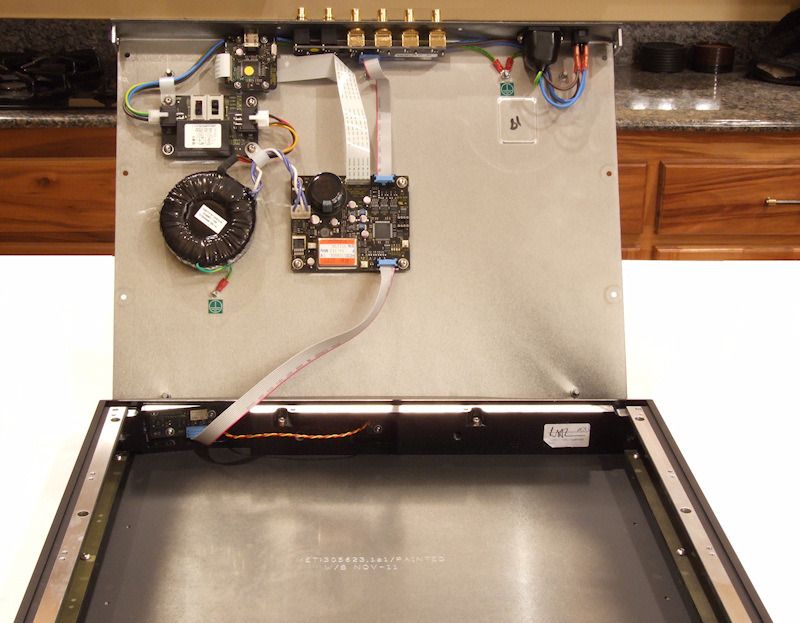
Figure 5. dCS Puccini U-Clock inside. Like an atom, the interior of a U-Clock consists of mostly empty space.
I hope that the most expensive component of the U-Clock isn't its sculpted and milled aluminum case. The U-Clock uses an oven controlled crystal oscillator (OCXO) to help maintain frequency stability. The crystal is isolated from thermal effects in an electrically heated enclosure or "oven" . OCXOs range in cost from a few hundred to a few thousand dollars. The OCXO in figure 5 is the orange and white box.
Assuming things work out with the dCS Debussy DAC, the U-Clock and Debussy will be stacked and located in the location currently occupied by the Cary CD 306 Pro version SACD player. The Cary will be retired and retained for research/testing/other unspecified purposes. I went into some detail with dCS explaining the difficulties I had with two other DACs. I was assured that I would not encounter such problems with the Debussy and that there weren't other interface issues lurking.
For one micro-nanosecond I thought about replacing the Cary with a dCS Puccini SACD player, but I realized that would have been a waste of money. I don't currently use the Cary, not even to audition newly purchased CDs and SACDs. New disc purchases are ripped and copied to the BDP-2's solid state drive, then auditioned. I definitely can't imagine ever going back to spinning digital discs one-by-one in my two channel system-not as long as I can sit in my listening chair and pull up high quality rips of any and every CD and SACD that I own-not as long as my rips sound equivalent to, and in most cases much better than, the physical media they were ripped from.
References
1. Word Clock Synchronization - When and Why You Need It (PDF Download Link)
2. Does Your Studio Need A Digital Master Clock?
3. Oven Controlled Crystal Oscillator
4. AES Standard AES11-2003 (PDF Download Link)Post edited by DarqueKnight onProud and loyal citizen of the Digital Domain and Solid State Country! -
Interesting DK. I've never dealt with external clocks before, but having a common clock for all the digital gear does make sense. Also, from what I have read, the Berkeley USB to SPDIF converter is supposed to be excellent for that purpose, and it is relatively inexpensive, if I remember right.
I should contact RAL and find out what a custom umbilical would cost for my Lumin power supply. The stock umbilical is much better than the stock Pass umbilical, but my gut says the RAL would sound better.Lumin X1 file player, Westminster Labs interconnect cable
Sony XA-5400ES SACD; Pass XP-22 pre; X600.5 amps
Magico S5 MKII Mcast Rose speakers; SPOD spikes
Shunyata Triton v3/Typhon QR on source, Denali 2000 (2) on amps
Shunyata Sigma XLR analog ICs, Sigma speaker cables
Shunyata Sigma HC (2), Sigma Analog, Sigma Digital, Z Anaconda (3) power cables
Mapleshade Samson V.3 four shelf solid maple rack, Micropoint brass footers
Three 20 amp circuits. -
Awesome! Thanks.

-
Clock Cables
"Interface-induced Jitter
Regardless of how good your clock source, the cable you use to connect clocks and digital audio signals can affect the clocking accuracy quite dramatically. Word clock signals are conveyed as a simple square wave running at the sample rate, and are always conveyed using a matched‑impedance interface designed specifically to convey high‑frequency signals. In fact, it's the same basic interface as is used for conveying video signals, with 75Ω terminations at each end and cables with a characteristic impedance of 75Ω."
Reference: Does Your Studio Need A Digital Master Clock?
My U-Clock came with three Pro-Signal brand 2 meter BNC-BNC coaxial cables, model number PSG00542. The retail price is $5.00. I also have a Revelation Audio Labs CryoSilver coaxial cable which has pure silver conductors, a vibration abatement jacket design, and Oyaide SLSB BNC connectors. The retail price of the Oyaide SLSB BNC connectors is $108 per pair. The retail price of a 1meter RAL CryoSilver coaxial cable is $449.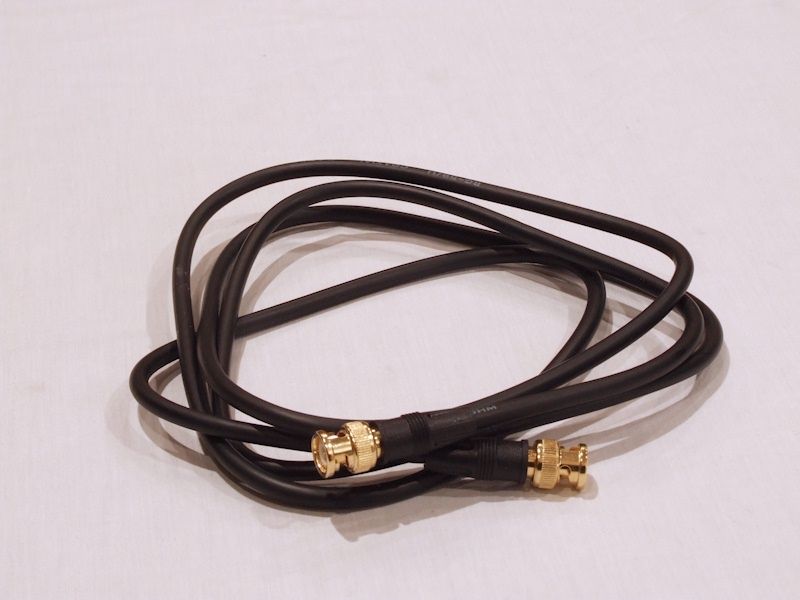
Figure 1. Pro-Signal 75 ohm coaxial cable with BNC connectors.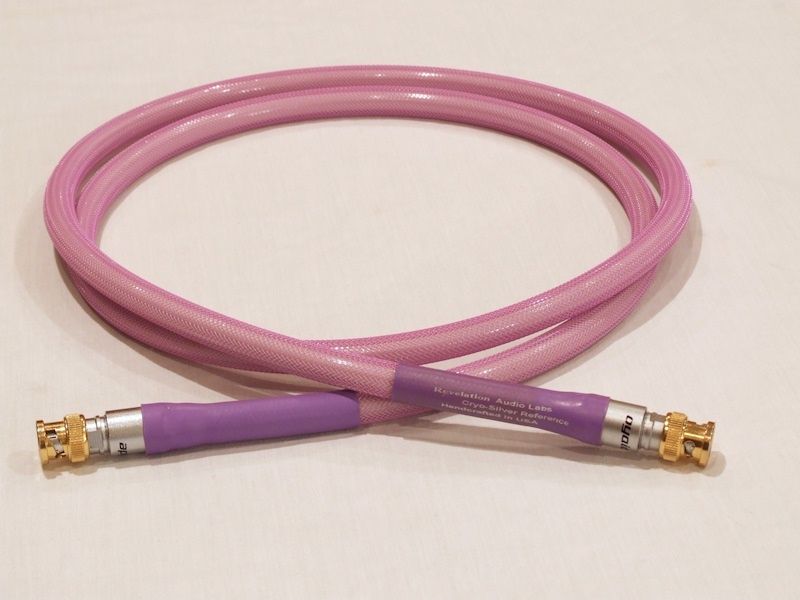
Figure 2. Revelation Audio Labs 75 ohm coaxial cable with Oyaide BNC connectors.
There was a difference in rise and fall times of the U-Clock's square wave pulses between the Pro-Signal and RAL cables. The output from the RAL cable was closer in shape, rise time, and fall time to the U-Clock's output.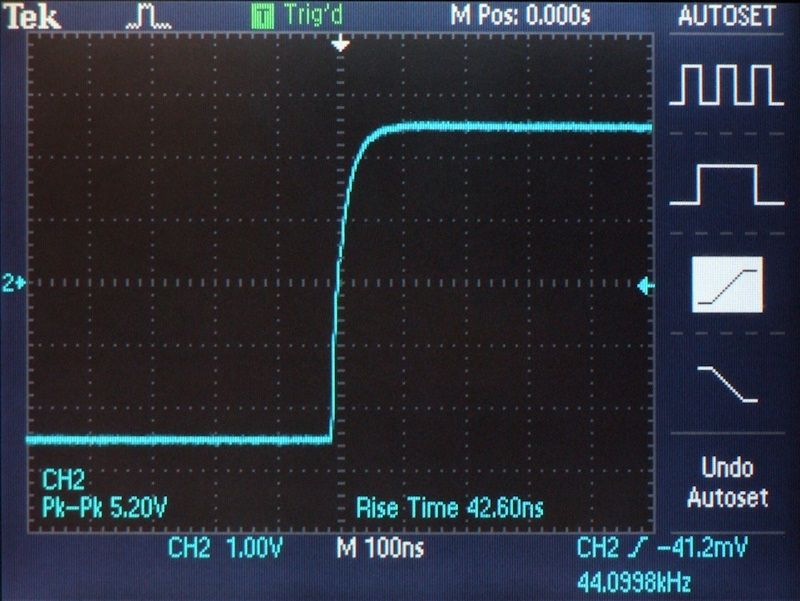
Figure 3. Rising edge of U-Clock's square wave pulse at U-Clock output.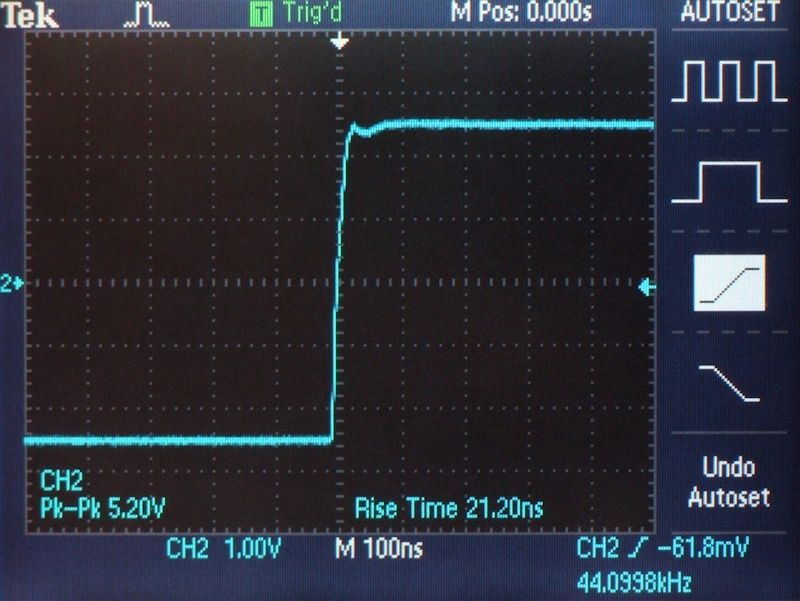
Figure 4. Rising edge of U-Clock's square wave pulse through Pro-Signal cable.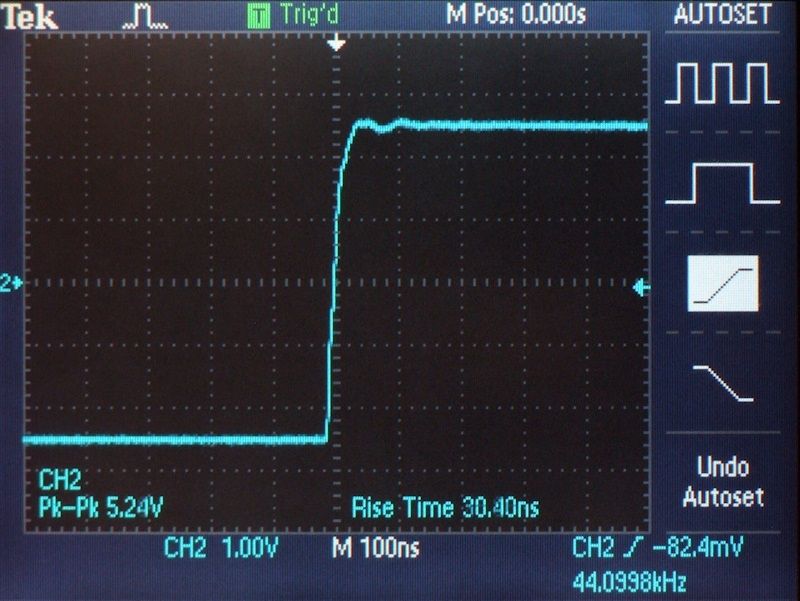
Figure 5. Rising edge of U-Clock's square wave pulse through RAL cable.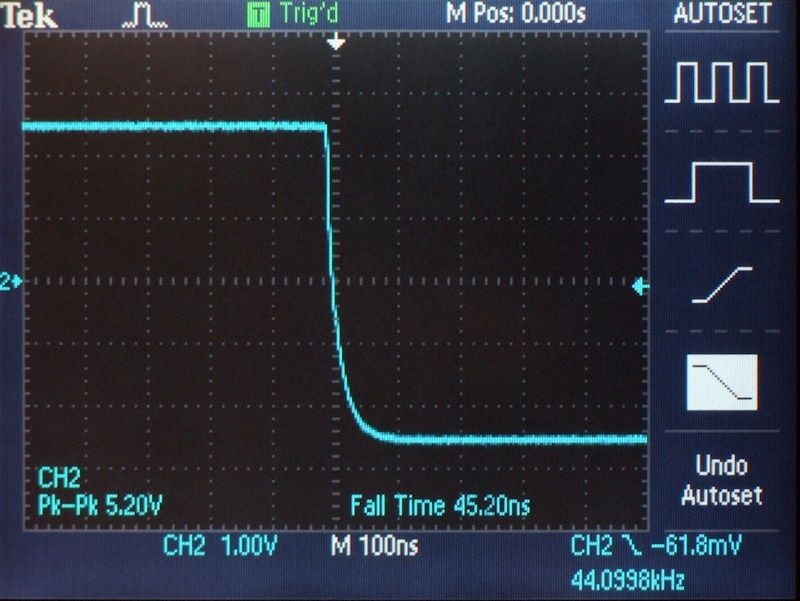
Figure 6. Falling edge of U-Clock's square wave pulse at U-Clock output.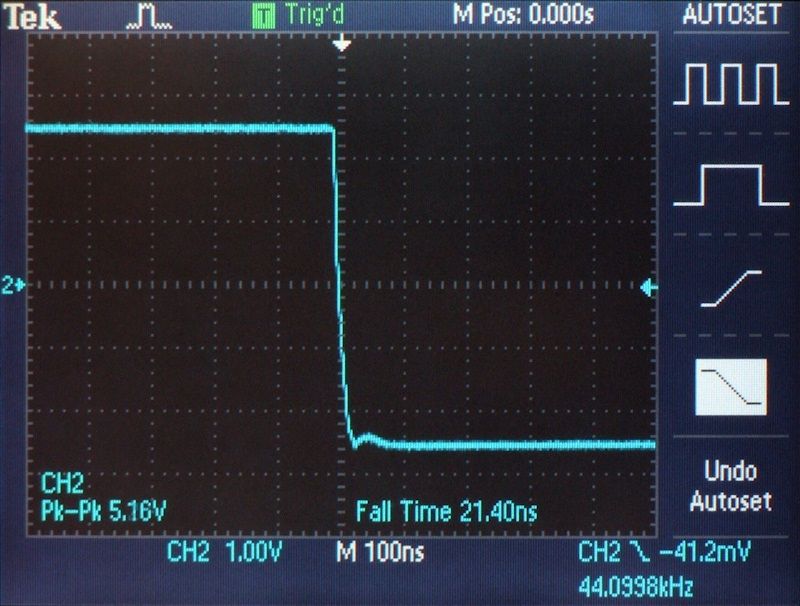
Figure 7. Falling edge of U-Clock's square wave pulse through Pro-Signal cable.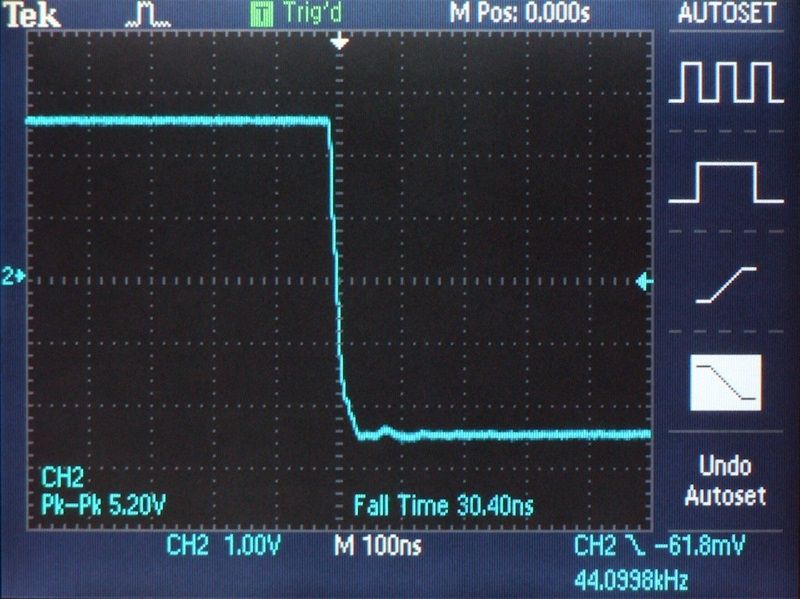
Figure 8. Falling edge of U-Clock's square wave pulse through RAL cable.
The halving of rise and fall times with the Pro-Signal cable gives me some concern:
"For applications outside the realm of high speed electronics, long (compared to the attainable state of the art) rise times are sometimes desirable: examples are the dimming of a light, where a longer rise-time results, amongst other things, in a longer life for the bulb, or digital signals apt to the control of analog ones, where a longer rise time means lower capacitive feedthrough, and thus lower coupling noise."
Reference: Rise Time - Wikipedia
I assume that the U-Clock's supplied coaxial cables, like the supplied power cord and USB cable, are the "throwaway type and dCS expects the owner to use their favorite brand of aftermarket cables. However, it will be nice if it turns out that there is no performance difference between the $449 RAL and the $5 Pro-Signal cables.Proud and loyal citizen of the Digital Domain and Solid State Country! -
[quote="DarqueKnight;2128334 However, it will be nice if it turns out that there is no performance difference between the $449 RAL and the $5 Pro-Signal cables. [/quote]
....and that's the ticket to it all anyway. Doesn't matter if all the graphs in the world show a difference, only matters if it's audible or not.
HT SYSTEM-
Sony 850c 4k
Pioneer elite vhx 21
Sony 4k BRP
SVS SB-2000
Polk Sig. 20's
Polk FX500 surrounds
Cables-
Acoustic zen Satori speaker cables
Acoustic zen Matrix 2 IC's
Wireworld eclipse 7 ic's
Audio metallurgy ga-o digital cable
Kitchen
Sonos zp90
Grant Fidelity tube dac
B&k 1420
lsi 9's



![[Deleted User]](https://w4.vanillicon.com/40bc09a87daec053937ab0249c85e591_100.png)