RT3000P Amp Hums with Photos
Options

dhoya76
Posts: 7
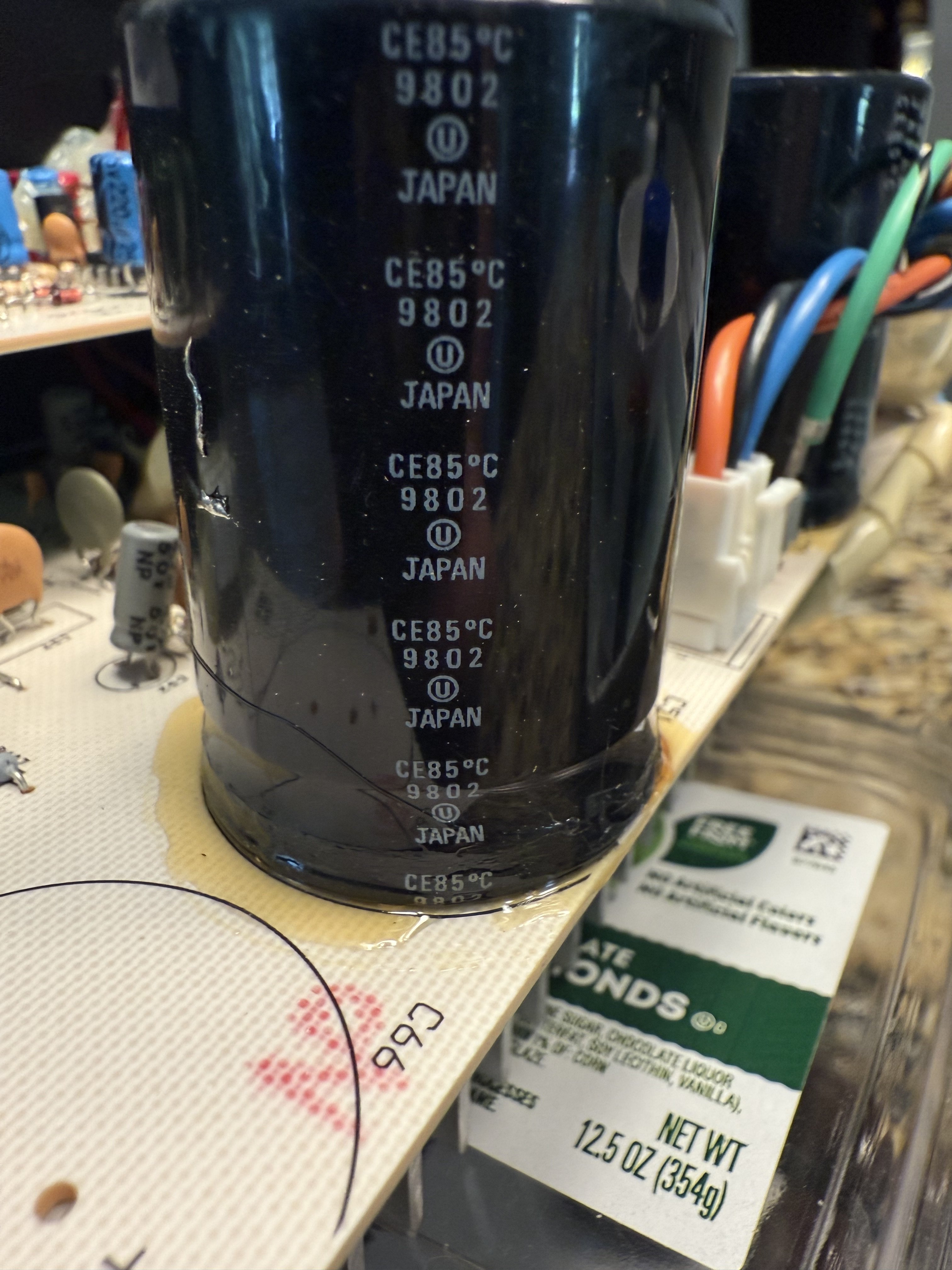
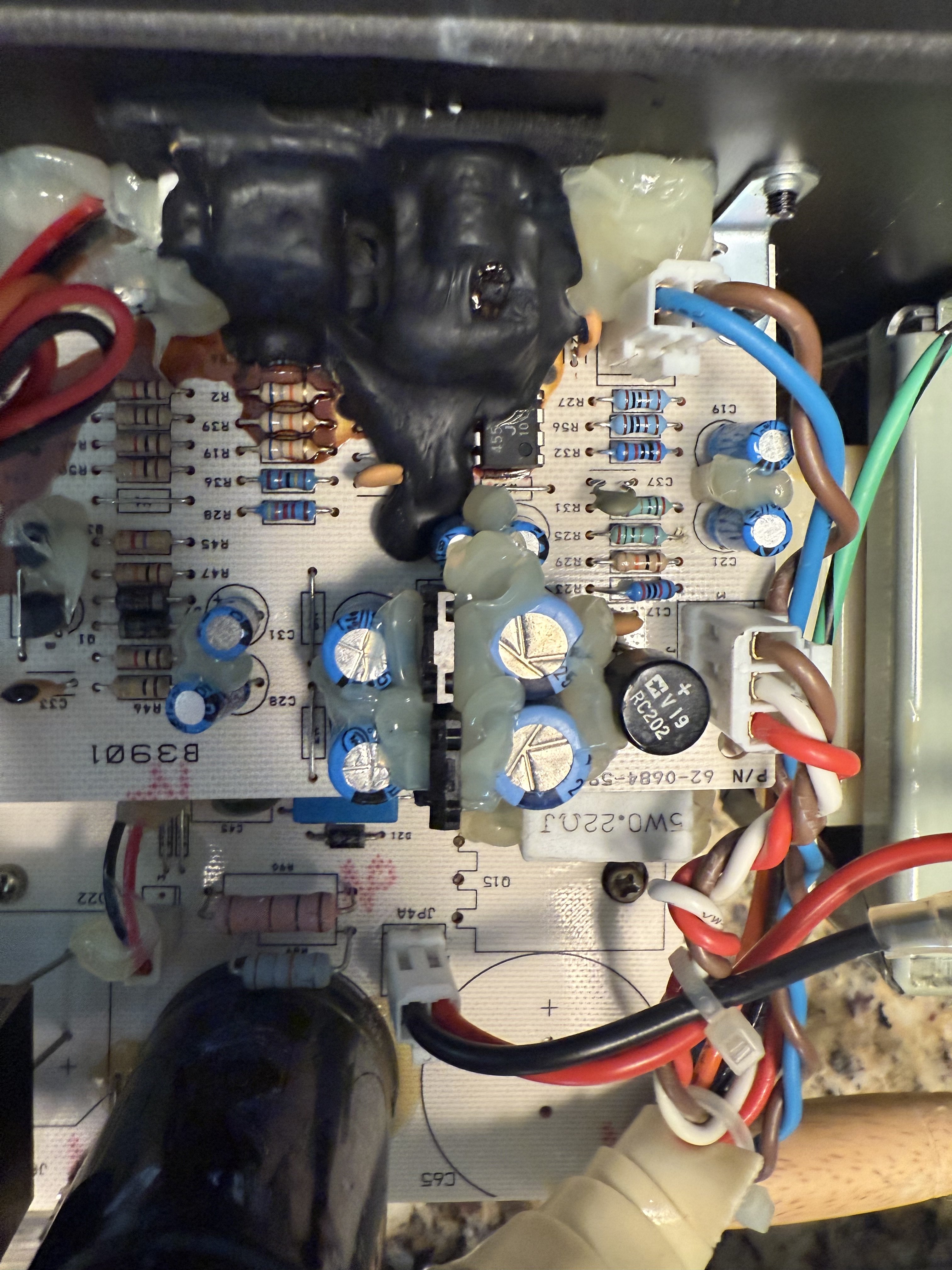
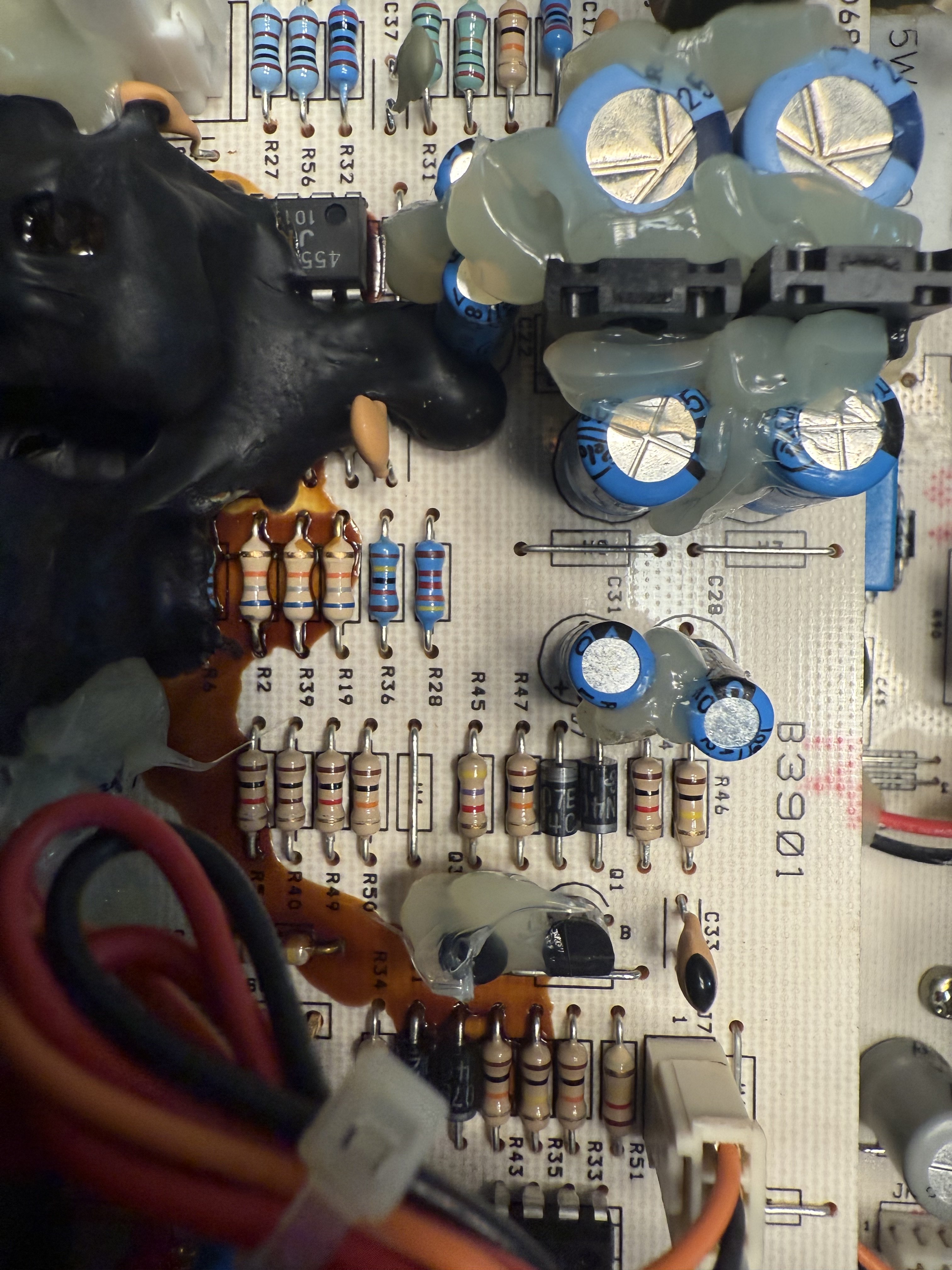
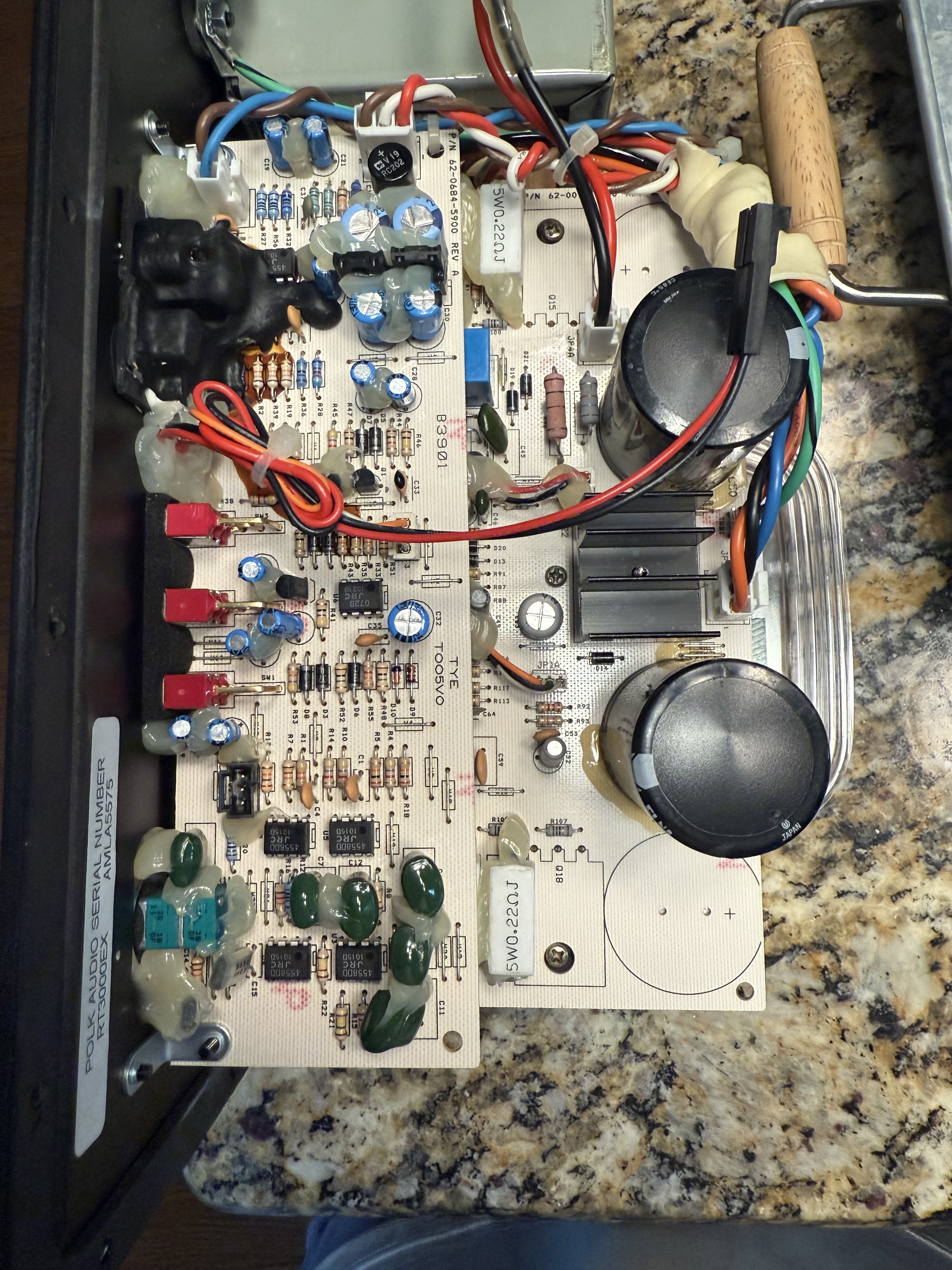
One of my RT3000P bases hums when plugged in. I took out the amp. The caps seem fine (no?) but the black gunk from the factory and the brown stuff on the board are concerning at first glance. Is that normal? Maybe it has heated up over the years and become conductive? 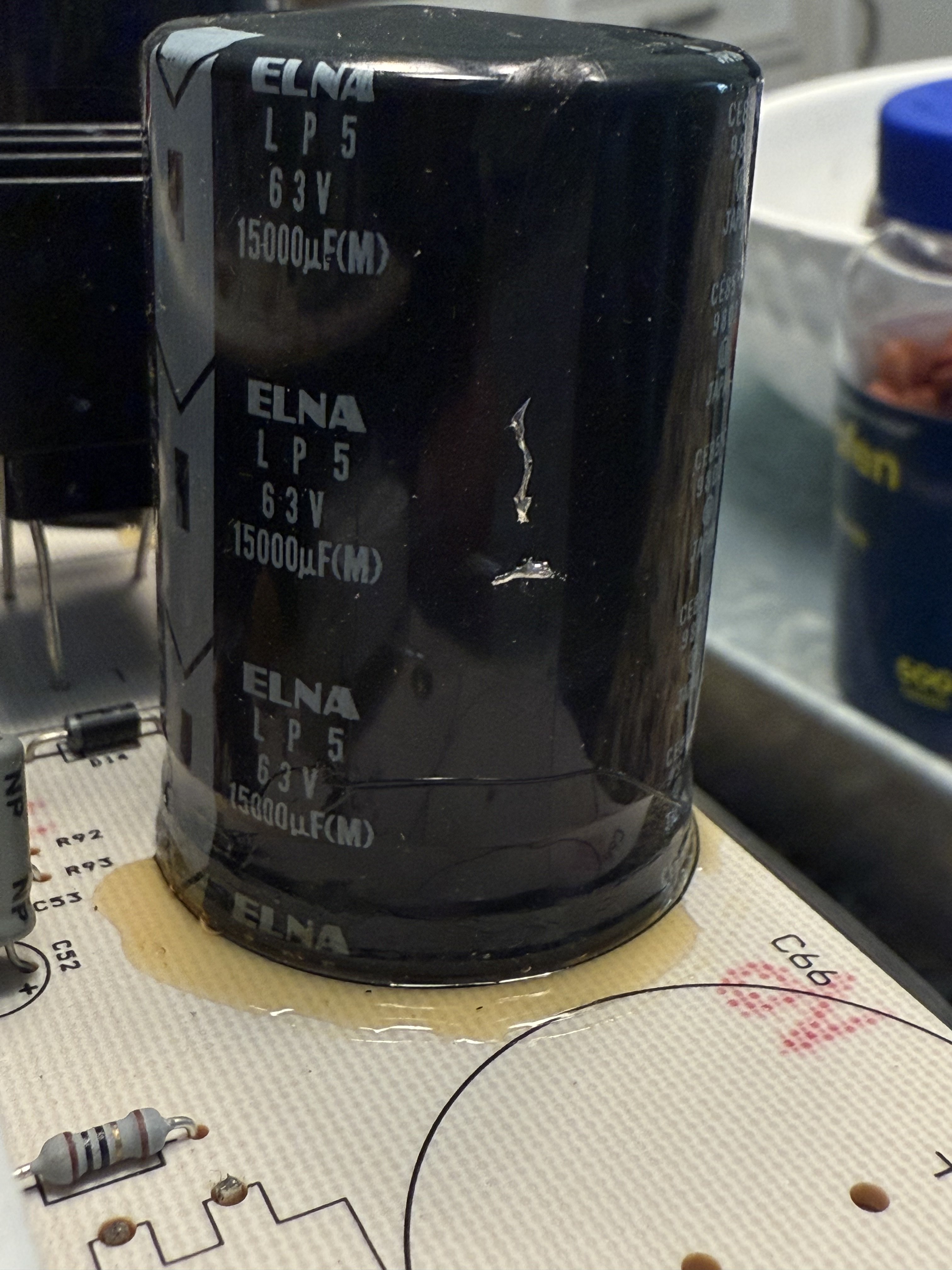
Comments
-
This content has been removed.
-
Yeah, I wondered whether the slight bulge was a problem. By “dent” do you mean the vertical scratch on the side or the area on the top around the perimeter? Was hoping the scratch was just aesthetic. Thanks for the input!
-
This content has been removed.
-
Thanks! I’ll replace both and maybe go ahead and recap the working amp, too. Do you think that black sealant gunk and brown resin residue on the board are probably normal even if messy looking? I’ll take out the working amp tonight and do a comparison. Thanks again!
-
This content has been removed.
-
Yeah, I wondered whether the slight bulge was a problem. By “dent” do you mean the vertical scratch on the side or the area on the top around the perimeter? Was hoping the scratch was just aesthetic. Thanks for the input!
Even if the capacitor didn't have a scratch and some damage, if I were you I would replace both of them just because of the heat they get exposed to next to that heat sink. This layout is almost as bad as my blue sound node 2 layout. -
This content has been removed.
-
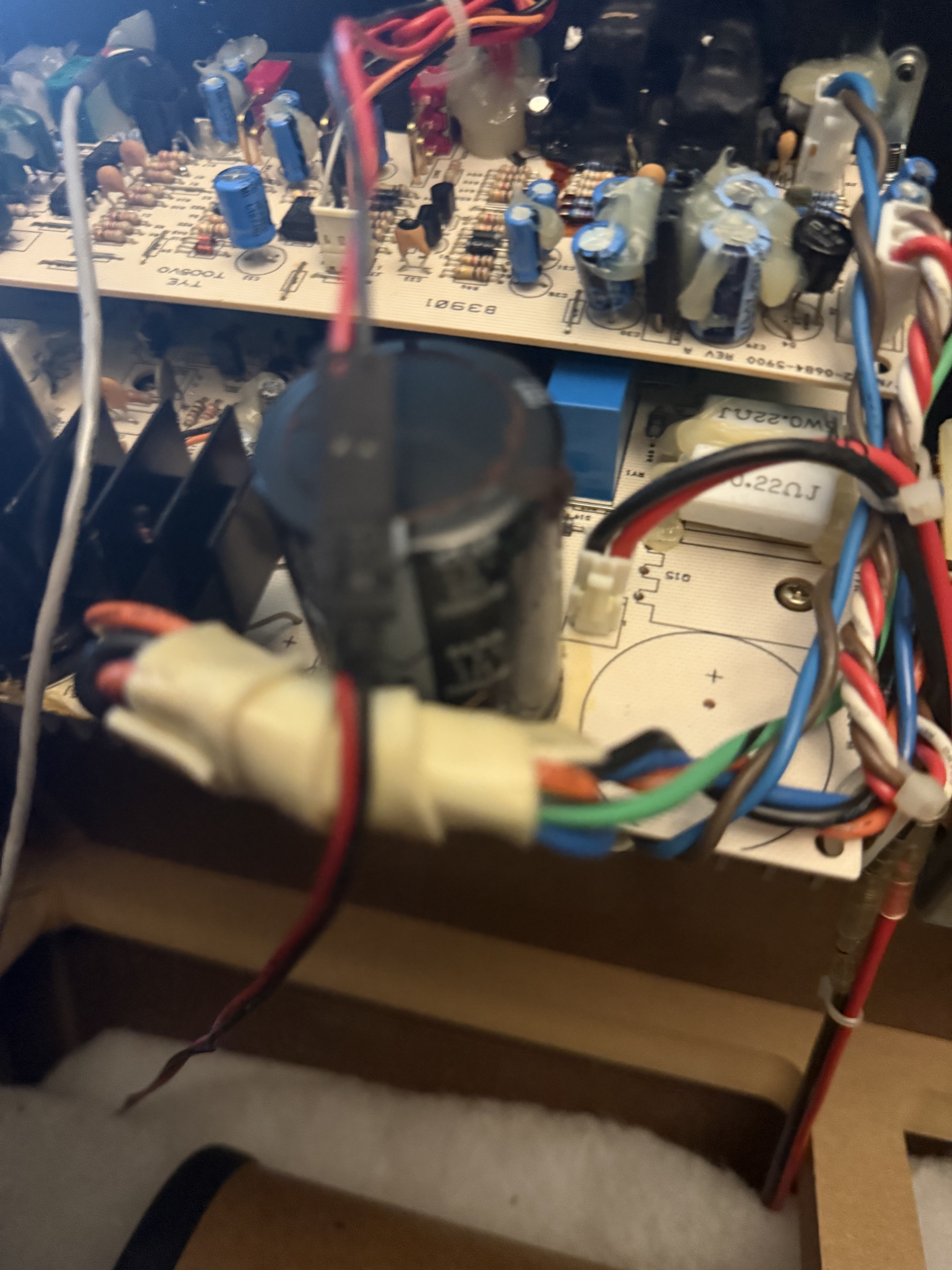
I took out the amp from the “good” RT3000P base, the one that works and doesn’t hum, and it (a) had the same black factory sealant and amber residue (flux?) (although it looked cleaner) and (b) not only had caps with a slight bulge but one of them was leaking a rusty color at the top. So it looks worse but “works.” Haha. I ordered 10 15000uf, 63V, 105 degree caps this morning. They are Chemi-Con. 35x65mm (slightly taller than the std 50mm ones but I measured and still have at least .50 inch of clearance). Despite both looking bad while one hums loudly while the other (worse looking) one doesn’t hum, is it still likely the two caps? I plan to recap both, and have some spares. Thanks!
-
This content has been removed.
-
If you haven't already eliminated the possibility of a new ground loop hum, you could try swapping the speakers with each other to see if the hum occurs in the same speaker when it's connected to power in the other speaker's location.
Looks like the speaker amps could do with a refresh regardless after being in service for 20+ years. -
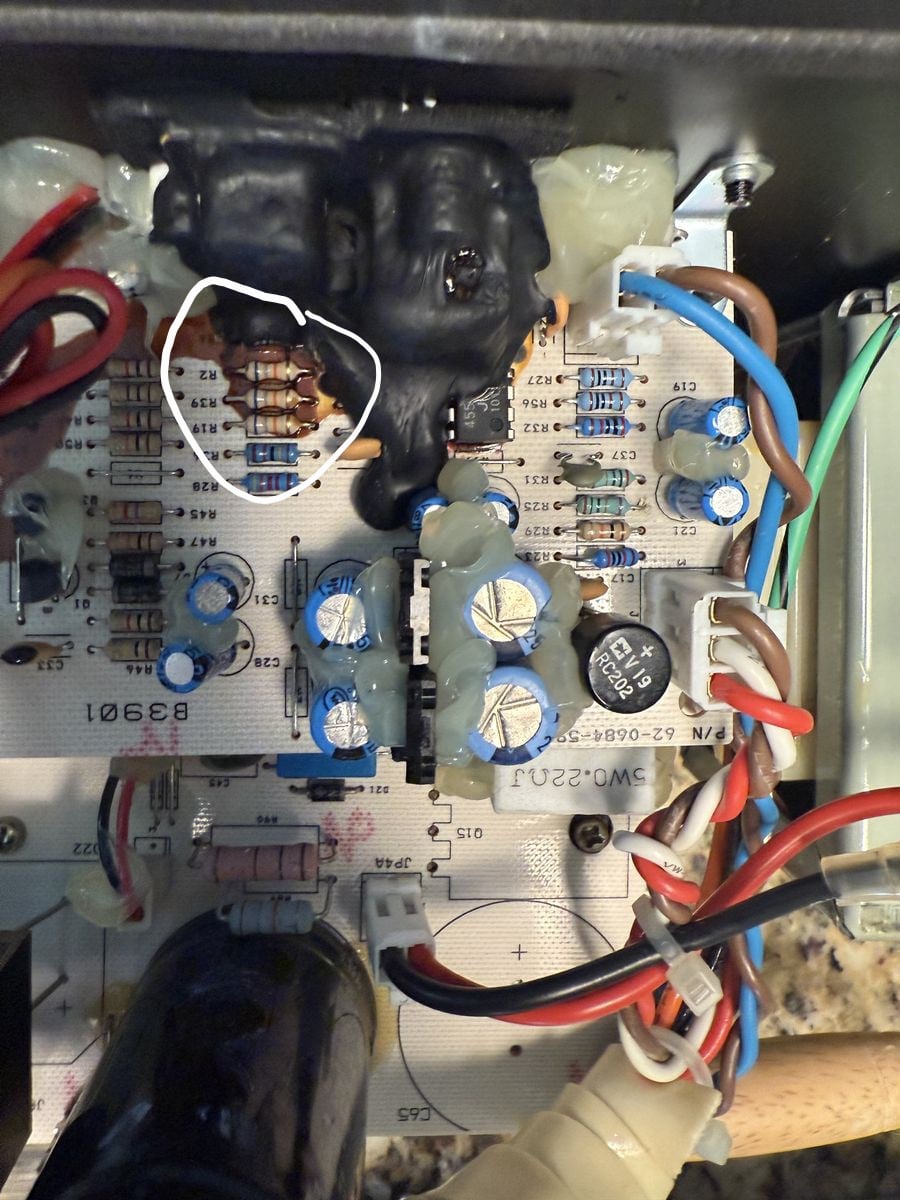
That brown stuff doesn't look normal to me.
-
If you haven't already eliminated the possibility of a new ground loop hum, you could try swapping the speakers with each other to see if the hum occurs in the same speaker when it's connected to power in the other speaker's location.
Looks like the speaker amps could do with a refresh regardless after being in service for 20+ years.
Thanks! I will try that. That will also allow me to cross off whether it is the volume switch that someone posted about on here a few years ago. My dad and I are going to try and recap the humming amp tonight.
-
That brown stuff doesn't look normal to me.
Thanks! I was wondering that, too. The “good” amp (the one that doesn’t hum and seems to work fine and annoyingly has a bulging and leaky cap) also has it, as shown in this pic from the amp that doesn’t hum. My research suggested that it’s leftover flux and is fine. Other research suggested that it is factory glue and it’s fine. And other research suggested that it’s degrading glue that can or has become conductive. Ha. I’ll probably try to clean it while recapping.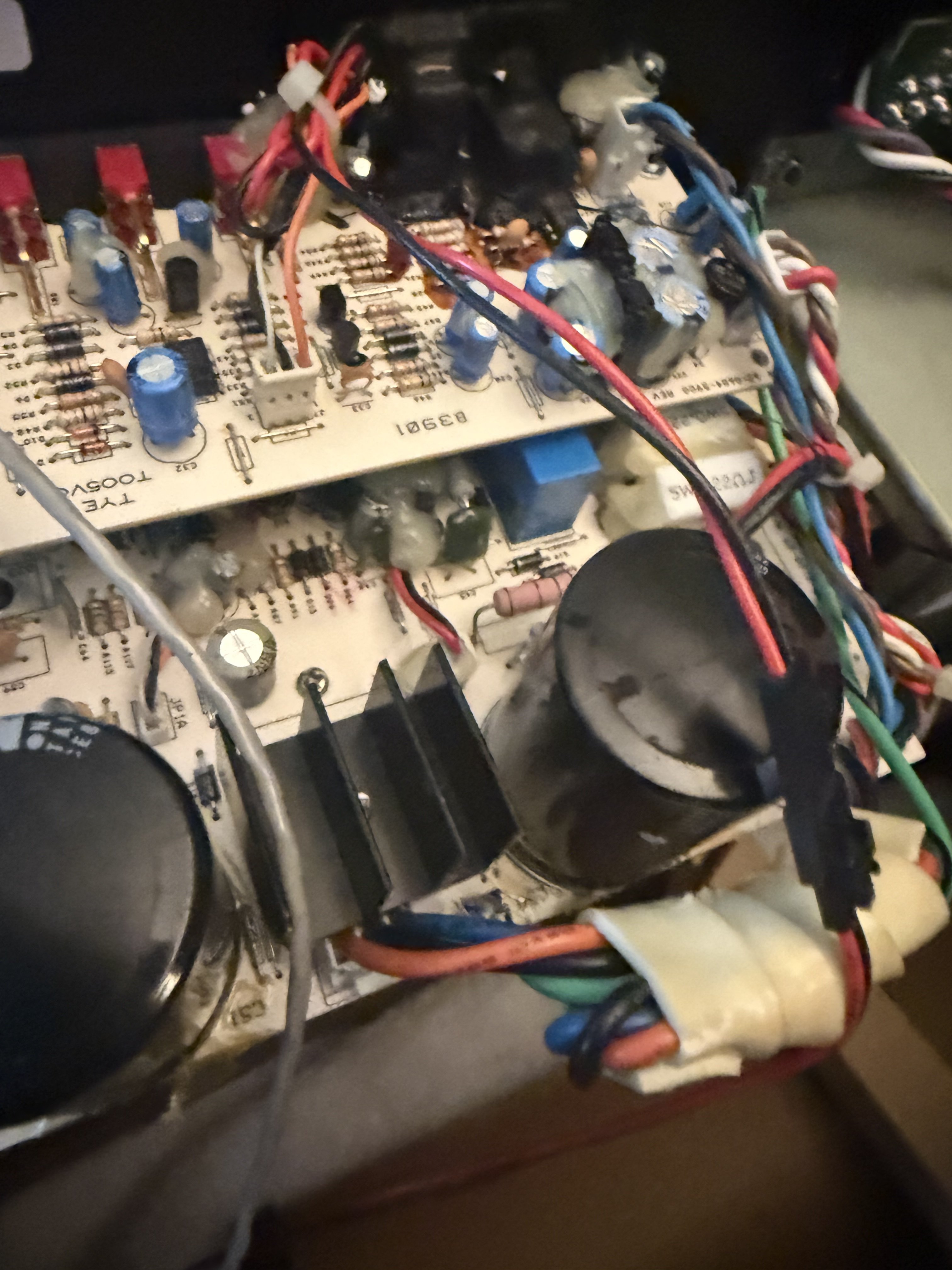
-
Ok, since it is on both boards it's normal. It's definitely not flux, so some sort of glue run off is the logical conclusion.
-
Appreciate being able to see the photos to see what's going on with the amps! Looks like the hot glue guy in the factory was getting paid by the ounce blobbed on.

-
As an update, I recapped the humming amp, and it’s fixed! Thanks for all of the input!
-
This content has been removed.