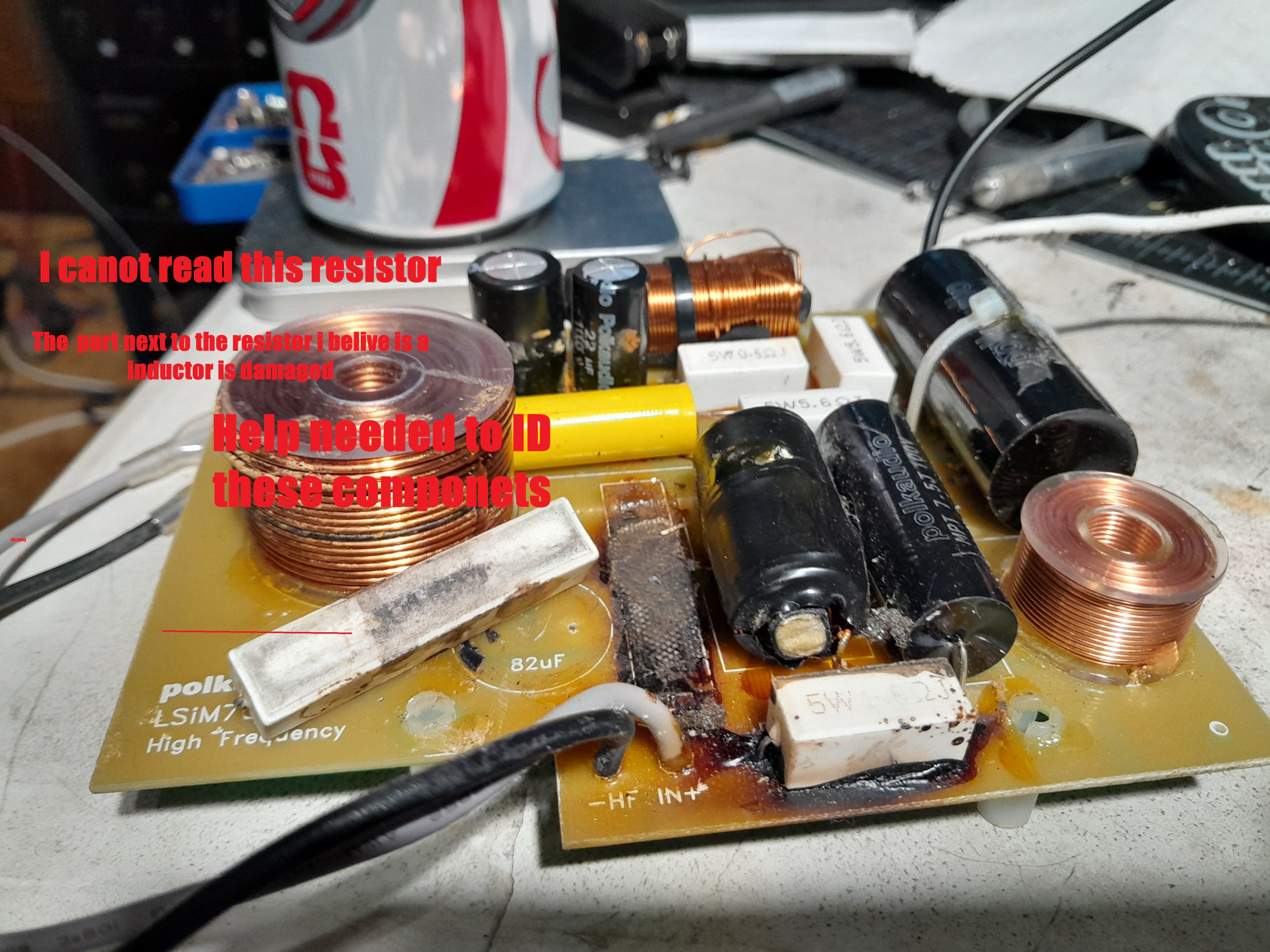
Polk lsim book shelf, blown crossover, need help to ID replacement parts
Options

LessOpinion
Posts: 2
in Speakers
I cannot read the resistor values. what I think is called a inductor (wire wound iron) next to it is not labeled with any info. Can you suggest up grades!
Answers
-
If you pull the crossover from your other speaker you'll be able to see the resistor values.
-
Maybe? Its blown also, I haven't looked yet.
-
this is really uncommon for that model... what caused the issue? You had some serious juice to cook that big resistor there- Not Tom ::::::: Any system can play Diana Krall. Only the best can play Limp Bizkit.
-
I'm guessing an amp went bad and sent DC through the speaker cables. He might have other issues when it comes together.
-
This content has been removed.
-
This content has been removed.
-
If it were an amplifier failure (i.e., DC getting to the loudspeakers), it's kind of puzzling that both channels would've failed simultaneously, but yes, I agree with @billbillw's armchair assessment (FWIW). There's a good chance that we're seeing the horrific effects of catastrophic failure upstream of the loudspeakers. That should be examined and rectified (no pun intended) as needed before even thinking about the crossovers. Otherwise, the OP risks another round of crossover flambé.

EDIT: Testing for DC on the output of the amplifier (sans installed loudspeakers) should be straightforward with a DMM. That said, besides the hardware fault responsible for the DC offset (e.g., a power shorted power transistor passing one of the rail voltages right to the speaker), the amp's protection circuitry (or fuse?!) would have also had to fail to work. Sort of a "China syndrom" symphony of failures
I guess the other, not inconceivable root cause might have been way too little amplifier (i.e., insufficient voltage/current delivery capability) for the load at the time of the immolation.
  Again, a situation that should be rectified first (i.e., replace with a more capable amp, or turn down the volume).