Reel-to-Reel tape decks - only meant for headphones?

jdjohn
Posts: 3,381
Admittedly, my exposure to RTR tape decks is limited to consumer models from my dad's collection. What I inherited is mostly various Akai models, with a couple of Sony in the mix, along with some other makers.
I have thoroughly enjoyed tinkering on all the units I inherited, with no lofty expectations on playback sound. My primary goal for each unit has been 'functionality' - anything additional has been gravy. Turns out that a low expectation in playback sound is the best approach with the examples I inherited. If I can get them to playback in a balanced sound, AND record likewise, I consider that a huge win.
SNR is expectedly low with any tape deck, BUT with quality playback gear in the chain, the resulting sound can be quite good. Related to that, I have played around with archiving vinyl onto tape, with impressive results. HOWEVER, the mechanical noise of a tape deck can detract from the overall playback experience in an open listening environment. Let's face it: tape decks are noisy, by nature.
We've all seen vintage photos of tape deck listeners using head-phones. Was that the true intension/use of tape decks?
I have thoroughly enjoyed tinkering on all the units I inherited, with no lofty expectations on playback sound. My primary goal for each unit has been 'functionality' - anything additional has been gravy. Turns out that a low expectation in playback sound is the best approach with the examples I inherited. If I can get them to playback in a balanced sound, AND record likewise, I consider that a huge win.
SNR is expectedly low with any tape deck, BUT with quality playback gear in the chain, the resulting sound can be quite good. Related to that, I have played around with archiving vinyl onto tape, with impressive results. HOWEVER, the mechanical noise of a tape deck can detract from the overall playback experience in an open listening environment. Let's face it: tape decks are noisy, by nature.
We've all seen vintage photos of tape deck listeners using head-phones. Was that the true intension/use of tape decks?
"This may not matter to you, but it does to me for various reasons, many of them illogical or irrational, but the vinyl hobby is not really logical or rational..." - member on Vinyl Engine
"Sometimes I do what I want to do. The rest of the time, I do what I have to." - Cicero, in Gladiator
Regarding collectibles: "It's not who gets it. It's who gets stuck with it." - Jimmy Fallon
"Sometimes I do what I want to do. The rest of the time, I do what I have to." - Cicero, in Gladiator
Regarding collectibles: "It's not who gets it. It's who gets stuck with it." - Jimmy Fallon
Comments
-
I know what you mean, tape decks can be noisy in really quiet environments. The Crown is an excellent deck but the fan noise inside the open back cabinet is distracting. There can be rubbing of the tape against the reel flanges that cause a regular ticking sound. If there's any tape oxide shedding on the tape guides it can sound like a banshee. The first time I had that happen I thought something was going to detonate. I've had tape counters make very tiny ticking sounds and even the Studer's internal clock had to be unplugged. But, after all these machines are at least 40 years old, most older and if you can hang in there long enough they can be very satisfying to keep around.
-
The only tape noise problems I have (that I notice) are the über-annoying sound of tape scraping a warped plastic reel once each revolution.

-
Regarding playback SQ, that's why Ken and many other folks go head out with external tape EQ preamps. Calibration tapes and required equipment (scope, dB meter, frequency generator) add to the cost to extract best performance. Two of my decks required recapping, one needed four transistors. I purchased new manufacture Teac replica calibration tapes from Germany (3.75 & 7.5ips). Along with specific calibration frequencies, it includes 13 frequencies from 31Hz to 16kHz so I can test playback frequency response.
SQ wise, my Teac 4010U and Pioneer RT-71 are OK for just playing something in the background. The Teac X-1000r, A-6300's are very, very good and you get what the fuss is about. The X-1000r has dbx that can be switched on or off and can produce a very quiet recording but must be played back on a dbx deck. It also has EE tape capability. The Otari two track is currently my best sounding deck. It was designed to run all day for commercial use at TV and radio stations.
I'm told modern tape is slightly wider which can be noisy with dirty guides. You have to watch for SSS or sticky shed syndrome on older tapes. There are web sites devoted to that. The older tape I'll use is Maxell UD 35-90 and newer tape is RTM LPR35 and SM911.
My old Teac 4010SU has a paddle fan on capstan motor, very noticeable from a couple feet away at 7.5ips. Later A series Teac's used a redesigned cup style fan on the capstan motor that is much quieter, but still noticeable though muted at 7.5 within a couple feet.
My Teac X-1000r has DC motors and no cooling fans, electronic counter, much quieter at 7.5. Otari MX-5050 BIII-2 has a direct drive DC capstan motor with no cooling fan, electronic counter, very quiet even at 15ips.
I setup my reel table height for plastic reels and use shims for the thinner metal reels so the tape doesn't rub. The Teac TZ-612 10.5" NAB hub adapters had removable shims. 1/4 turn to remove or install, very convenient. I have a pair of fancy trumpet style hub adapters on the Otari and use a .7mm shim behind them for aluminum reels.Post edited by SCompRacer onSalk SoundScape 8's * Audio Research Reference 3 * Bottlehead Eros Phono * Park's Audio Budgie SUT * Krell KSA-250 * Harmonic Technology Pro 9+ * Signature Series Sonore Music Server w/Deux PS * Roon * Gustard R26 DAC / Singxer SU-6 DDC * Heavy Plinth Lenco L75 Idler Drive * AA MG-1 Linear Air Bearing Arm * AT33PTG/II & Denon 103R * Richard Gray 600S * NHT B-12d subs * GIK Acoustic Treatments * Sennheiser HD650 * -
The Tandberg TD20A for all of its quirkiness is very pleasantly quiet, I sit about 3' from the transport and any extraneous noise can be a distraction. Since I play a lot of vintage prerecorded tapes they can sometimes rub against the reel flanges, but usually that goes away after a few minutes. There's no worry about sticky shed with prerecorded tapes so far. I recently bought a NOS Sony take up reel. In my semi-humble opinion they made the best take up reels, both 7" and 10.5".
Combined with the Hagerman Piccolo and the Marantz 7 clone it sounds pretty amazing. I recently played a Ray Charles live concert tape on the ABC label and it was audio bliss. Worth all of the hours spent measuring the frequency response and trying different loading combinations. Now if I can get 3.75 its tapes to sound the same way? Next challenge. -
I've learned different decks set to slightly different reel table heights will wind tape closer to one side of reel or the other so sometimes the rub is inevitable. Ever run into a used prerecorded tape that was rewound upside down? I loaded a local purchase used tape once not paying attention (shiny side up) and thought something went wrong with the deck...lol
Since time constants are different for NAB 3.75ips you'll have to implement a separate switchable EQ for it, right? I've seen some tapeheads call 3.75 a compromise speed while others will fine tune record and playback EQ to make it sound as good as possible. You just have to watch record levels as 3.75 saturates easily. I've experimented with changing record EQ film caps in Teac A series decks. The older tape EQ results in a 2-3dB bump at 7-10kHz using modern tape, like LPR35. High marks to you going even further.
In my research reading older NAB/IEC EQ threads I recall the Tandberg TD20A had a special SE EQ setting. It was a proprietary Tandberg only EQ curve that lowered the noise floor ~ 10dB using standard tape. Like with dolby and dbx, you have to play it back using that SE setting. I know your playback is outside the box now, but I found it interesting Tandberg did that.Salk SoundScape 8's * Audio Research Reference 3 * Bottlehead Eros Phono * Park's Audio Budgie SUT * Krell KSA-250 * Harmonic Technology Pro 9+ * Signature Series Sonore Music Server w/Deux PS * Roon * Gustard R26 DAC / Singxer SU-6 DDC * Heavy Plinth Lenco L75 Idler Drive * AA MG-1 Linear Air Bearing Arm * AT33PTG/II & Denon 103R * Richard Gray 600S * NHT B-12d subs * GIK Acoustic Treatments * Sennheiser HD650 * -
I've all but given up on the plastic reels due to the warping. I did manage to flatten a couple of them using a heat gun, using drink coasters as spacers in-between the flanges. But, I have enough metal reels now, so the plastic ones are getting culled. With the metal ones, as you guys know, they can be disassembled, flattened, and then put back together. The difference in thickness of the flanges between the plastic reels and metal reels is definitely a thing, although using a mixture of both types (supply vs take-up) can make it challenging.
My current project is an Akai 4000D (not a GX) from my dad's collection, which is a small form factor tape deck, and this one has a lovely wooden cabinet I was having imbalance issues between the recording and playback levels (i.e., flipping between 'source' and 'tape' during recording gave wildly different VU levels), so I ended up replacing all the transistors on the recording and playback amp boards. There are two pair of amp boards, so four total (L/R for both playback and recording), which have slide tabs into sockets, and that makes them very easy to remove and work on. Each board is about the size of a deck of playing cards.
I picked-up a calibration tape off eBay, which (sort of) helped, but it turned out the -3dB playback calibration level on the section of tape I used did not equate to the same level with my particular tape deck. I believe the GennLab calibration tapes are probably the best ones, although rather spendy. I also tried using a smartphone app frequency generator into the tape deck inputs for calibrating, but it's difficult to know what volume to use on the smartphone during the calibration process. In the end, what worked for me was playing a 1,000 Hz reference tone from a CBS/Columbia STR100 vinyl test record through my phono preamp, into the tape deck, and calibrating from that. I think I finally have the adjustments dialed-in now, but need to do some more test recordings.
Those paddle fans @SCompRacer mentioned are indeed noisy. A couple of the other Akai decks I've worked on from my dad's collection have those type of fans, and I can easily hear them from across the room. The Akai 4000D currently on my bench (i.e., dining room table) does not have a fan at all, so it is quieter than most, but definitely not absolutely quiet. I've wanted to lubricate the motor bearings on several of these Akai decks, but it requires total removal of the motors from the chassis, which presents difficulties.
P.S. I think my favorite Akai's from my dad's stash are a GX-77, and an M-8, which has a tube preamp stage. Since Tandberg has been mentioned, there was a 3600XD in the collection, but I ended up trashing it, since (as I recall) it was kind of a big, cheap, plastic mess; I even got new belts for it, but eventually had to throw in the towel, and toss it."This may not matter to you, but it does to me for various reasons, many of them illogical or irrational, but the vinyl hobby is not really logical or rational..." - member on Vinyl Engine
"Sometimes I do what I want to do. The rest of the time, I do what I have to." - Cicero, in Gladiator
Regarding collectibles: "It's not who gets it. It's who gets stuck with it." - Jimmy Fallon -
I read most of the posts in the tape forums since I don’t have much else to do and have read that techs say replace the transistors in the 4000D.
I have some .5mm shims I use for 7” metal reels. I took advantage of the RTM Black Friday sale and bought some 10.5 pancakes of LPR35 for some empty aluminum reels I have.
On the older Teac’s they used foam around the bushings/oil tubes that deteriorated in the motors. That would either block the oil tube or the oil would flow in too quickly so you’d have to go easy oiling them. Since you don't have to oil them often, some just oil from the outside instead of disassembling. I hear you on disassembly! I've done my share. The most difficult were the three X-1000r's.
I have a nice older Leader signal generator but you have to fiddle with it to set exact frequency and output. I end up using my Rigol DG1022 as I can instantly program it for Hz and output. I check it for accuracy every now and then with frequency counter and dB meter and it's spot on. The Rigol is two channel but I just program one and use a splitter to output to both channels. Need 1K and -12dB (195mv), done! Need to quickly alternate between 1k and 10kHz adjusting bias, punch the numbers in and done.
What flux level is your calibration tape? The old standard was 185, but many calibration tapes sold now are 250nWb/m. You can use a 250 tape to calibrate to lower (or higher) levels remembering to compensate for the output. So the SM says adjust output level with knob at 2 o’clock to -8dB (308mv) with a 185 tape. Using a 250 tape and adjusting to 200, I adjust output to -6dB (388mv). Instead of calibrating VU meters to 0dB, they would be +2.
Some techs still say MRL cal tapes are the best but they are pricey. I got mine on ebay from ural91 in Germany. He did both speeds on one reel to save on shipping. ~$220 for both shipped IIRC. Ural did Teac replica tapes which included 13 tones to test frequency response. To test record response, I can program my signal generator to do a sweep with chosen frequencies or quickly manually enter them.
Two of my old Teac’s calibrated to 250 on the playback amp but the record amp would only do 225 maxed out. I would end up with quite a difference between source and tape on the VU meter and no headroom. 200nWb/m seemed to be the sweet spot for both.
To bias for tape used, Teac used the overbias method. While recording a tone, monitor tape, adjust bias pot either way to achieve peak output on a dB meter, then continue to turn pot CW for -3dB reading (for the old tape used). RTM suggested -5dB overbias for LPR35. Techs have taught me to just alternate between 1k and 10k tones and adjust bias so 10kHz is ~1-1.5 dB higher than 1k. That seems to work better than the overbias method for a flatter record frequency response.
I have six decks now and need to thin the herd!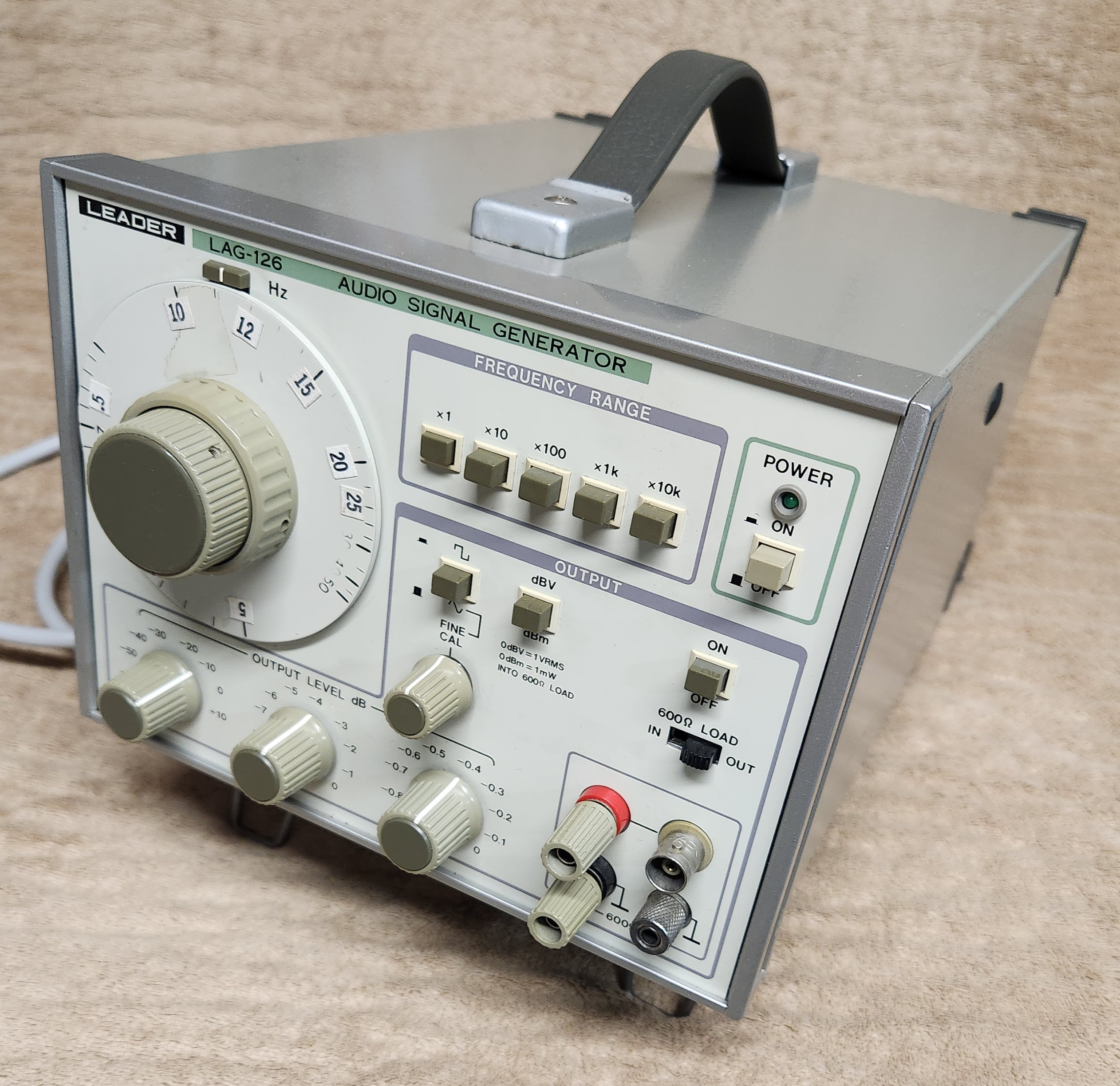
It starts with 400Hz 0 vu, -10vu 10kHz(3.75)/16kHz(7.5) azimuth, alternating 400Hz/12.5kHz (3.75) playback EQ adjust, 400Hz/16kHz (7.5) playback EQ adjust, 15 seconds each of 31.5 - 14k/16k, and a continuous sweep from 31.5-12.5kHz/16kHz. MRL cal tape would have four frequencies. The 1k 185nWb/m is for adjusting dbx board on X-1000r/X-2000r.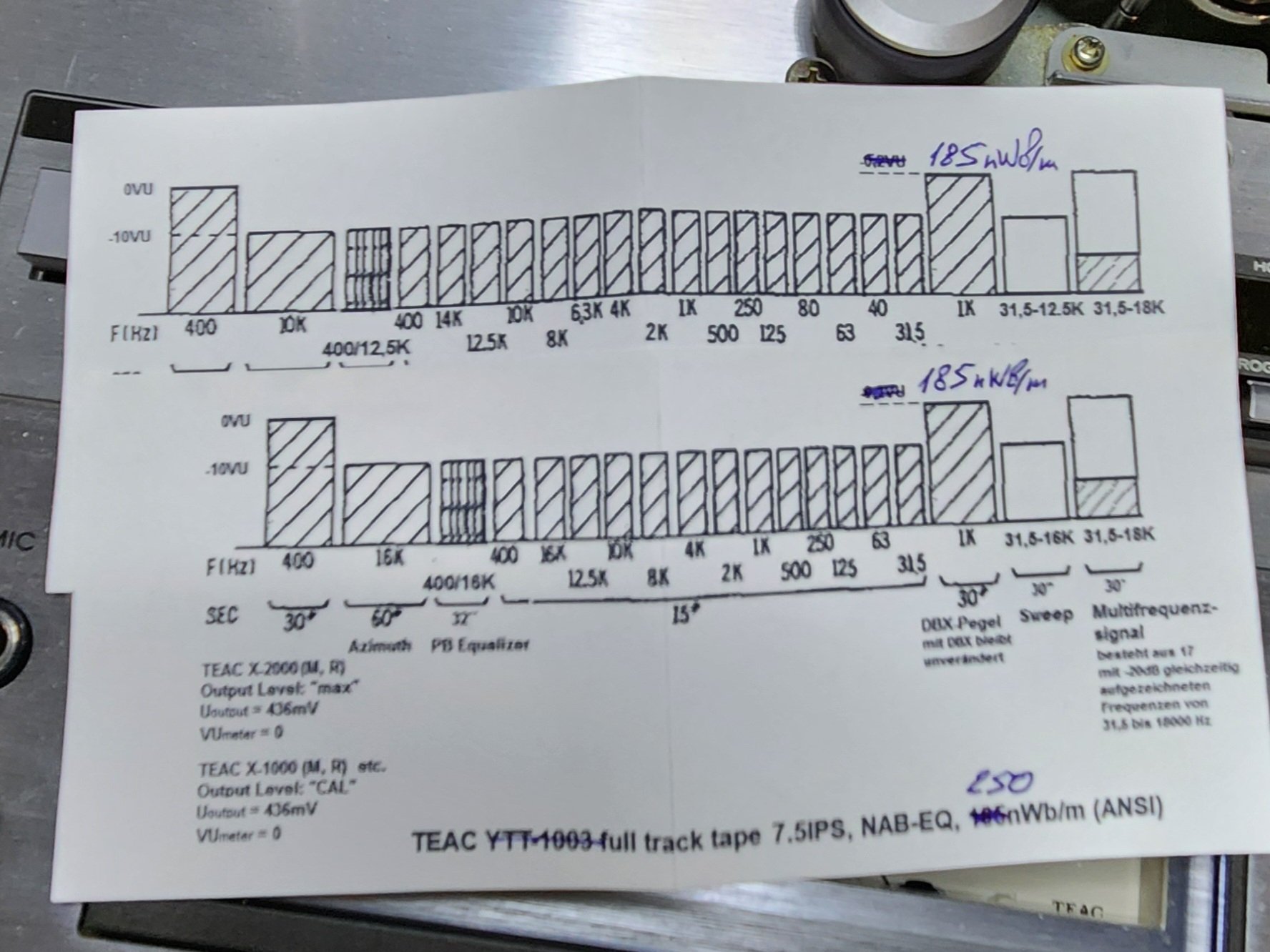
Paddle fan.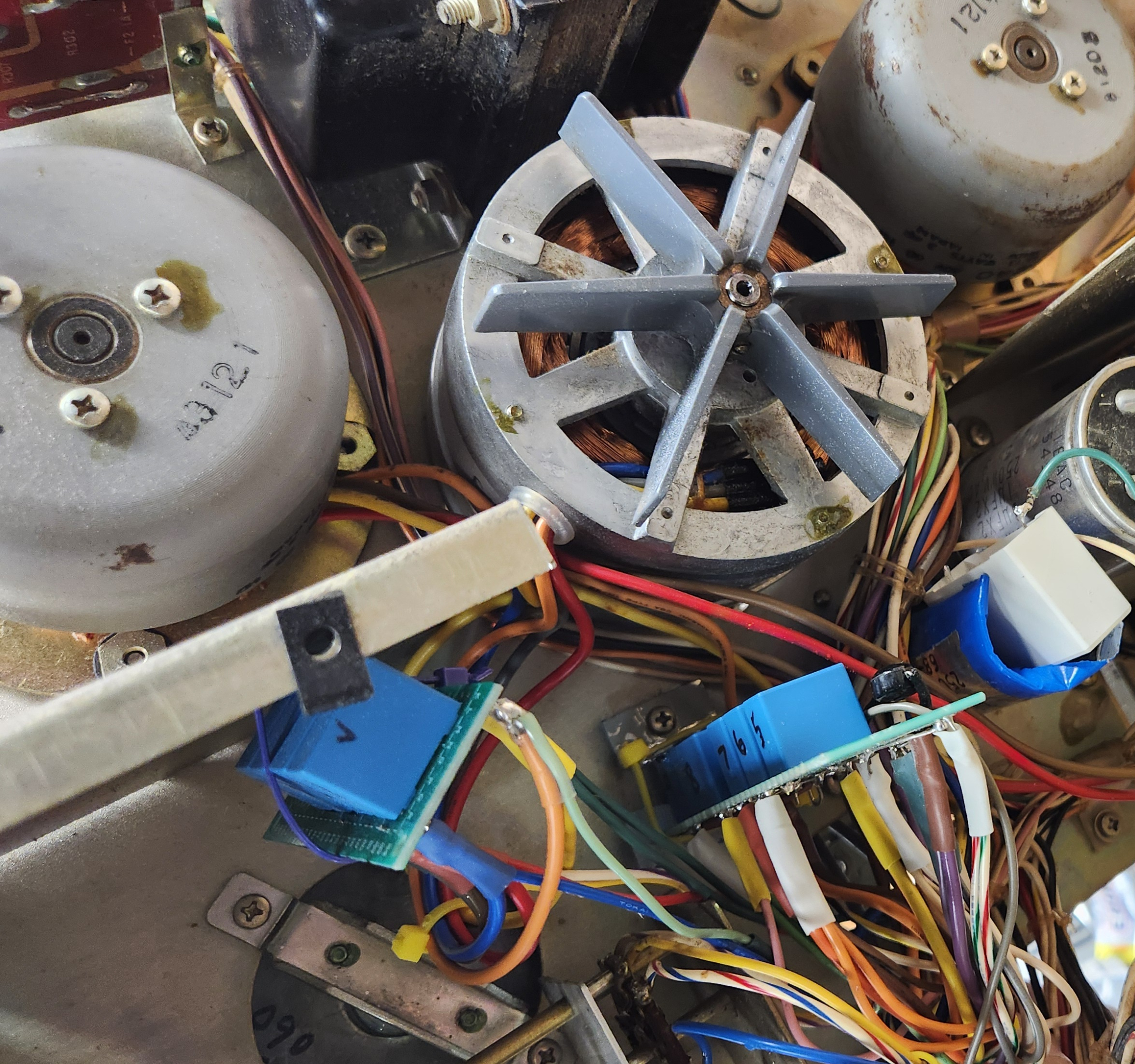
Cup fan.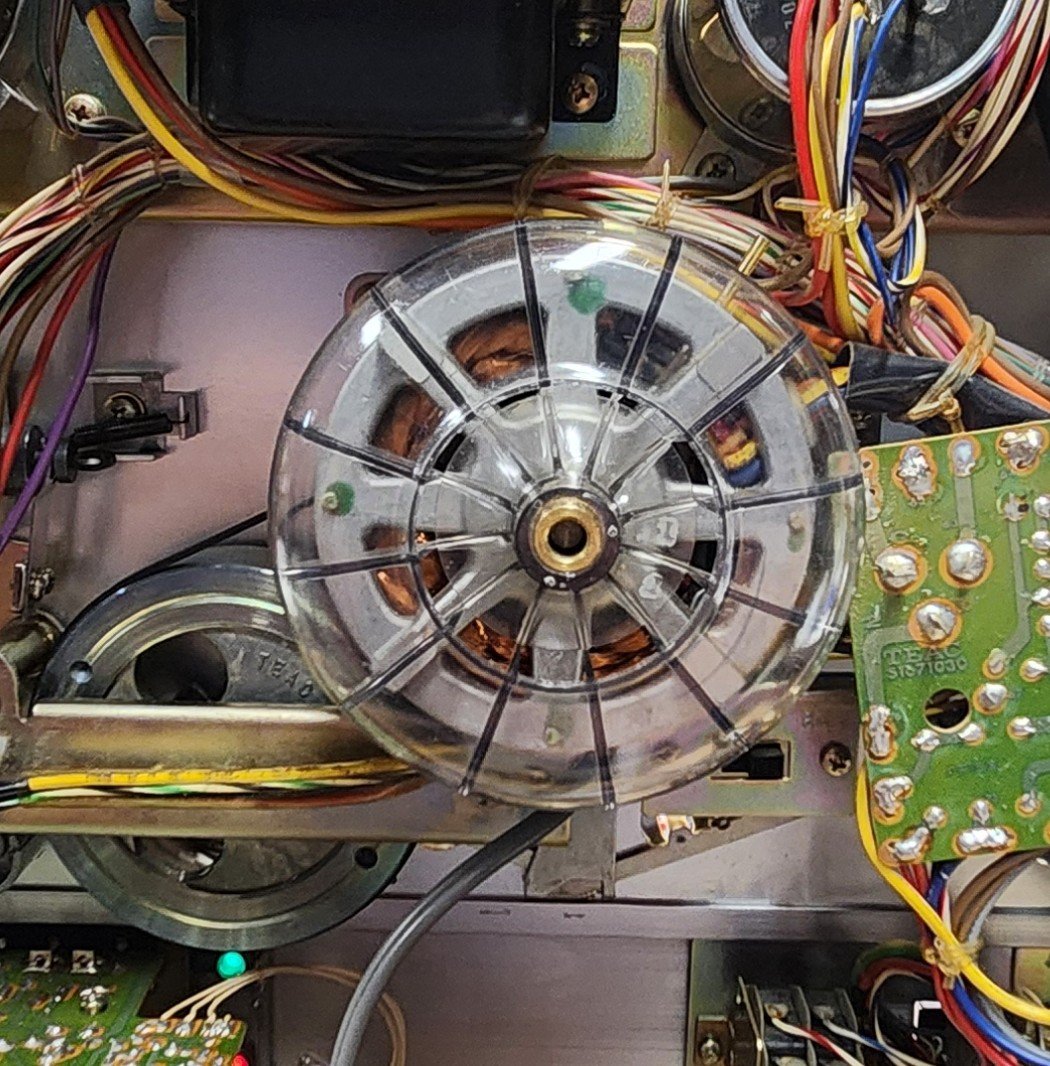
No fan!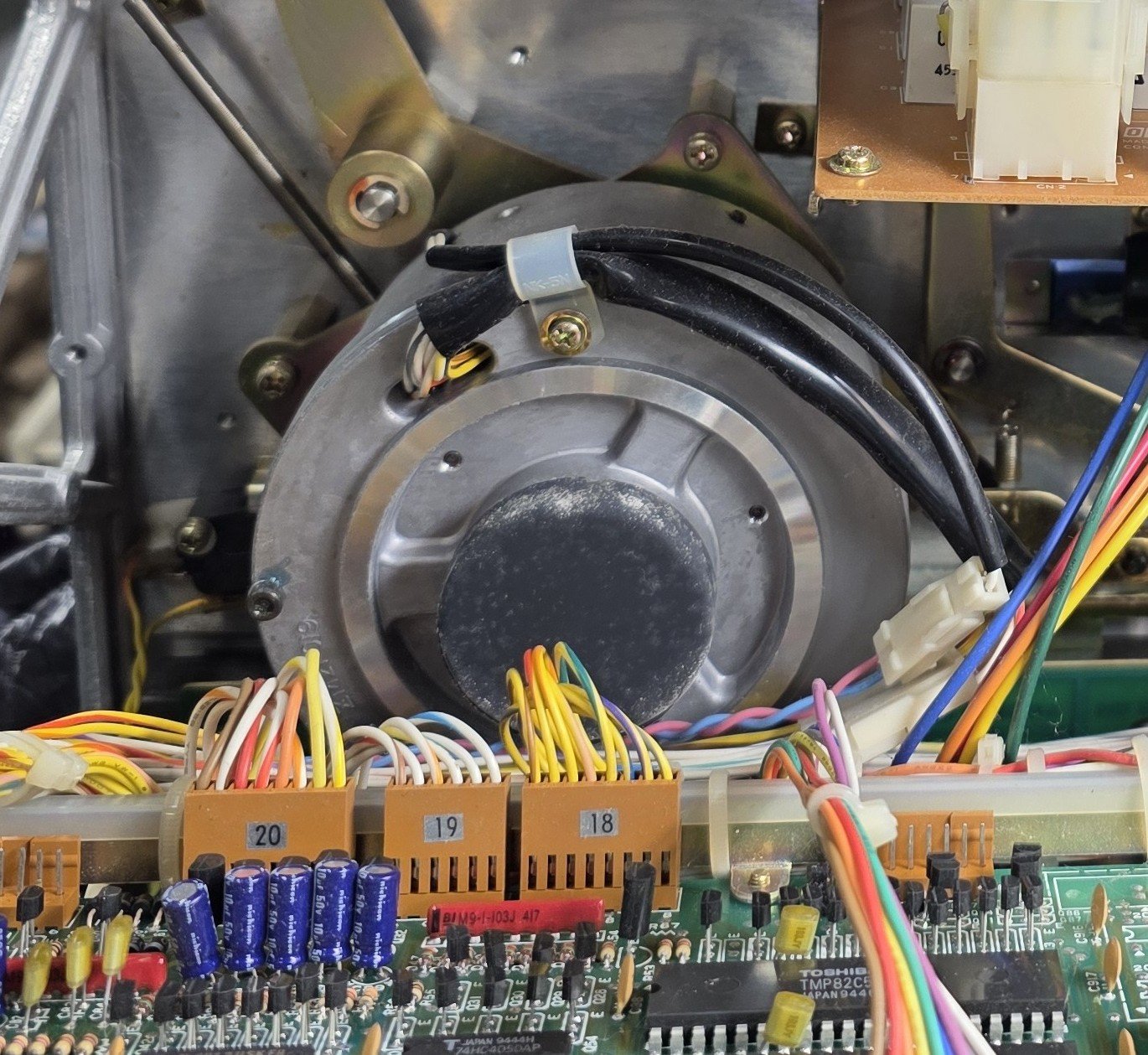
Post edited by SCompRacer onSalk SoundScape 8's * Audio Research Reference 3 * Bottlehead Eros Phono * Park's Audio Budgie SUT * Krell KSA-250 * Harmonic Technology Pro 9+ * Signature Series Sonore Music Server w/Deux PS * Roon * Gustard R26 DAC / Singxer SU-6 DDC * Heavy Plinth Lenco L75 Idler Drive * AA MG-1 Linear Air Bearing Arm * AT33PTG/II & Denon 103R * Richard Gray 600S * NHT B-12d subs * GIK Acoustic Treatments * Sennheiser HD650 * -
Oh boy, I have no idea about the flux level on this tape I have.SCompRacer wrote: »What flux level is your calibration tape? The old standard was 185, but many calibration tapes sold now are 250nWb/m. You can use a 250 tape to calibrate to lower (or higher) levels remembering to compensate for the output. So the SM says adjust output level with knob at 2 o’clock to -8dB (308mv) with a 185 tape. Using a 250 tape and adjusting to 200, I adjust output to -6dB (388mv). Instead of calibrating VU meters to 0dB, they would be +2.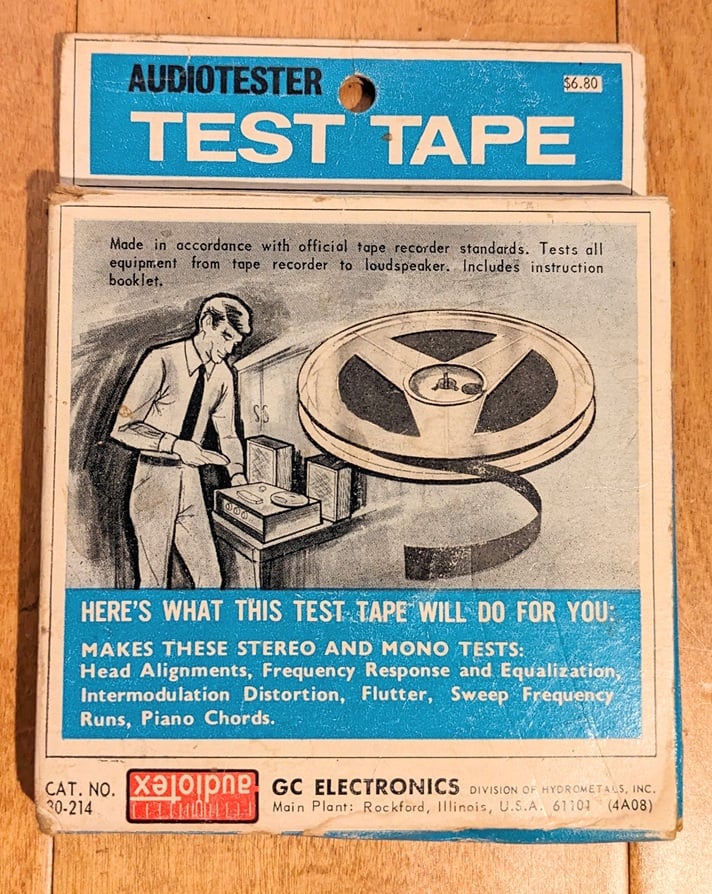
It was really cheap, so low expectations for it.
Hmmm...can you direct me to the page number in the 4000D SM that mentions setting the output level knob at 2 o'clock, etc.? I've looked through that manual several times, and can't find that and other references you mentioned. I believe the adjustment procedures for output and recording levels are all on page 13.
"This may not matter to you, but it does to me for various reasons, many of them illogical or irrational, but the vinyl hobby is not really logical or rational..." - member on Vinyl Engine
"Sometimes I do what I want to do. The rest of the time, I do what I have to." - Cicero, in Gladiator
Regarding collectibles: "It's not who gets it. It's who gets stuck with it." - Jimmy Fallon -
My bad, I should have said so my Teac SM says… Teac specified a maximum output calibration with volume full CW, then you backed off line out to a 2 or 3 o’clock setting to adjust a reference level output. Same process with record.
Internet Archive has an older GE Electronics catalog. They list 30-212, 30-213 test tapes but no details about flux levels. I doubt your test tape is higher than 185 based on its age but it could possibly be lower.
I downloaded a 4000D manual. I see they only mention playing a test tape with 700Hz signal @ 7.5ips. In the 4000D footnotes they do say output level at maximum. Teac used 400Hz to set output levels. Techs have told me 1kHz is an acceptable frequency for output calibration instead of 400Hz. MRL tapes are typically 1kHz at 0 VU for output calibration.
Some manufacturers will specify the flux level or a part number to their factory alignment tapes. A quick search shows Akai techs saying use a 185nWb/m calibration tape for the 4000D. Again, you can use a higher flux level tape to calibrate to a lower flux level by remembering your output readings will be at a higher level. You can also use a lower flux level tape like 250 to calibrate to a higher level like 320. MRL, RTM list the dB differences.
For record calibration the Akai SM specifies using Scotch 211. That tape is on the possible SSS or sticky shed syndrome list. Best thing is to research any tape you have before using it. There are some bake methods employed to temporarily fix a SSS tape and then record it onto a good tape. Link to one site below.
https://favreaumixingmastering.com/en/sticky-shed-syndrome-treatment-tape-list/
ural91 sells Akai 7.5 calibration tapes. It would set you back ~$112 shipped with today's euro conversion. Without knowing the exact parameters of your calibration tape you don't know what you are calibrating to. Not only flux level but are the frequencies at 0vu or -10vu.
https://www.ebay.com/itm/304470530130?itmmeta=01KC27WXAG531JQKM6WP7EDJMZ&hash=item46e3db9852:g:~K4AAeSw0W9ofmrO
Techs that have distortion analyzers can compare the differences calibrating an older deck to a higher flux level. I have a computer program (Visual Analyzer 64) for testing distortion but using a computer sound card I don't trust the results as take it to the bank numbers. However, it will show if I have an increase if I calibrate too high, so 200nWb/m is my compromise calibration for the older 185 Teac decks using a 250 tape. When I record on newer tape like LPR35, I can record hotter like +2-3dB over 0VU. If the SQ suffers, I back record levels off. It's not that the tape can't handle hotter levels, its exceeding the design parameters of the decks amp.
EDIT: I see your post at Tapeheads. Tapetech is the man. He has assisted me and many others with his knowledge and experience.
Post edited by SCompRacer onSalk SoundScape 8's * Audio Research Reference 3 * Bottlehead Eros Phono * Park's Audio Budgie SUT * Krell KSA-250 * Harmonic Technology Pro 9+ * Signature Series Sonore Music Server w/Deux PS * Roon * Gustard R26 DAC / Singxer SU-6 DDC * Heavy Plinth Lenco L75 Idler Drive * AA MG-1 Linear Air Bearing Arm * AT33PTG/II & Denon 103R * Richard Gray 600S * NHT B-12d subs * GIK Acoustic Treatments * Sennheiser HD650 * -
Lots of good info in your posts, so hopefully others will also benefit from it.
Ha, no worries on the Teac vs Akai service manual instructions
I only have a couple more Akai tape decks to sort out, so I'll likely try to push through without buying another calibration tape. Interesting, though, that ural91 (from Germany) on eBay seems to use Scotch tapes, but I guess not all Scotch tapes are considered bad? The GennLab tapes I mentioned are actually made/sold from New Zealand. What is it about us Americans having to buy calibration tapes from abroad?
The better tapes from my dad's collection are mostly TDK, with one LX35-90B that I believe is blank/unused. There's a Maxell UD 35-90 (with metal reel) that has been recorded on, but I think only once, so it is a prime candidate for new material. I also see an Ampex Grand Master 1800 that appears to be 'virgin'. There is also a butt-load of Soundcraft 'Golden Tone' tapes that have previously recorded material on them - these are my current 'test subjects' when experimenting."This may not matter to you, but it does to me for various reasons, many of them illogical or irrational, but the vinyl hobby is not really logical or rational..." - member on Vinyl Engine
"Sometimes I do what I want to do. The rest of the time, I do what I have to." - Cicero, in Gladiator
Regarding collectibles: "It's not who gets it. It's who gets stuck with it." - Jimmy Fallon -
Thx for the kind words. When I got deeper into tape I thought how hard could it be....lol
According to his ad, ural91 still uses RTM LPR35 tape but appears to stick it in a Scotch box now. My tape is in a white box that said Tonbandspule which translates to audiotape reel.
It would have run me over $400 for two (3.75/7.5) MRL four frequency tapes. Since it's just a hobby, and ural91 had good rep in the forums, I went with his. I'd need six tapes for the Otari, one for each speed (3.75/7.5/15) in NAB and IEC. I'm not going there....
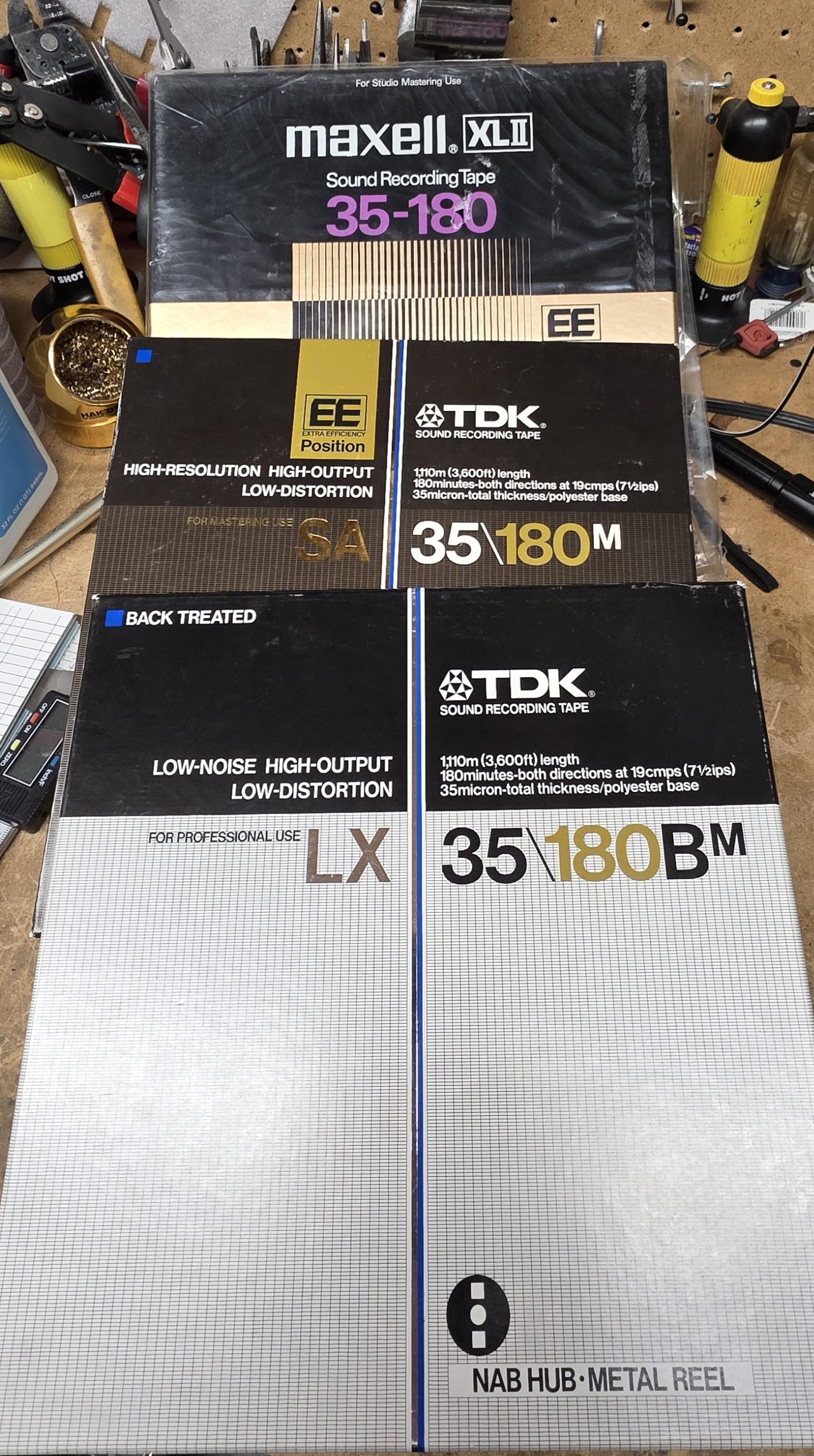
I have some sealed 7" reels of Maxell UD 35-90. Good stuff! I have a 10.5 aluminum reel of LX 35/180Bm and a couple of EE.
I try and keep a list updated of old tapes real tapeheads are using and not reporting problems with.
TDK Audua
Scotch 203
Ampex 641/642
Ampex PEM 468
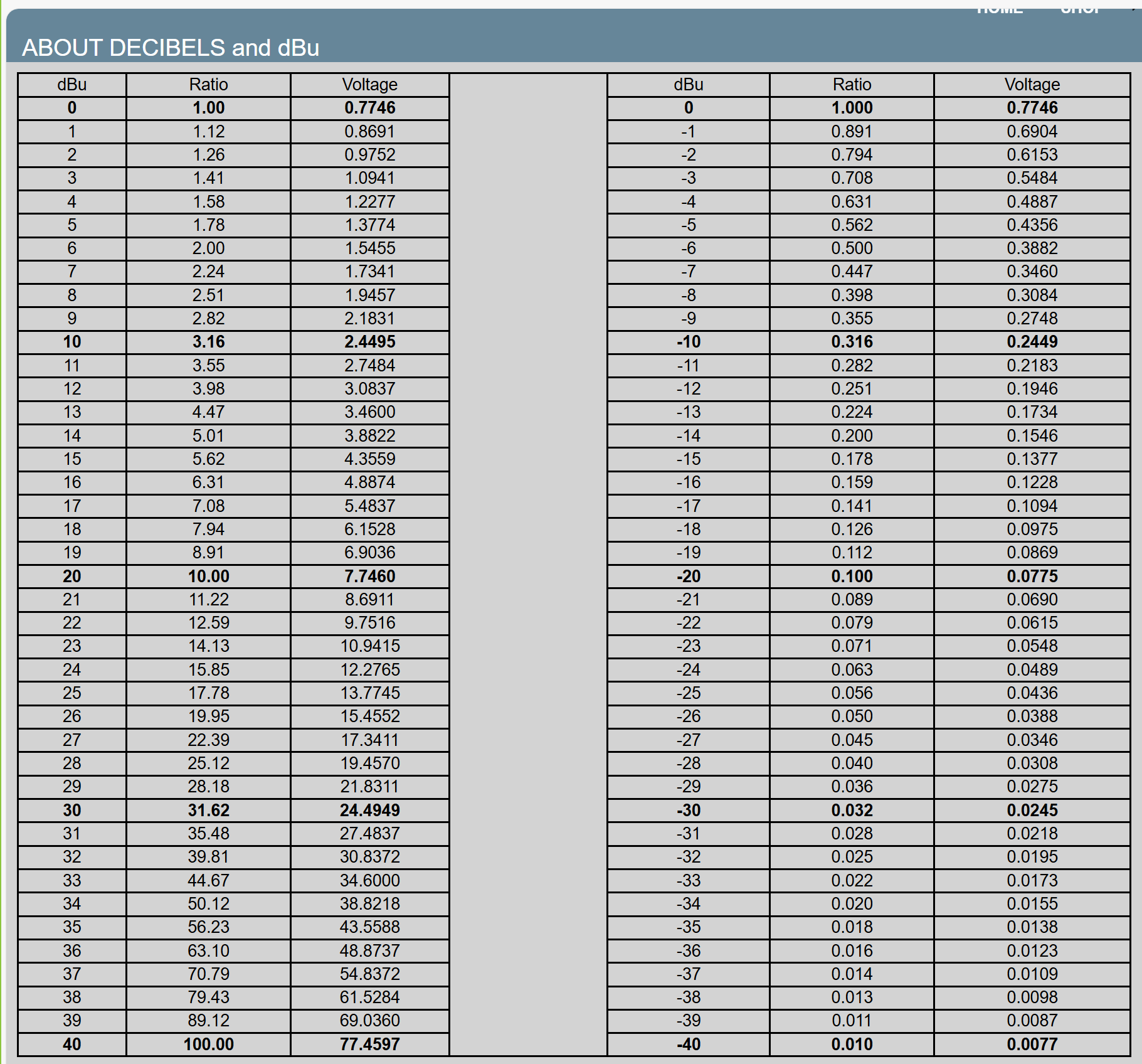
One thing I keep handy is a dBu to voltage chart. SM's typically say dB but not the voltage. dBu(m) is typically used in calibration.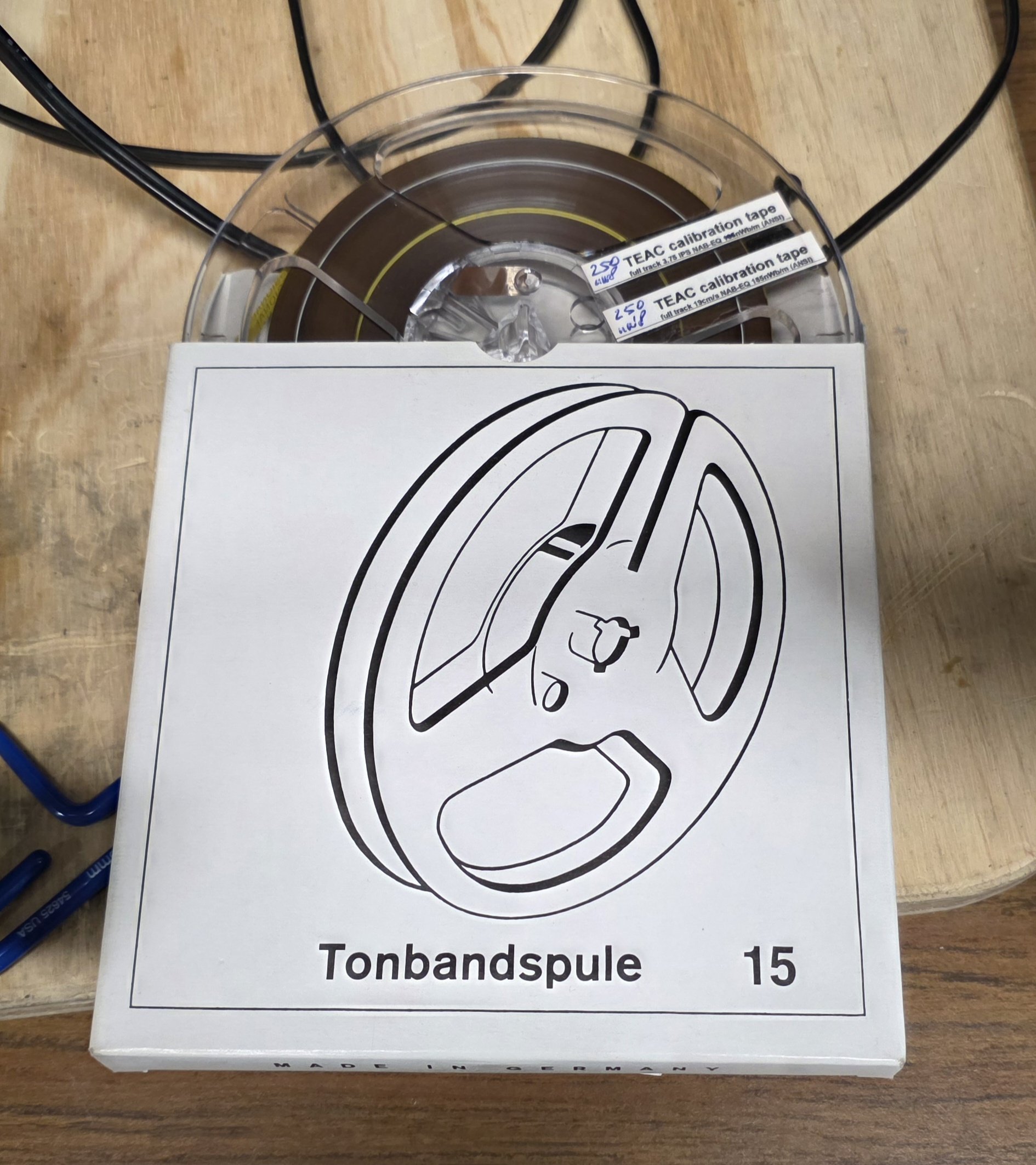
Salk SoundScape 8's * Audio Research Reference 3 * Bottlehead Eros Phono * Park's Audio Budgie SUT * Krell KSA-250 * Harmonic Technology Pro 9+ * Signature Series Sonore Music Server w/Deux PS * Roon * Gustard R26 DAC / Singxer SU-6 DDC * Heavy Plinth Lenco L75 Idler Drive * AA MG-1 Linear Air Bearing Arm * AT33PTG/II & Denon 103R * Richard Gray 600S * NHT B-12d subs * GIK Acoustic Treatments * Sennheiser HD650 *


