Mcintosh C2800 Vs. C2300, a REVIEW

nooshinjohn
Posts: 26,002
I begin writing this by saying that I never thought I would ever find myself in a position to be able to acquire a McIntosh preamp brand new in the box given the price tag for a piece like the C2800 is prohibitively expensive on my budget. I have been quite pleased with the tube analog C2300 that have I have been using for nearly 2 years. It has been an outstanding performer and I had no intention or desire to be replacing anything at this time. Then Magnolia loses the product line and the opportunity to step up became something to really think about. It has been a six month long odyssey to get to the point where we are now, and that is a shiny new C2800 in my Audio room.
Let’s start off by talking briefly about the C2300. It is McIntosh’s last all analog tube preamplifier within a single chassis they do make a C12000 but that piece is well out of price range at over $20,000. It is a bit insane how expensive getting into high-end Audio can be these days, but with that said, gear like the C2300 comes up on the used market as a relative bargain. I purchased mine from a gentleman who took the best of care of it and it performs as if it were brand new. Sonically this is the best preamp I have ever had in my system.. It just seems to do everything right. The addition of the SimAudio 680d DAC took things to a completely different level. Everything that I’ve been hoping to get out of my system came true. Details, micro details sounds stage focus resolution, everything just felt right. To be honest, I never really felt it necessary to upgrade and I was perfectly happy with what I had.
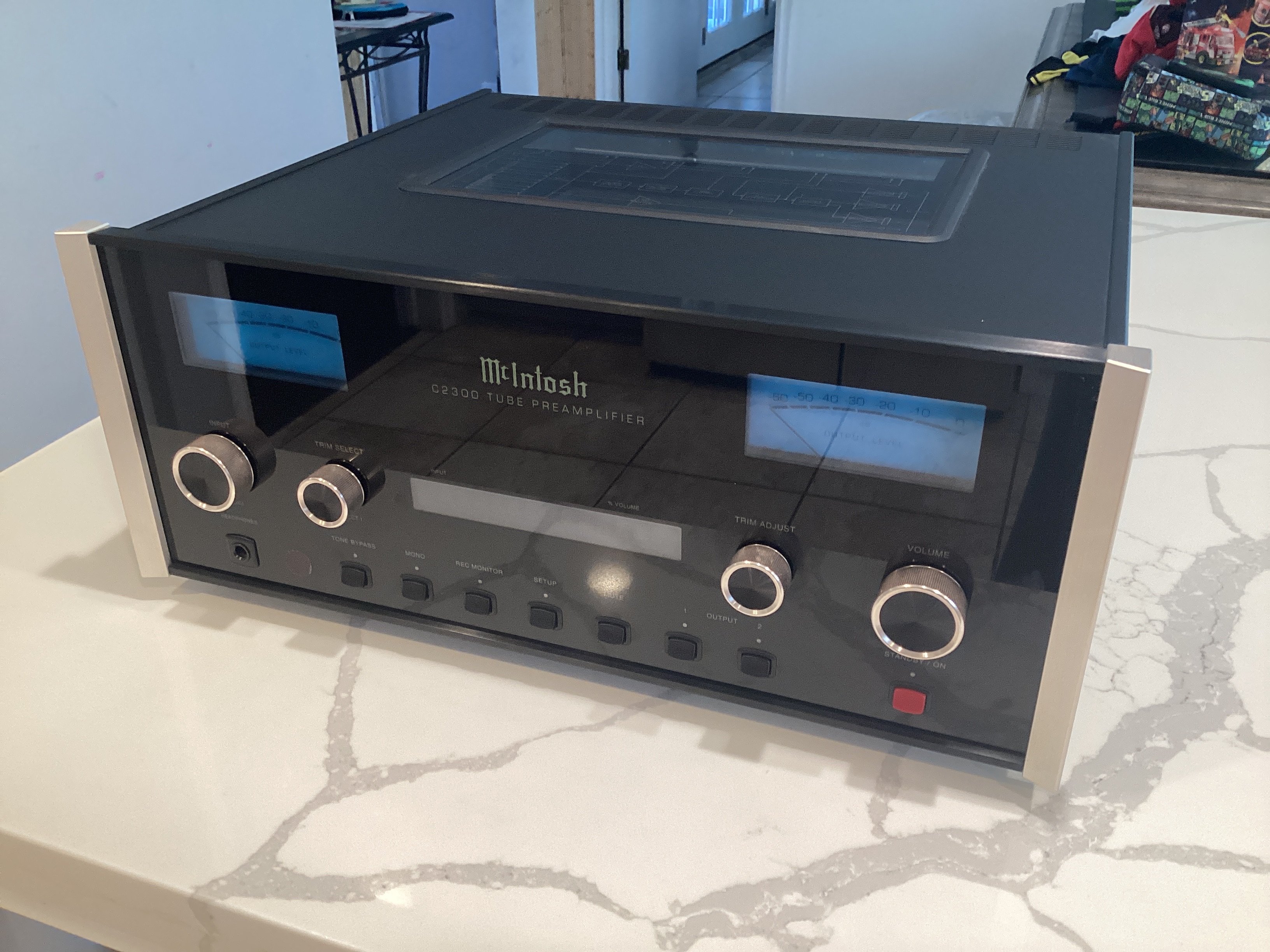
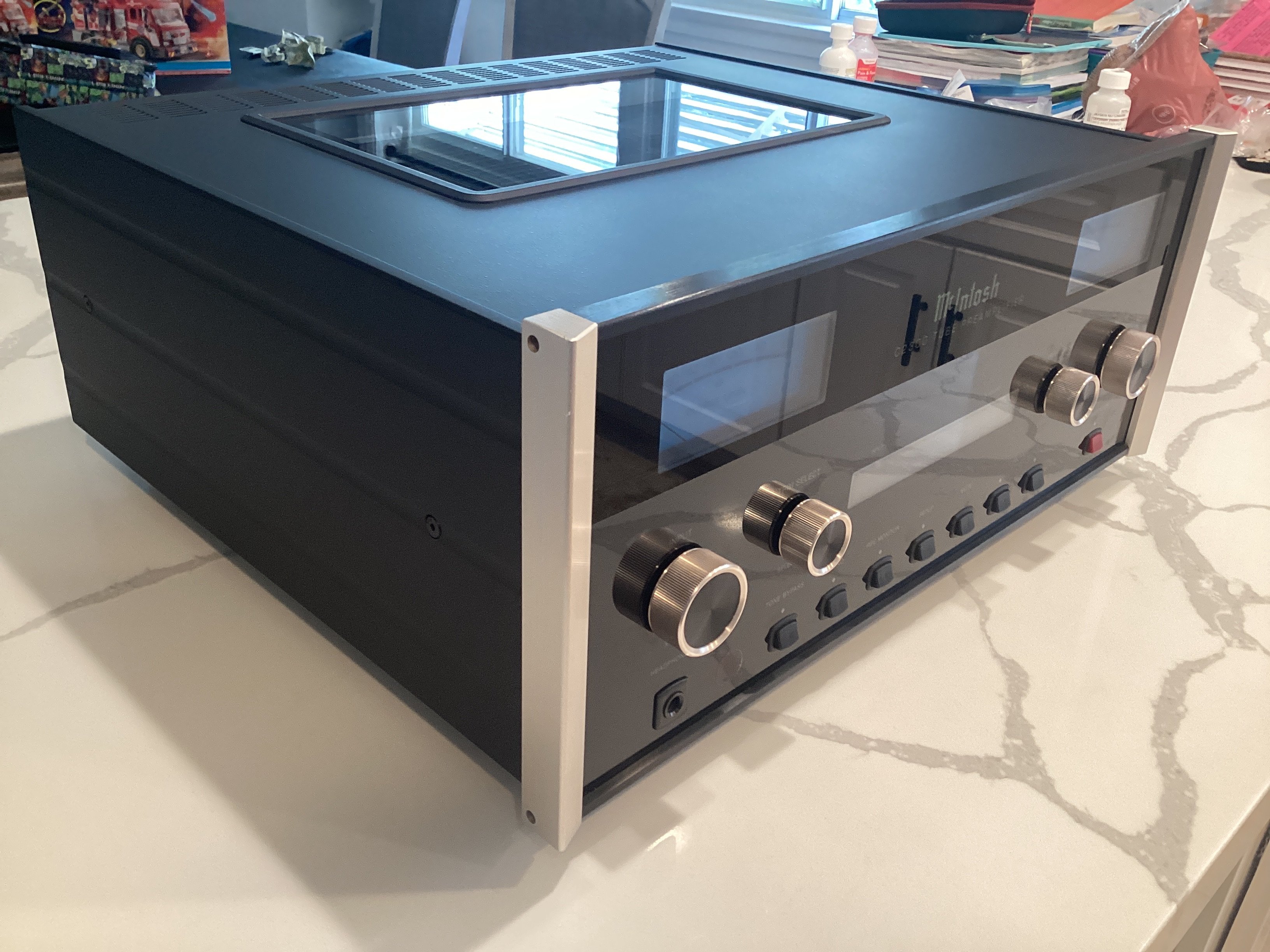
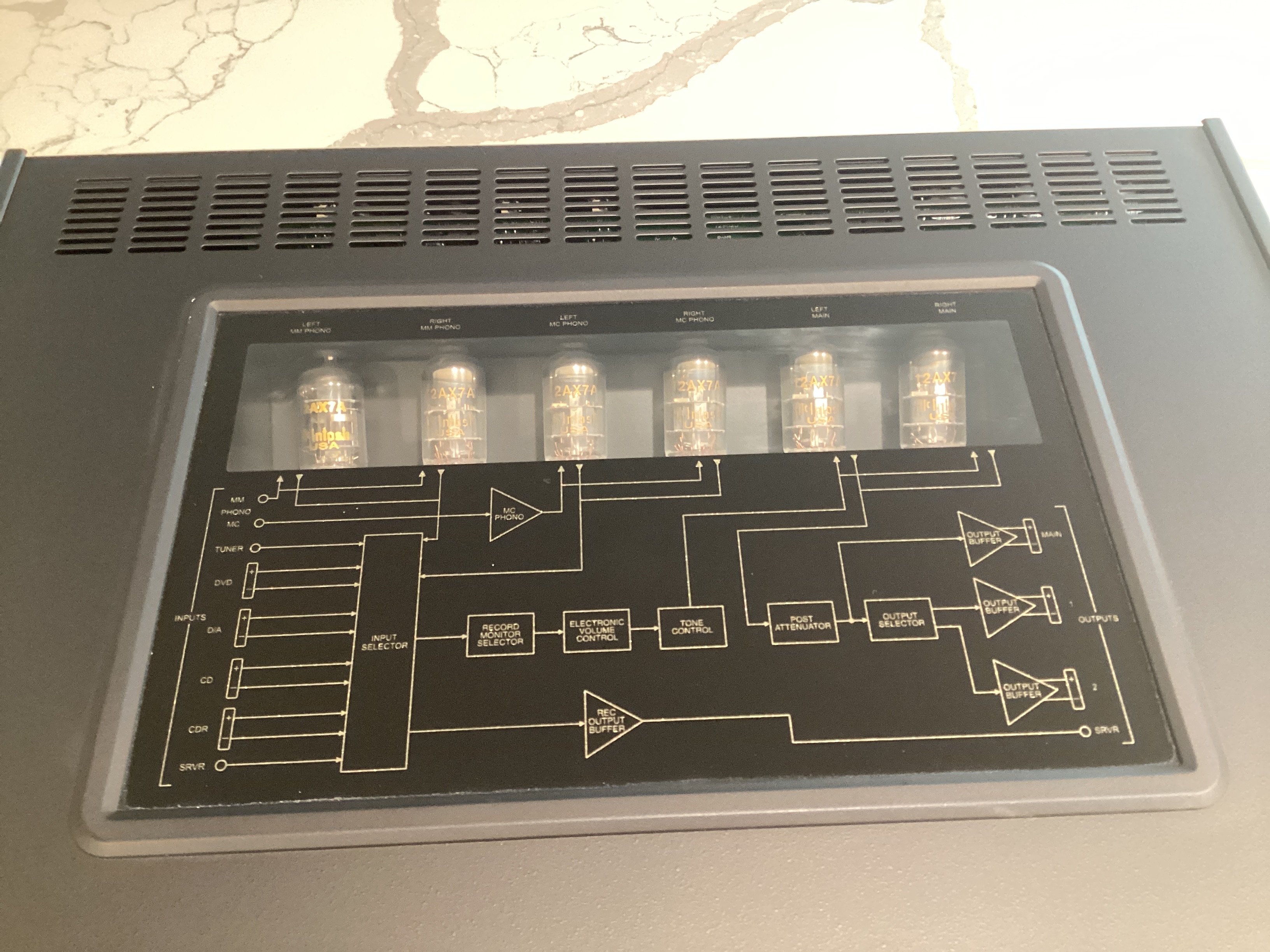
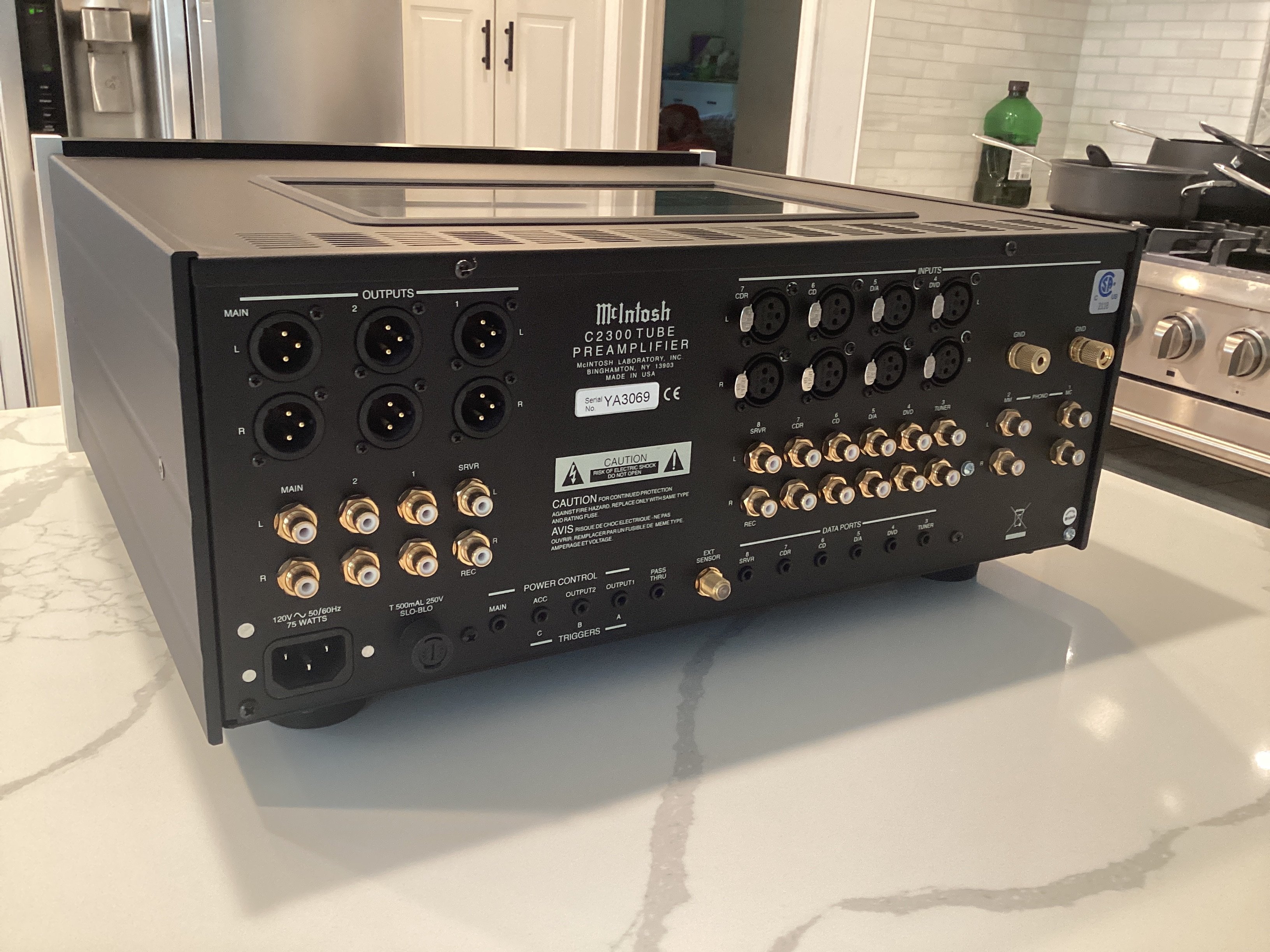
That said, in this hobby we’re always looking for something better and for me the convenience of features offered by the C2800, including the ability to add subwoofers directly to the pre-amplifier and the upgrade ability for the DAC seem to make sense. Being happy with what I already had, I also felt I needed to give this new preamp a try. With Magnolia basically giving these things away at cost because they are no longer an authorized seller, it made getting my hands on one a bunch easier.
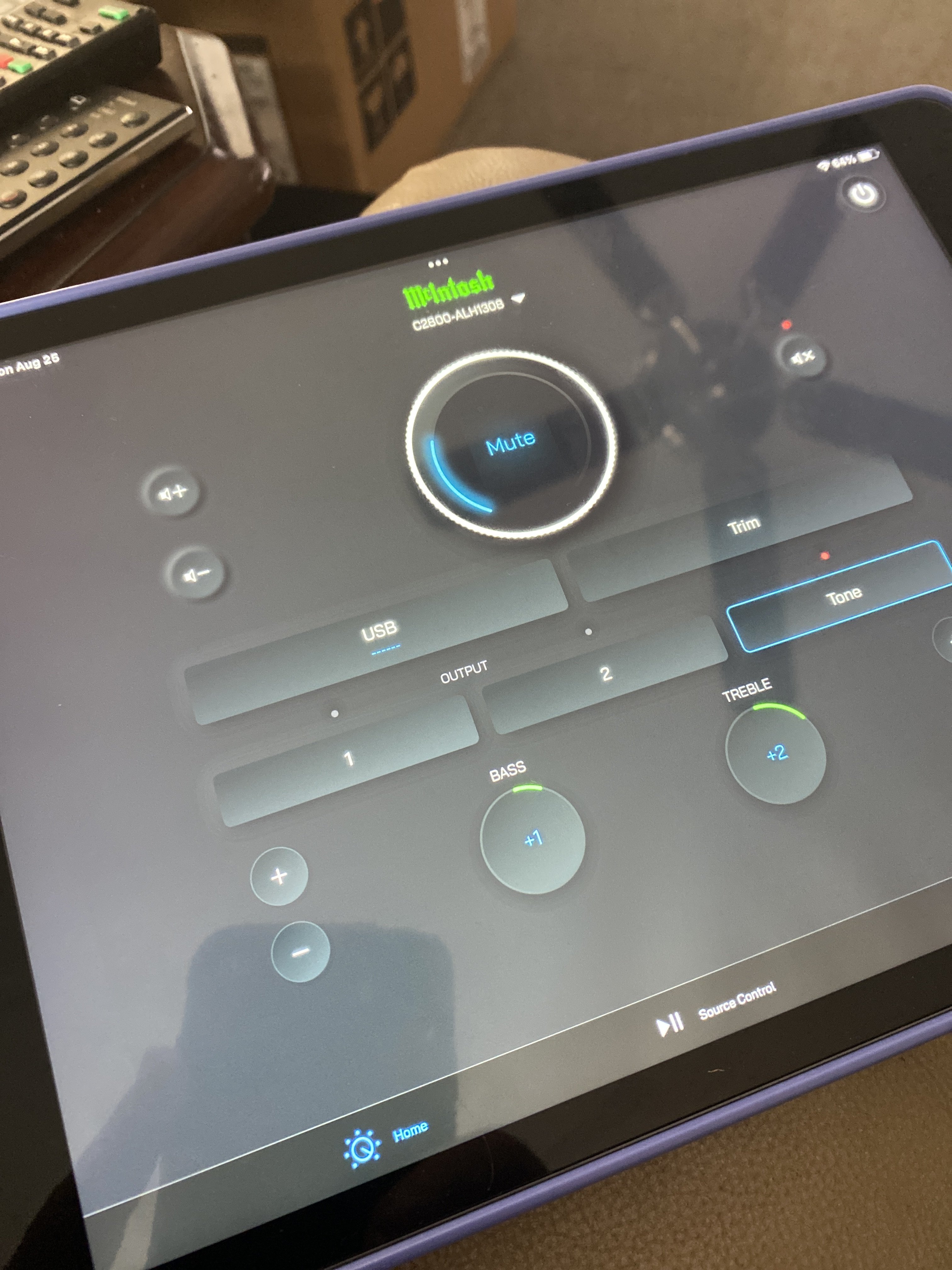
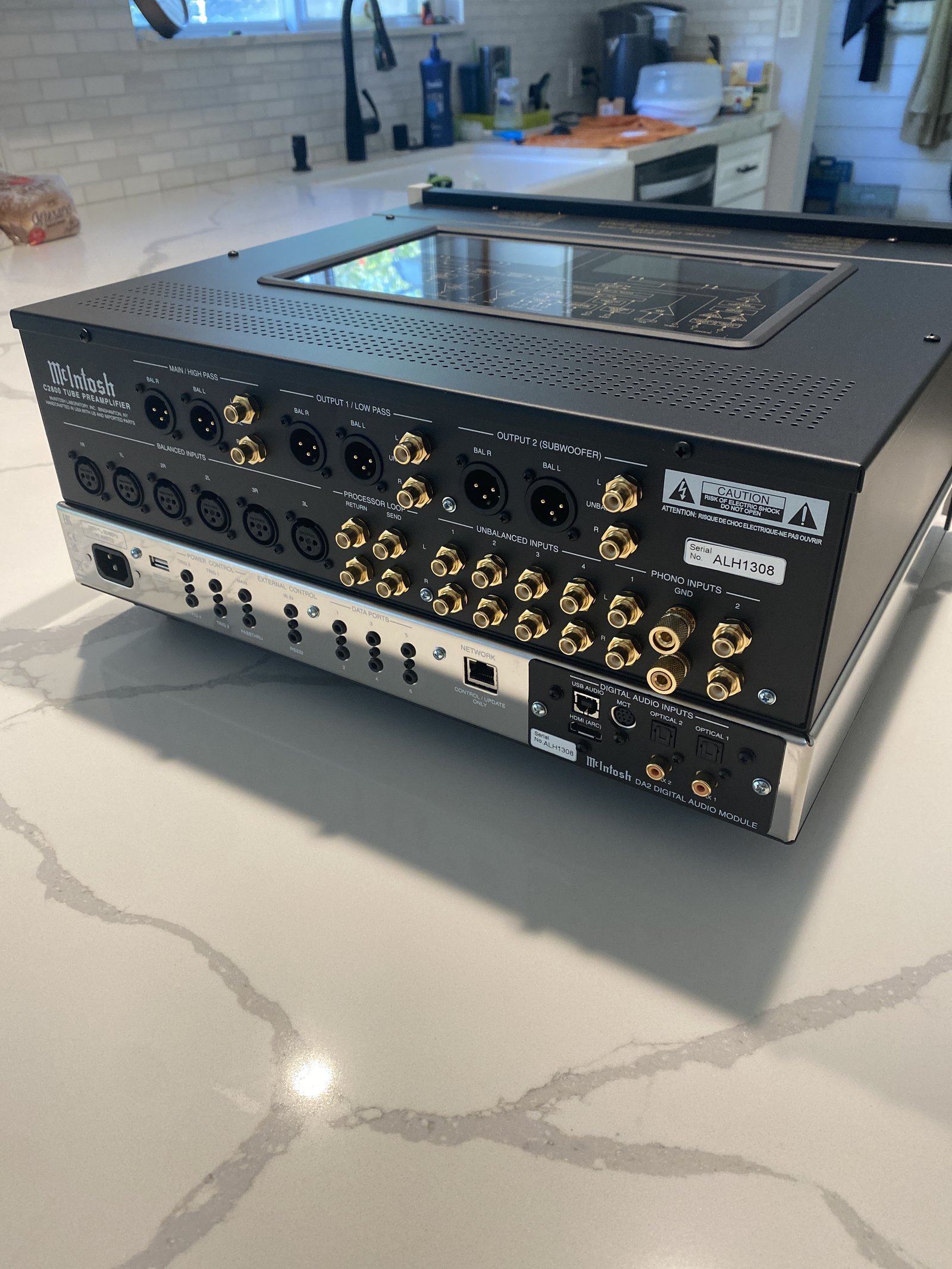
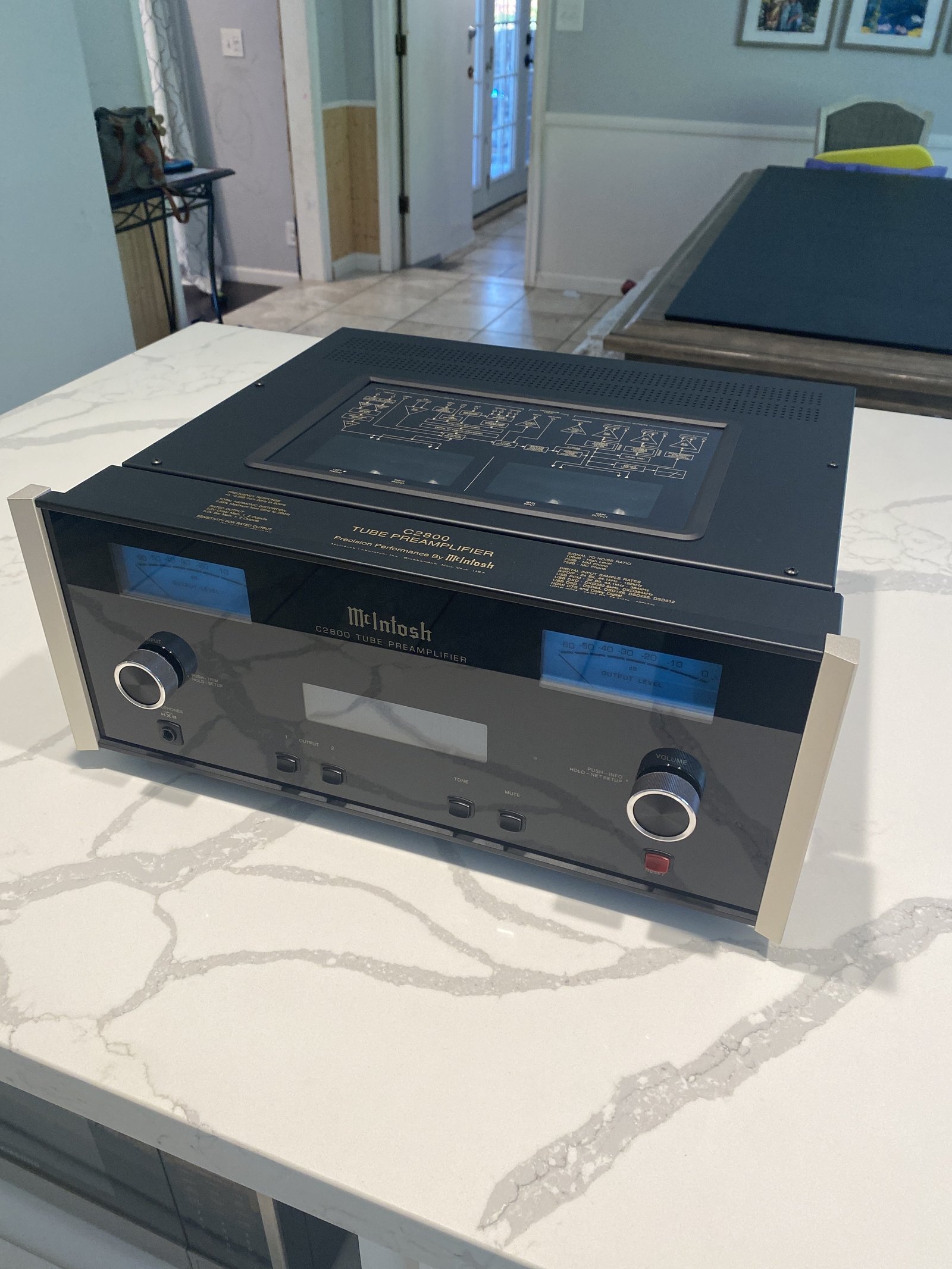
The C2800 shares a strong family resemblance to previous generations of Macintosh preamps. What has changed upfront is that they have changed the controls around a bit so as to reduce the number of buttons coming through the black glass front panel they have also raised up the display by approximately 1 inch which makes viewing from the listening position a bit easier. installing it in my system was fairly straightforward, but this time I also needed to download firmware so that the Macintosh could talk to my computer and home network. This is a big step for me because I am not at all computer savvy, and it required a phone call to Doug down on San Diego to help me get through it. Soon it was playing music and I will go into listening impressions in a bit more detail later. Suffice to say that the similarities between the two preamplifiers are so close that it is impossible to pick out one over the other. This was expected but still surprising, with the one area that the C 2800 does improve upon is the phono stage. The other area of big improvement is in control. You can use the remote control and the buttons on the face panel to get through things, but it is much easier to use the Macintosh control app on my iPad. From there I can control source, volume, tone control, and independent gain levels for each input. These functions and a few more would prove invaluable as I go forward, evaluating the new preamplifier.
Let’s start off by talking briefly about the C2300. It is McIntosh’s last all analog tube preamplifier within a single chassis they do make a C12000 but that piece is well out of price range at over $20,000. It is a bit insane how expensive getting into high-end Audio can be these days, but with that said, gear like the C2300 comes up on the used market as a relative bargain. I purchased mine from a gentleman who took the best of care of it and it performs as if it were brand new. Sonically this is the best preamp I have ever had in my system.. It just seems to do everything right. The addition of the SimAudio 680d DAC took things to a completely different level. Everything that I’ve been hoping to get out of my system came true. Details, micro details sounds stage focus resolution, everything just felt right. To be honest, I never really felt it necessary to upgrade and I was perfectly happy with what I had.
That said, in this hobby we’re always looking for something better and for me the convenience of features offered by the C2800, including the ability to add subwoofers directly to the pre-amplifier and the upgrade ability for the DAC seem to make sense. Being happy with what I already had, I also felt I needed to give this new preamp a try. With Magnolia basically giving these things away at cost because they are no longer an authorized seller, it made getting my hands on one a bunch easier.
The C2800 shares a strong family resemblance to previous generations of Macintosh preamps. What has changed upfront is that they have changed the controls around a bit so as to reduce the number of buttons coming through the black glass front panel they have also raised up the display by approximately 1 inch which makes viewing from the listening position a bit easier. installing it in my system was fairly straightforward, but this time I also needed to download firmware so that the Macintosh could talk to my computer and home network. This is a big step for me because I am not at all computer savvy, and it required a phone call to Doug down on San Diego to help me get through it. Soon it was playing music and I will go into listening impressions in a bit more detail later. Suffice to say that the similarities between the two preamplifiers are so close that it is impossible to pick out one over the other. This was expected but still surprising, with the one area that the C 2800 does improve upon is the phono stage. The other area of big improvement is in control. You can use the remote control and the buttons on the face panel to get through things, but it is much easier to use the Macintosh control app on my iPad. From there I can control source, volume, tone control, and independent gain levels for each input. These functions and a few more would prove invaluable as I go forward, evaluating the new preamplifier.
The Gear... Carver "Statement" Mono-blocks, Mcintosh C2800 Arcam AVR20, Oppo UDP-203 4K Blu-ray player, Sony XBR70x850B 4k, Polk Audio Legend L800 with height modules, L400 Center Channel Polk audio AB800 "in-wall" surrounds. Marantz MM7025 stereo amp. Simaudio Moon MiND2 Shunyata Triton/Typhon Rotel RP9400 Turntable
“When once a Republic is corrupted, there is no possibility of remedying any of the growing evils but by removing the corruption and restoring its lost principles; every other correction is either useless or a new evil.”— Thomas Jefferson
How many flies need to be buzzing a dead horse before you guys stop beating it?
“When once a Republic is corrupted, there is no possibility of remedying any of the growing evils but by removing the corruption and restoring its lost principles; every other correction is either useless or a new evil.”— Thomas Jefferson
How many flies need to be buzzing a dead horse before you guys stop beating it?
Post edited by nooshinjohn on
Comments
-
Nice write up, John. Thanks.
-
The Gear... Carver "Statement" Mono-blocks, Mcintosh C2800 Arcam AVR20, Oppo UDP-203 4K Blu-ray player, Sony XBR70x850B 4k, Polk Audio Legend L800 with height modules, L400 Center Channel Polk audio AB800 "in-wall" surrounds. Marantz MM7025 stereo amp. Simaudio Moon MiND2 Shunyata Triton/Typhon Rotel RP9400 Turntable
“When once a Republic is corrupted, there is no possibility of remedying any of the growing evils but by removing the corruption and restoring its lost principles; every other correction is either useless or a new evil.”— Thomas Jefferson
How many flies need to be buzzing a dead horse before you guys stop beating it? -
Slacker !!
-
CONTINUED...
The C2800 and the C2300 were virtually tied when listening to vinyl records(in fairness I only played two so far) But the New Mac did a touch better with clarity up top. There just seemed to be a bit more shimmer and better decay with cymbals and such. In the midranges, vocals and guitars were indistinguishable from one another, and the @300 seemed a bit tighter on the bottom end of things.
With SACD and Redbooks, there again was no discernable differences, and try as I might, my ears just could not differentiate between the two, so it became time to listen to the DA2 module... and this is where the real fun begins.
The DA2 Dac module is a well-regarded addition to the Mcintosh preamp. It is not considered to be the be-all, end-all, but for a DAC built into a preamp, it gets solid acclaim for it's performance, and my initial reaction was very positive. Everything was there as it should be. The soundstage was well represented, with instruments properly spaced across a wide field from left to right. Height and depth of the soundstage was also well represented. Midrange was exceptional and layered. Separation of instruments and vocalists was also very good.
If my only experience with DACs was with the DA2 module, or perhaps the DAC included in my Arcam AV20, I would be quite pleased. That said I also have the Simaudio 680d DSD on hand. My next move was to utilize input one on the C2800 and the computer computer audio being streamed to the USB input. By doing so I was able to stream music from my iPad to the Simaudio in the sync the USB input so that I could play an identical signal and shuffle between the two sources. This was an eye-opener and initially very disappointing. The new McIntosh simply could not keep up. It did not matter the music type or genre. It was lacking all the way around.
To be continued…The Gear... Carver "Statement" Mono-blocks, Mcintosh C2800 Arcam AVR20, Oppo UDP-203 4K Blu-ray player, Sony XBR70x850B 4k, Polk Audio Legend L800 with height modules, L400 Center Channel Polk audio AB800 "in-wall" surrounds. Marantz MM7025 stereo amp. Simaudio Moon MiND2 Shunyata Triton/Typhon Rotel RP9400 Turntable
“When once a Republic is corrupted, there is no possibility of remedying any of the growing evils but by removing the corruption and restoring its lost principles; every other correction is either useless or a new evil.”— Thomas Jefferson
How many flies need to be buzzing a dead horse before you guys stop beating it? -
Continued...
The Simaudio 680d DSD is another well regarded piece of equipment, and not something I considered moving on from. It's ability to dig deep into the music and reveal details thought non-existent is remarkable and had me listening to old music seemingly for the very first time. The combination of C2300/680d has been nothing short of brilliant. Introducing it to the C2800 was another revelation. Sonically superior in every way to the DA2 module. All of a sudden, what I found to be a very satisfying swap had me wanting to go back to the previous setup and forget I ever even thought I could equal what I had much less do better. Again, it is not that the Mcintosh was not performing well enough, just that the Simaudio was bringing better resolving power to bear and it showed from top to bottom throughout the audio spectrum.
This brings me back to my iPad and the McConnect app. Disappointed, I went and grabbed the packing boxes and was about to begin reinstalling the previous setup when I decided to spend some time playing around in the app. There are a ton of features in there to assist in unlocking to full performance for the C2800. Puzzled as to why a newer DAC from a world-renown maker like Mcintosh would not be able to at least equal a DAC from 10 years ago, I started to mess around with the tone controls.
Yes, I know, tone controls are an abomination and have no place in high end "audiophile" grade equipment but hear me out. In my case, a bump of plus2 in treble and plus1 in bass somehow made the DA2 sound EXACTLY LIKE the 680d. I spent three hours last night toggling back and forth between sources at level matched output and was unable to hear any difference whatsoever. Music genre and volume resulted in no discernable difference between the two. This is what I was hoping to achieve at a minimum. I need to keep playing with it a bit before I decide to keep it or not, but the flexibility and the easy by which future upgrades can be made without the expense of replacement, combined with the ease of control and use all give the C2800 a leg up over the competition.
I also have a newfound understanding of the use of tone controls. They are in no way a substitute for a properly designed piece of gear, and they are still, to me, a bit of a placebo for poor design. That said, they can be used as a tweak to enhance performance to better match equipment to the rig, the room, and lastly, to listener preference. I also now have questions as to why certain gear needs to cost so much. If a small adjustment was able to make such a vast improvement, I wonder what hides inside that beautiful, sculpted silver box.
More to come later, but for now, these are my impressions after a few days with the new Mcintosh. More updates to come.The Gear... Carver "Statement" Mono-blocks, Mcintosh C2800 Arcam AVR20, Oppo UDP-203 4K Blu-ray player, Sony XBR70x850B 4k, Polk Audio Legend L800 with height modules, L400 Center Channel Polk audio AB800 "in-wall" surrounds. Marantz MM7025 stereo amp. Simaudio Moon MiND2 Shunyata Triton/Typhon Rotel RP9400 Turntable
“When once a Republic is corrupted, there is no possibility of remedying any of the growing evils but by removing the corruption and restoring its lost principles; every other correction is either useless or a new evil.”— Thomas Jefferson
How many flies need to be buzzing a dead horse before you guys stop beating it? -
I am having a very hard time putting into words what I am hearing tonight, but I think I am hearing the very same phenomena that Tom @treitz3 described a while ago. From a tonal standpoint, the new Mac's DA2 module and the Simaudio 680d are in near perfect sync. There is no sonic difference that just jumps out they are both superb. What is apparent is a velvety blackness to the Simaudio. This manifests itself in the perception of a clean area around each instrument and vocalist instead of an incredibly soft haze. This helps with giving a deeper look into the soundstage, and into the musicianship of separate instruments such as acoustic guitar, Tenor Sax, or vocal texture.
Again, it is not a tonal thing, volume related or some psychosomatic effect. It is there. Once again, it is not genre related, as it is there for every track I listened to, and now that I have identified it, it cannot be unheard. The DAC module is housed in the power section of the preamp and I wonder how well it is isolated from interference.The Gear... Carver "Statement" Mono-blocks, Mcintosh C2800 Arcam AVR20, Oppo UDP-203 4K Blu-ray player, Sony XBR70x850B 4k, Polk Audio Legend L800 with height modules, L400 Center Channel Polk audio AB800 "in-wall" surrounds. Marantz MM7025 stereo amp. Simaudio Moon MiND2 Shunyata Triton/Typhon Rotel RP9400 Turntable
“When once a Republic is corrupted, there is no possibility of remedying any of the growing evils but by removing the corruption and restoring its lost principles; every other correction is either useless or a new evil.”— Thomas Jefferson
How many flies need to be buzzing a dead horse before you guys stop beating it? -
nooshinjohn wrote: »There is no sonic difference that just jumps out they are both superb. What is apparent is a velvety blackness to the Simaudio. This manifests itself in the perception of a clean area around each instrument and vocalist instead of an incredibly soft haze. This helps with giving a deeper look into the soundstage, and into the musicianship of separate instruments such as acoustic guitar, Tenor Sax, or vocal texture.
Again, it is not a tonal thing, volume related or some psychosomatic effect. It is there. Once again, it is not genre related, as it is there for every track I listened to, and now that I have identified it, it cannot be unheard. The DAC module is housed in the power section of the preamp and I wonder how well it is isolated from interference.
I was honestly hesitant to post this, as it seems that some folks around these parts seem to not want to hear any more about it, but I will post this anyway. What you are hearing in my experience is the loss of "noise" in one versus the other, when audibly comparing these two components. The Simaudio (from what you have described here) has less noise that is either introduced, passed through or shielded from/filtered out compared to what basically amounts to an all in one box that also handles many other things. EMI and RFI also bounce around inside your new pre and what you are hearing is the audible result.
The Simaudio may also handle jitter, leakage current, Allan deviation, timing variances within the 1's and 0's (whether it be immediate, misread, short or long) better than the pre. This is not surprising because the Simaudio is more of a dedicated device, where these types of things are better controlled versus an all in one box that performs multiple things. Then there are the clock differences and circuitry leading up to and from it. The reasons why you are hearing what you just described are vast, but at the end of the day, it all boils down to the loss of noise.
This is exactly why I have attacked as much noise as possible throughout my system. Now that you have identified it, "unhearing" it is not possible IME, and it's rather easy to pick up on from here on out. Not only with your system but others as well.
Congrat's on your new pre. I would recommend getting some spare/upgraded tubes soon, just in case.
Tom
~ In search of accurate reproduction of music. Real sound is my reference and while perfection may not be attainable? If I chase it, I might just catch excellence. ~ -
I was hoping you would chime in Tom, my thanks!
Fortunately, with some moving things around, I am in a spot where I can keep both Preamp and DAC. I have decided to try and do just that. How often does it happen where we can buy a brand-new piece of dream gear for dead cost-plus tax? The functionality this pre gives me going forward means I can someday explore a whole new world of audio. True bi-amping, dual subs, nine inputs plus dual phono stages, HDMI ARC input... the combinations are endless.The Gear... Carver "Statement" Mono-blocks, Mcintosh C2800 Arcam AVR20, Oppo UDP-203 4K Blu-ray player, Sony XBR70x850B 4k, Polk Audio Legend L800 with height modules, L400 Center Channel Polk audio AB800 "in-wall" surrounds. Marantz MM7025 stereo amp. Simaudio Moon MiND2 Shunyata Triton/Typhon Rotel RP9400 Turntable
“When once a Republic is corrupted, there is no possibility of remedying any of the growing evils but by removing the corruption and restoring its lost principles; every other correction is either useless or a new evil.”— Thomas Jefferson
How many flies need to be buzzing a dead horse before you guys stop beating it? -
Ok, I'll be 'that guy'. Tom is referring to 'power management', utilizing a myriad of devices to reduce mains AC line noise, whilst nooshinjohn is referring to 'tone control' adjustments (in VERY hi-level gear), achieving a very hi-level playback sound. What if nooshinjohn were to apply similar 'power management' devices into his current setup?
I certainly don't want to minimize the 'power management' aspect, since I have invested quite a bit of jack into that realm, but I think these gents have quite different setups in gear, and I have no doubt both likely sound magnificent."This may not matter to you, but it does to me for various reasons, many of them illogical or irrational, but the vinyl hobby is not really logical or rational..." - member on Vinyl Engine
"Sometimes I do what I want to do. The rest of the time, I do what I have to." - Cicero, in Gladiator
Regarding collectibles: "It's not who gets it. It's who gets stuck with it." - Jimmy Fallon -
Ok, I'll be 'that guy'. Tom is referring to 'power management', utilizing a myriad of devices to reduce mains AC line noise, whilst nooshinjohn is referring to 'tone control' adjustments (in VERY hi-level gear), achieving a very hi-level playback sound. What if nooshinjohn were to apply similar 'power management' devices into his current setup?
I certainly don't want to minimize the 'power management' aspect, since I have invested quite a bit of jack into that realm, but I think these gents have quite different setups in gear, and I have no doubt both likely sound magnificent.
Power management is certainly a consideration but is only a part of the picture. Noise reduction or outright cancellation of it is the focus. My current setup has crossed that threshold where what Tom was talking about makes absolute perfect sense.The Gear... Carver "Statement" Mono-blocks, Mcintosh C2800 Arcam AVR20, Oppo UDP-203 4K Blu-ray player, Sony XBR70x850B 4k, Polk Audio Legend L800 with height modules, L400 Center Channel Polk audio AB800 "in-wall" surrounds. Marantz MM7025 stereo amp. Simaudio Moon MiND2 Shunyata Triton/Typhon Rotel RP9400 Turntable
“When once a Republic is corrupted, there is no possibility of remedying any of the growing evils but by removing the corruption and restoring its lost principles; every other correction is either useless or a new evil.”— Thomas Jefferson
How many flies need to be buzzing a dead horse before you guys stop beating it? -
Could you disclose that threshold? It might be beneficial for folks to have perspective of your power management devices vs what Tom has put out there.nooshinjohn wrote: »Power management is certainly a consideration but is only a part of the picture. Noise reduction or outright cancellation of it is the focus. My current setup has crossed that threshold where what Tom was talking about makes absolute perfect sense."This may not matter to you, but it does to me for various reasons, many of them illogical or irrational, but the vinyl hobby is not really logical or rational..." - member on Vinyl Engine
"Sometimes I do what I want to do. The rest of the time, I do what I have to." - Cicero, in Gladiator
Regarding collectibles: "It's not who gets it. It's who gets stuck with it." - Jimmy Fallon -
Could you disclose that threshold? It might be beneficial for folks to have perspective of your power management devices vs what Tom has put out there.nooshinjohn wrote: »Power management is certainly a consideration but is only a part of the picture. Noise reduction or outright cancellation of it is the focus. My current setup has crossed that threshold where what Tom was talking about makes absolute perfect sense.
It is hard to explain. The best way I can describe it is this.... If you are listening to a single performer, and nobody else is on the stage with them, you hear just that one sound source and all that happens within that acoustic space. Now add a guitar left and a bass guitar right. Each of those performers occupies their own space, but they also alter the acoustic space by being there. The more performers, the more crowded the space becomes.
Now... The DA2 within the Mcintosh does a fantastic job of painting a picture of the space. All of the tonality and sonic information is there and presented just as well as it appears to come from the Simaudio 680d, but this musical information is painted across a darker canvas. The haze of confusion in the space between individual performers is greatly diminished, allowing for the texture of the performance to shine through.
We have all experienced hearing things in a song that were passed over on lesser gear that we were shocked to hear when the upgrade was made. This is no different, except now I am listening and hearing the absence of false information that should not have been there in the first place. That false information is the noise that clutters the spaces between performers in an acoustic space.Post edited by nooshinjohn onThe Gear... Carver "Statement" Mono-blocks, Mcintosh C2800 Arcam AVR20, Oppo UDP-203 4K Blu-ray player, Sony XBR70x850B 4k, Polk Audio Legend L800 with height modules, L400 Center Channel Polk audio AB800 "in-wall" surrounds. Marantz MM7025 stereo amp. Simaudio Moon MiND2 Shunyata Triton/Typhon Rotel RP9400 Turntable
“When once a Republic is corrupted, there is no possibility of remedying any of the growing evils but by removing the corruption and restoring its lost principles; every other correction is either useless or a new evil.”— Thomas Jefferson
How many flies need to be buzzing a dead horse before you guys stop beating it? -
Plaes allow me to interject here. Power is one thing. Noise is what I was more pointed toward.....and the lack thereof.
Tom~ In search of accurate reproduction of music. Real sound is my reference and while perfection may not be attainable? If I chase it, I might just catch excellence. ~ -
Plaes allow me to interject here. Power is one thing. Noise is what I was more pointed toward.....and the lack thereof.
Tom
I understand completely. I do think it is a great place to start, sorting out the power side of the equation first while chasing the noise. There is a bunch of incoming noise at my house, and my power situation sucks at the moment.The Gear... Carver "Statement" Mono-blocks, Mcintosh C2800 Arcam AVR20, Oppo UDP-203 4K Blu-ray player, Sony XBR70x850B 4k, Polk Audio Legend L800 with height modules, L400 Center Channel Polk audio AB800 "in-wall" surrounds. Marantz MM7025 stereo amp. Simaudio Moon MiND2 Shunyata Triton/Typhon Rotel RP9400 Turntable
“When once a Republic is corrupted, there is no possibility of remedying any of the growing evils but by removing the corruption and restoring its lost principles; every other correction is either useless or a new evil.”— Thomas Jefferson
How many flies need to be buzzing a dead horse before you guys stop beating it? -
Ok, I'll be 'that guy'. Tom is referring to 'power management', utilizing a myriad of devices to reduce mains AC line noise, whilst nooshinjohn is referring to 'tone control' adjustments (in VERY hi-level gear), achieving a very hi-level playback sound. What if nooshinjohn were to apply similar 'power management' devices into his current setup?
I certainly don't want to minimize the 'power management' aspect, since I have invested quite a bit of jack into that realm, but I think these gents have quite different setups in gear, and I have no doubt both likely sound magnificent.
No, that's not all he is talking about. It's but one small aspect of what Tom has/is saying. I can speak to it because I have also experienced it. Maybe not to the same exact degree as Tom, but to a great degree nonetheless.
You know it when you hear it (or rather don't hear it). It's very hard to convey in words.
Anyway.....carry on
H9"Appreciation of audio is a completely subjective human experience. Measurements can provide a measure of insight, but are no substitute for human judgment. Why are we looking to reduce a subjective experience to objective criteria anyway? The subtleties of music and audio reproduction are for those who appreciate it. Differentiation by numbers is for those who do not".--Nelson Pass Pass Labs XA25 | EE Avant Pre | EE Mini Max Supreme DAC | MIT Shotgun S1 | Puritan Audio PSM136 Pwr Condtioner & Classic PC's | Legend L600 | Roon Nucleus 1 w/LPS - Tubes add soul! -
I will say this. It is definitely something that every one of you should strive for....if you want the very best in audio reproduction. It's not system dependant (to a degree). It simply makes your listening experience an untold amount more pleasurable on so many aspects of the reproductive effort.
It is very hard to describe...but once you DON'T hear it? There is no turning back. At least IMO/IME.
Tom~ In search of accurate reproduction of music. Real sound is my reference and while perfection may not be attainable? If I chase it, I might just catch excellence. ~


