Question For VPI 16.5 RCM Owners

DarqueKnight
Posts: 6,765
Question
Do any of you who use a VPI 16.5 RCM use an aftermarket power cord with it? I noticed the turntable runs a little more quiet with a better power cord. The high torque motor makes a sort of "grinding" sound when running. The vacuum sounds like...a loud vacuum cleaner. I measured, but did not hear, a difference in the sound of the vacuum with a better power cord.
A Radio Shack sound level meter was placed on the counter top 5" from the front of the 16.5 RCM. The meter was set to A weighting with fast response. I was curious to hear if the turntable and vacuum would run more quiet with a better power cord. They did.
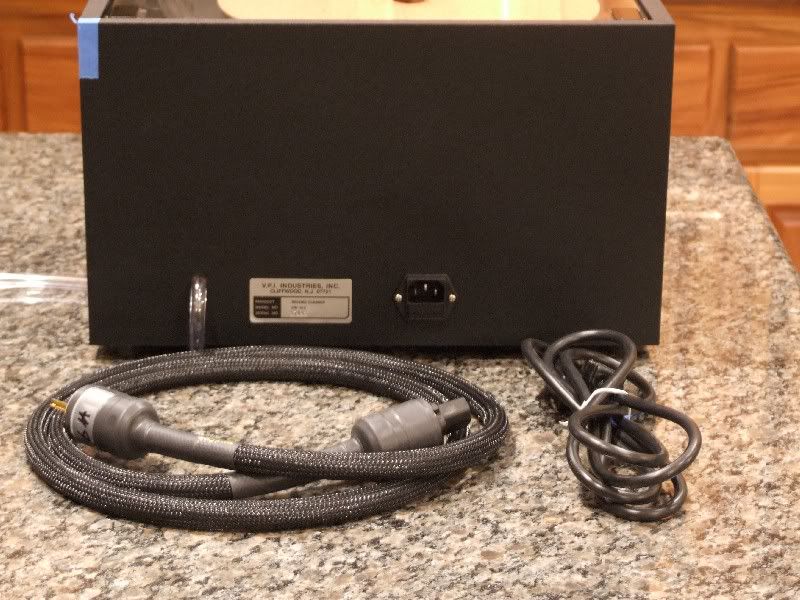
Stock 6.5 Foot, 18 AWG Power Cord (Cost Unknown)
Motor: Fluctuated between 52 to 55 dB-A.
Vacuum: Fluctuated between 99 to 101 dB-A.
Signal Cable 6 Foot, 10 AWG Power Cord ($74)
Motor: Meter read 52 dB-A most of the time and would intermittently jump to 54 dB-A.
Vacuum: Meter read 98 dB-A most of the time and would intermittently jump to 98.5 dB-A.
PS Audio Statement SC 9.8 Foot, 7 AWG Power Cord ($759)
Motor: Meter read 50 dB-A most of the time and would intermittently jump to 51 dB-A.
Vacuum: Meter read 98 dB-A most of the time and would intermittently jump to 98.5 dB-A.
I sent these results to VPI and requested their comments. Specifically, I asked if they had any information or insight regarding whether there was any benefit to the longevity of the turntable motor and vacuum motor with a better quality power cord. I have not heard back from them yet.
I did not evaluate the cleaning effectiveness of the 16.5 with an aftermarket PC compared to the stock PC. I did compare a totally hand cleaned record with one cleaned on the 16.5 and there was no difference, except that my hands were not tired from hand vacuuming and having to go round and round hand scrubbing. Now, I let the machine do the grunt work. The 16.5's stock cord was permanently replaced by the Signal Cable PC primarily because it looks nicer.:)
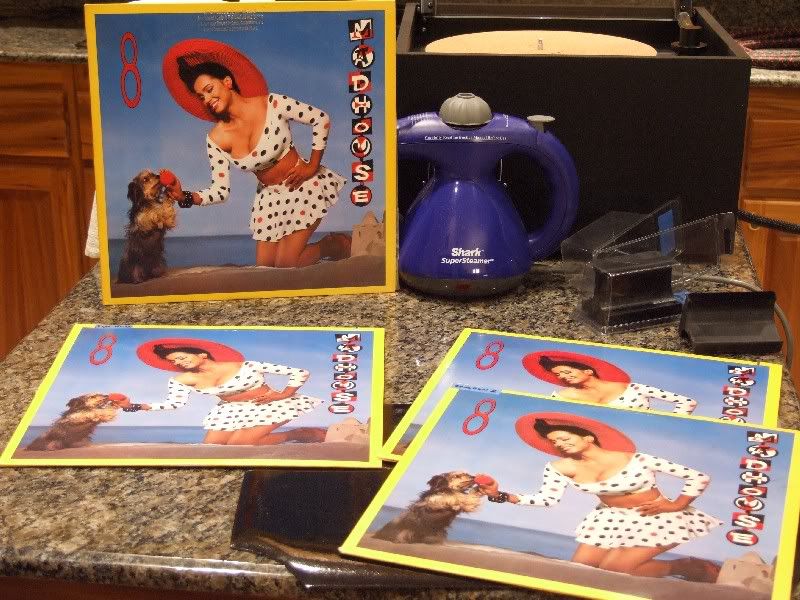
I have multiple new copies of the "Madhouse 8" LP. They all had light surface noise when purchased.
The Madhouse LP's exhibited light surface noise (pops, ticks) primarily in the lead in grooves, dead grooves between tracks and lead out grooves. Deep cleaning removed almost all of this noise and improved the overall signal to noise ratio of the two records that were cleaned. One record was cleaned by hand and the other cleaned by the 16.5. I will elaborate further in my full report.
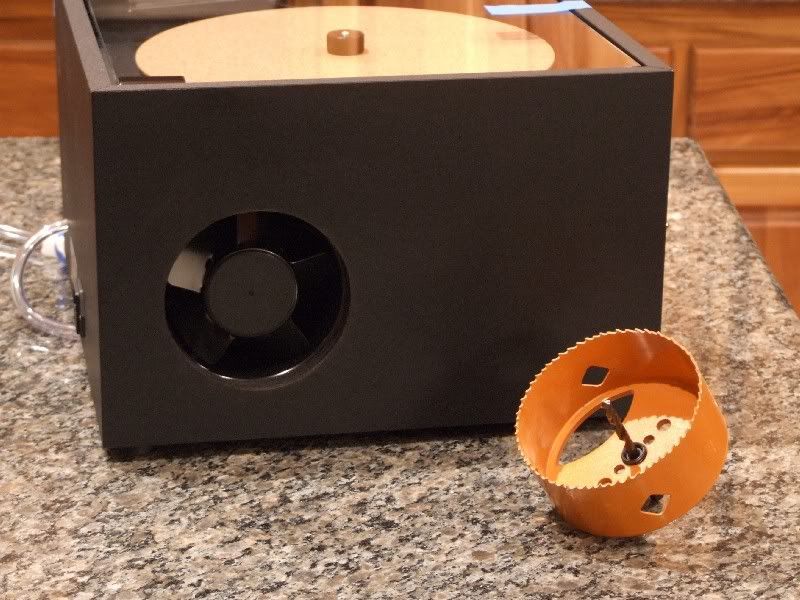
Such cool air. The hole saw blade cost 30% more than the fan.:eek:
If you clean large batches of records (15 or more per session), the addition of a cooling fan can prevent the vacuum's motor from overheating and shutting down. This is a VPI recommended tweak and does not void the warranty.
The fan is turned on and off by a toggle switch added between the toggle switches for the turntable and vacuum.
A full report will be published sometime after I complete my fiendish experiments and other research.
Addendum - Record Cleaning Notes
My record cleaning ritual consists of:
1. Visual Inspection.
2. Dry brushing with a Hunt EDA Mark 6 brush.
3. Auditioning the record at various locations on each side.
4. Steam cleaning with the Shark steam cleaner.
5. Wet Scrubbing with a Mobile Fidelity Brush.
6. Vacuuming.
7. Applying record cleaning fluid.
8. Wet Scrubbing with a different Mobile Fidelity Brush.
9. Vacuuming.
10. Visual Inspection
11. Auditioning the record at various locations on each side.
12. Placing in a Mobile Fidelity inner sleeve.
13. Placing a painter's tape sticker on the album cover indicating that it has been cleaned.
I use a homemade record cleaning fluid consisting of 75% distilled water (regular, not ultra pure), 25% isopropyl alcohol (99% pure) and 4 drops of Triton X-114 detergent.
I never buy heavily soiled or visibly scratched records. However, even many brand new records come with some surface noise that can be be totally removed or drastically reduced with intensive cleaning.
Disclaimer
 DK is not a vinylphile. He just plays one on the Internet.
Do any of you who use a VPI 16.5 RCM use an aftermarket power cord with it? I noticed the turntable runs a little more quiet with a better power cord. The high torque motor makes a sort of "grinding" sound when running. The vacuum sounds like...a loud vacuum cleaner. I measured, but did not hear, a difference in the sound of the vacuum with a better power cord.
A Radio Shack sound level meter was placed on the counter top 5" from the front of the 16.5 RCM. The meter was set to A weighting with fast response. I was curious to hear if the turntable and vacuum would run more quiet with a better power cord. They did.
Stock 6.5 Foot, 18 AWG Power Cord (Cost Unknown)
Motor: Fluctuated between 52 to 55 dB-A.
Vacuum: Fluctuated between 99 to 101 dB-A.
Signal Cable 6 Foot, 10 AWG Power Cord ($74)
Motor: Meter read 52 dB-A most of the time and would intermittently jump to 54 dB-A.
Vacuum: Meter read 98 dB-A most of the time and would intermittently jump to 98.5 dB-A.
PS Audio Statement SC 9.8 Foot, 7 AWG Power Cord ($759)
Motor: Meter read 50 dB-A most of the time and would intermittently jump to 51 dB-A.
Vacuum: Meter read 98 dB-A most of the time and would intermittently jump to 98.5 dB-A.
I sent these results to VPI and requested their comments. Specifically, I asked if they had any information or insight regarding whether there was any benefit to the longevity of the turntable motor and vacuum motor with a better quality power cord. I have not heard back from them yet.
I did not evaluate the cleaning effectiveness of the 16.5 with an aftermarket PC compared to the stock PC. I did compare a totally hand cleaned record with one cleaned on the 16.5 and there was no difference, except that my hands were not tired from hand vacuuming and having to go round and round hand scrubbing. Now, I let the machine do the grunt work. The 16.5's stock cord was permanently replaced by the Signal Cable PC primarily because it looks nicer.:)
I have multiple new copies of the "Madhouse 8" LP. They all had light surface noise when purchased.
The Madhouse LP's exhibited light surface noise (pops, ticks) primarily in the lead in grooves, dead grooves between tracks and lead out grooves. Deep cleaning removed almost all of this noise and improved the overall signal to noise ratio of the two records that were cleaned. One record was cleaned by hand and the other cleaned by the 16.5. I will elaborate further in my full report.
Such cool air. The hole saw blade cost 30% more than the fan.:eek:
If you clean large batches of records (15 or more per session), the addition of a cooling fan can prevent the vacuum's motor from overheating and shutting down. This is a VPI recommended tweak and does not void the warranty.
The fan is turned on and off by a toggle switch added between the toggle switches for the turntable and vacuum.
A full report will be published sometime after I complete my fiendish experiments and other research.
Addendum - Record Cleaning Notes
My record cleaning ritual consists of:
1. Visual Inspection.
2. Dry brushing with a Hunt EDA Mark 6 brush.
3. Auditioning the record at various locations on each side.
4. Steam cleaning with the Shark steam cleaner.
5. Wet Scrubbing with a Mobile Fidelity Brush.
6. Vacuuming.
7. Applying record cleaning fluid.
8. Wet Scrubbing with a different Mobile Fidelity Brush.
9. Vacuuming.
10. Visual Inspection
11. Auditioning the record at various locations on each side.
12. Placing in a Mobile Fidelity inner sleeve.
13. Placing a painter's tape sticker on the album cover indicating that it has been cleaned.
I use a homemade record cleaning fluid consisting of 75% distilled water (regular, not ultra pure), 25% isopropyl alcohol (99% pure) and 4 drops of Triton X-114 detergent.
I never buy heavily soiled or visibly scratched records. However, even many brand new records come with some surface noise that can be be totally removed or drastically reduced with intensive cleaning.
Disclaimer
DK is not a vinylphile. He just plays one on the Internet. Proud and loyal citizen of the Digital Domain and Solid State Country!
Post edited by DarqueKnight on
Comments
-
Awww man . . . this brings back good memories of my formal vinyl life.
DK if you're gonna tweak your cleaner out then get this as well:
http://www.ttweights.com/catalog/item/6797177/6712336.htm


It's a nice tweak becuase it protects the center of the record from fluid and is easily screwed onto the spindle with a tight comfortable fit. (You may or may not have noticed already that the little plastic thingy provided by VPI can be easily stripped or not completely secured against the record.
Mike
TT VPI Deluxe Cleaner Clamp (5.6 oz/159 Grams)
VPICleanerClampV2.0 – Two piece Aluminum and Polycarbonate base, ultra light, built in Radial Seal to stop fluid leaks and will not damage a record if you slip.
Key Features:
1) The Body is Machined form BILLET Aluminum and the internal is machined hollow to reduce weight at a very light 5.6 oz/159 Grams
2) The bottom has a precision machined polycarbonate base with a proprietary outer edge seal to stop fluid leaks
3) The device will not scratch a record if you slip due to the very light weight and the protective bottom face
4) It features a beautiful handle for quick on and off. The top face is diamond machined and looks beautiful sitting on the cleaning machine
5) Each clamp is hand polished to a mirror finish
Machined from Aircraft grade 6061 T6 Aluminum, counter bored with a ¼ 20 threads designed to fit all VPI cleaning machines.
This clamp is designed for the following VPI Record Cleaning machines
HW-27 Typhoon Record Cleaner
HW-17F Record Cleaning Machine
HW-16.5 Record Cleaning Machine
HW-16.5 Record Cleaning Machine
Technical Specifications
Includes : 1 piece aluminum CNC Machined Body with Polycarbonate Base/outer seal machined and assembled
Dimensions : 3.45 inch diameter by 1.10 inches height
Weight : 5.6 oz5.6 oz/159 Grams Aluminum Body and Polycarbonate base -
Thanks for the suggestion. The clamp that VPI includes with the 16.5 is pitiful and cheap. I guess they assume that everyone who buys a 16.5 will use an aftermarket clamp, so no need to include a good one.
I have been using a spare reflex record clamp, but I would like something lighter and quicker to get on and off. The TTWeights clamp appears to fit the bill, plus the record label protection feature of this clamp is very appealing.Proud and loyal citizen of the Digital Domain and Solid State Country! -
Once again Ray you aim to please. Great write up and highly educational.
-
I think a fan is a good idea, even if you clean less than 15 lp's at a sitting. As soon as the motor starts getting warmer I'm thinking the lifetime is adversely affected. I'm not a motor specialist though. Did you cut another hole somewhere for the air to travel through the box?
I can see a good shielded power cable cutting down on noise since any line noise will be transmitted to the motors then the box. Have you tried it on a power conditioner?
madmaxVinyl, the final frontier...
Avantgarde horns, 300b tubes, thats the kinda crap I want...
-
Did you cut another hole somewhere for the air to travel through the box?
There were already vent slots cut into the bottom of the chassis.I can see a good shielded power cable cutting down on noise since any line noise will be transmitted to the motors then the box. Have you tried it on a power conditioner?
Yes. I tried it with one of the PS Audio Power Plant Premier AC regenerators in my home theater system and measured better results:
Stock 6.5 Foot, 18 AWG Power Cord (Cost Unknown)
Motor: Less than 50 dB-A (lower limit of meter is 50 dB-A).
Vacuum: Fluctuated between 97.5 and 98 dB-A.
Signal Cable 6 Foot, 10 AWG Power Cord ($74)
Motor: Motor: Less than 50 dB-A (lower limit of meter is 50 dB-A).
Vacuum: Fluctuated between 97 and 97.5 dB-A.
PS Audio Statement SC 9.8 Foot, 7 AWG Power Cord ($759)
Motor: Motor: Less than 50 dB-A (lower limit of meter is 50 dB-A).
Vacuum: Fluctuated between 97 and 97.5 dB-A.
The turntable motor ran more quiet and steady with regenerated AC, but I could not perceive a difference in the vacuum motor's sound level. The 16.5's vacuum is louder than my lawn mower, which is 90 dB-A.:eek:
I am also going to apply Dynamat to the box interior.:)Proud and loyal citizen of the Digital Domain and Solid State Country! -
DK
Nice work as usual and thanks for the great information.
I have to ask this. I have always wondered how well the "Shark Steamer" works on things like grout or anything else for that matter. I know that question has nothing to do with audio but am real curious. Maybe I'll get one for my wife for her B-Day if they work well :eek:
Thanks -
I don't know. I have only used mine for steam cleaning records.Proud and loyal citizen of the Digital Domain and Solid State Country!
-
Thanks anyway.
-
Great read DK! I'm not surprised the 10 ga cord works better. I've worn out one 16.5, sold the second and now have a 17F. These machines are a blessing. I can't count how many records I've cleaned between DJ'ing with vinyl years ago and home use. The 17F came with a little round knurled clamp similar to the one they provide with the 16.5. I've been using the original clamp from my Aries instead.
Best,
PaulMain system: Levinson Reference 32 Preamp/30.6 DAC/31.5 Transport/Sony SCD777ES/VPI Aries w/SDS JMW 10.5 arm/Van den Hul Frog/Levinson 33 Monoblocks/33H Monoblocks/Transparent reference XL interconnect & Speaker cable/Nearfield Acoustics Pipedream Reference 18 Line Array.
Bedroom: Levinson 390S/380S/ML3/Sony SCD 777ES/McIntosh MC2000/Infinity IRS-Beta