Tolerance with electrolytic caps
Options

VR3
Posts: 29,752
Very curious, when it comes with amplifiers and preamps, etc
Electrolytic caps have horrendous tolerances
One I saw was -20%, +75%
How in the world do engineers design around such craziness?
Electrolytic caps have horrendous tolerances
One I saw was -20%, +75%
How in the world do engineers design around such craziness?
- Not Tom ::::::: Any system can play Diana Krall. Only the best can play Limp Bizkit.
Comments
-
That's what makes them engineers and not scientists, theoreticians, or philosophers.
Engineers know that they can get close enough.
-
Modern electrolytics have quite a bit closer tolerances than those of yore. Indeed, from my (incredibly biased) perspective, one of the very few examples of electronic components that have fundamentally improved since the 1930s is (are?) capacitors in general, and electrolytics in particular.
-
I will say the higher quality ones seem to be within 10% but to me coming from the crossover world with stuff being like 1% it's just wild lol- Not Tom ::::::: Any system can play Diana Krall. Only the best can play Limp Bizkit.
-
Of course, the thing to remember is that one may, if one wishes, test to spec. In other words, buy a handful and pick one with a value within 1%, 5%, or 10% of the desired nominal value.
There is much to say on the whole topic of specifications and tolerance (i.e., acceptable range). One very important fact (much overlooked) is that audio frequency amplification is really simple relative to the whole spectrum of electronic applications. It gets far less simple to design stable, reliable and "fault tolerant" (i.e., in the sense of designing in tolerance for the aging and drift of individual components) circuitry for use at high (radio) frequencies, for oscillators, and for differential circuitry. The pinnacle of analog circuit design, from my perspective, is (was) NTSC black-and-white compatible color television and mono-compatible multiplex stereo FM. Circuits that generated the carriers and did the de-matrixing of multiplexed signals in both applications have to operate with at least ppm (parts per million) accuracy and stability. Not just factory-fresh, but for years in the real world, given the vagaries of heat, wear, and power line fluctuation. THAT was/is an extreme challenge for design, implementation, and manufacturing. And those old color TVs and FM stereo tuners (tube or solid state) just. plain. worked. -- and often for years without tuning or maintenance. Nobel-prize level work was done -- with no reward to most of the folks in the trenches but their paychecks, and perhaps some assurance of long-term employment & a pension at the end of it.
It is easy for, even a schlub like me, to take Ohm's law and the operational data and curves for vacuum tubes in a copy of the RCA Receiving Tube Manual and design and build a single-ended triode vacuum tube amplifier. It's not really any harder to build a push-pull amp, with or without feedback, operating in class A or or class AB.
Designing and constructing a color TV that can tune and process VHF and UHF signals is a far, far, far bigger challenge.
OK, that's my old-guy rant for the morning. Note I reserve the afternoon for additional raving if necessary.
-
Oh, also, bear in mind that the tolerance range in a spec such as capicatance is most likely/usually reflective of manufacturing capability. It's easier (read: cheaper) to manufacture , e.g., a foil and film capacitor in a cost-effective manner with a +/- 1% acceptance range than it would be to make an electrolytic with the same acceptable variance in capacitance.
Two other fun things vis-a-vis capacitors.
Fun thing one: Electrolytics have one and only one advantage -- it is easy (again: cheap) to put a lot of capacitance in a small package. I know guys who abhor electrolytics and just don't use them.
Here's an example -- a preamp designed and built by my friend Alan in Massachusetts. 100% electrolytic-free (including power supply).
preamp is on the top right, above the ReVox. Two chassis - preamp on the left (mounted in the black wooden base, sporting two mono volume control knobs); power supply on the right (with "potato masher" 5R4 HV rectifier).
Fun thing two: Don't (ever) forget about ESR when selecting capacitors.
-
Good looking gear for sure.
Some of these parts are pretty pricey. The ones that are 30 cent wouldn't be too bad but some of these caps are 50 to 100 a pop
But it seems to be esr and ripple current is a large part to quality caps and the lower the esr with the higher the ripple current x the lighter your wallet- Not Tom ::::::: Any system can play Diana Krall. Only the best can play Limp Bizkit. -
When it comes to non-electrolytics:
1) vintage can be hard to beat (they last forever, to a good approximation).
2) "chance favors the prepared mind".
Some folks keep an eye out for potentially, eventually useful components at hamfests, antique radio swapmeets, etc., etc.
The WE oiler shown above -- not affordable. It was on loan for some crossover experiments I was doing with the Frankenaltecs. It was, sonically, the winner, but I'd have to sell a kidney to afford a pair of those.
Did you ever see the 100 uF @ 600V non-electrolytics I - finally! - employed a year or so ago to replace the electrolytic cathode bypass caps in my SE 2A3 amp? They were not terribly expensive. They were rather larger than the electrolytics, though.
-
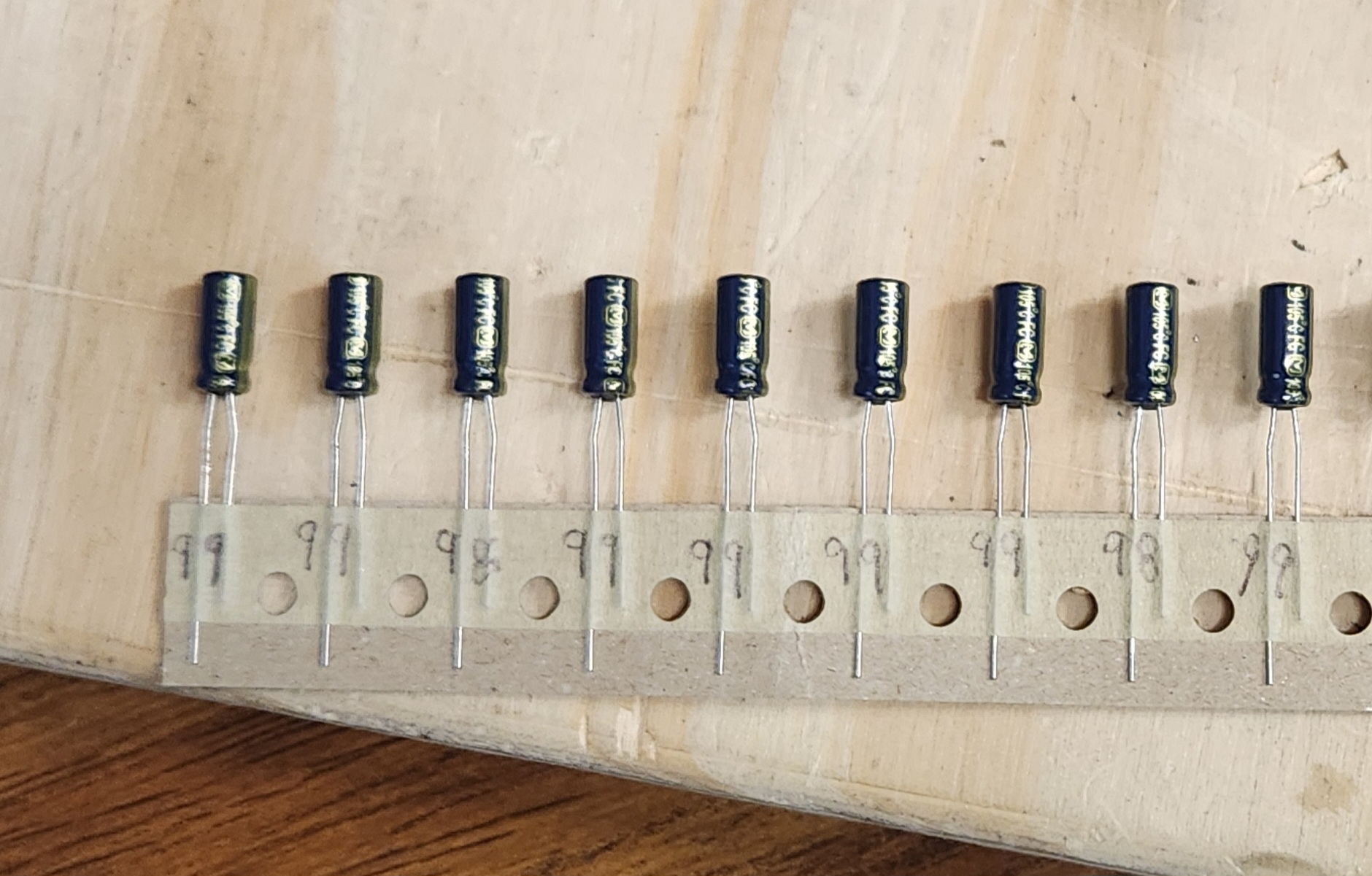
I used mostly Panasonic FC for the Teac A-6300 recap. The entire tape of 10uf 50v, about 40 total, measured mostly 9.8-9.9uf on the Sencore Z meter. Had some exact and 10.1. (I didn't use a decimal). The other values were similar.
Salk SoundScape 8's * Audio Research Reference 3 * Bottlehead Eros Phono * Park's Audio Budgie SUT * Krell KSA-250 * Harmonic Technology Pro 9+ * Signature Series Sonore Music Server w/Deux PS * Roon * Gustard R26 DAC / Singxer SU-6 DDC * Heavy Plinth Lenco L75 Idler Drive * AA MG-1 Linear Air Bearing Arm * AT33PTG/II & Denon 103R * Richard Gray 600S * NHT B-12d subs * GIK Acoustic Treatments * Sennheiser HD650 * -
This content has been removed.
-
For the smaller electrolytic I have been using Panasonic fm, vishay/sprague (which is what levinson used) and I've used audio note kaisai in a few places.
Trick is finding something with similar esr and ripple or better, especially on the large value caps.
The good caps definitely measure pretty well compared to lower quality varieties.
Honestly replacing the film caps are easier than the lytics, usually come right off without a problem and wima is right on spec
This may be the only levinson in 2025 that has been completely recapped, all caps!
Now whether or not it works when I'm done, that's a different story 😁- Not Tom ::::::: Any system can play Diana Krall. Only the best can play Limp Bizkit. -
I just replaced a motor run cap in an old Sony TC-500A reel-to-reel tape deck.
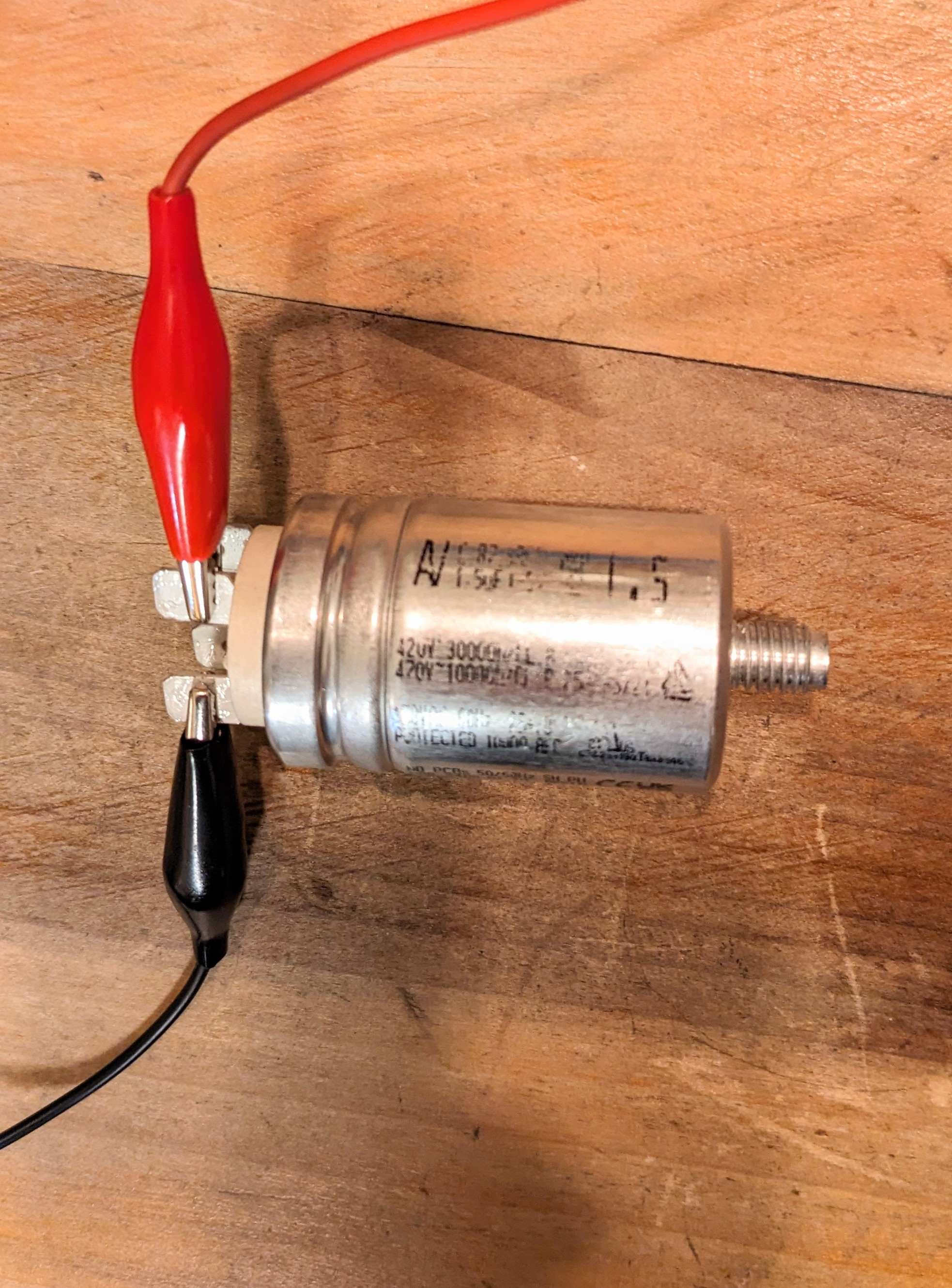
This is actually a film cap in an Aluminum canister. It's 1.5uF 470V 5%, made by Kemet. The motor was bogging down when under load, and this new cap seems to have fixed it. From what I read, it is a common problem in the old Sony RTR decks."This may not matter to you, but it does to me for various reasons, many of them illogical or irrational, but the vinyl hobby is not really logical or rational..." - member on Vinyl Engine
"Sometimes I do what I want to do. The rest of the time, I do what I have to." - Cicero, in Gladiator
Regarding collectibles: "It's not who gets it. It's who gets stuck with it." - Jimmy Fallon -
I had a bad capstan motor run capacitor in a Teac 4010SU R2R. I also replaced the reel motors run capacitor.
Some folks use ceiling fan motor run capacitors of the appropriate value. They control motor torque so best to replace with same value. It was common for the motor run caps to have multiple values for 50/60Hz operation. 50Hz required a bit more capacitance, typically adding ~1uf to the 60Hz value. When replacing I delete the 50Hz values since we live in 60Hz land. The 50Hz wiring ends, if so equipped, need to be insulated and secured.
US only models with no 50/60Hz switch typically used the same 50/60Hz cap, just no wires attached to the smaller value.
I used Nichicon MAB motor run caps to replace them. I gutted and cut a slot in the old can capacitors which made it easier to secure them.
Not my pic but an OEM reel motor run capacitor with mounting bracket. Two 3uf and two 1uf.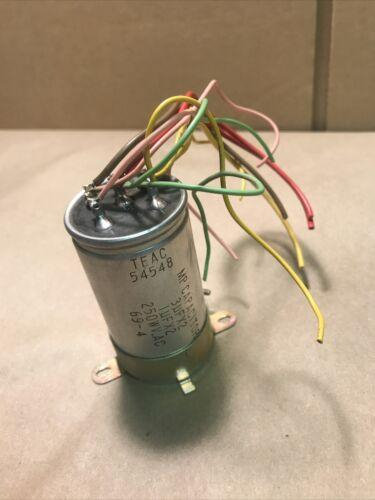
Gutted and slotted cans. Some tape is wrapped over the edges of deburred can.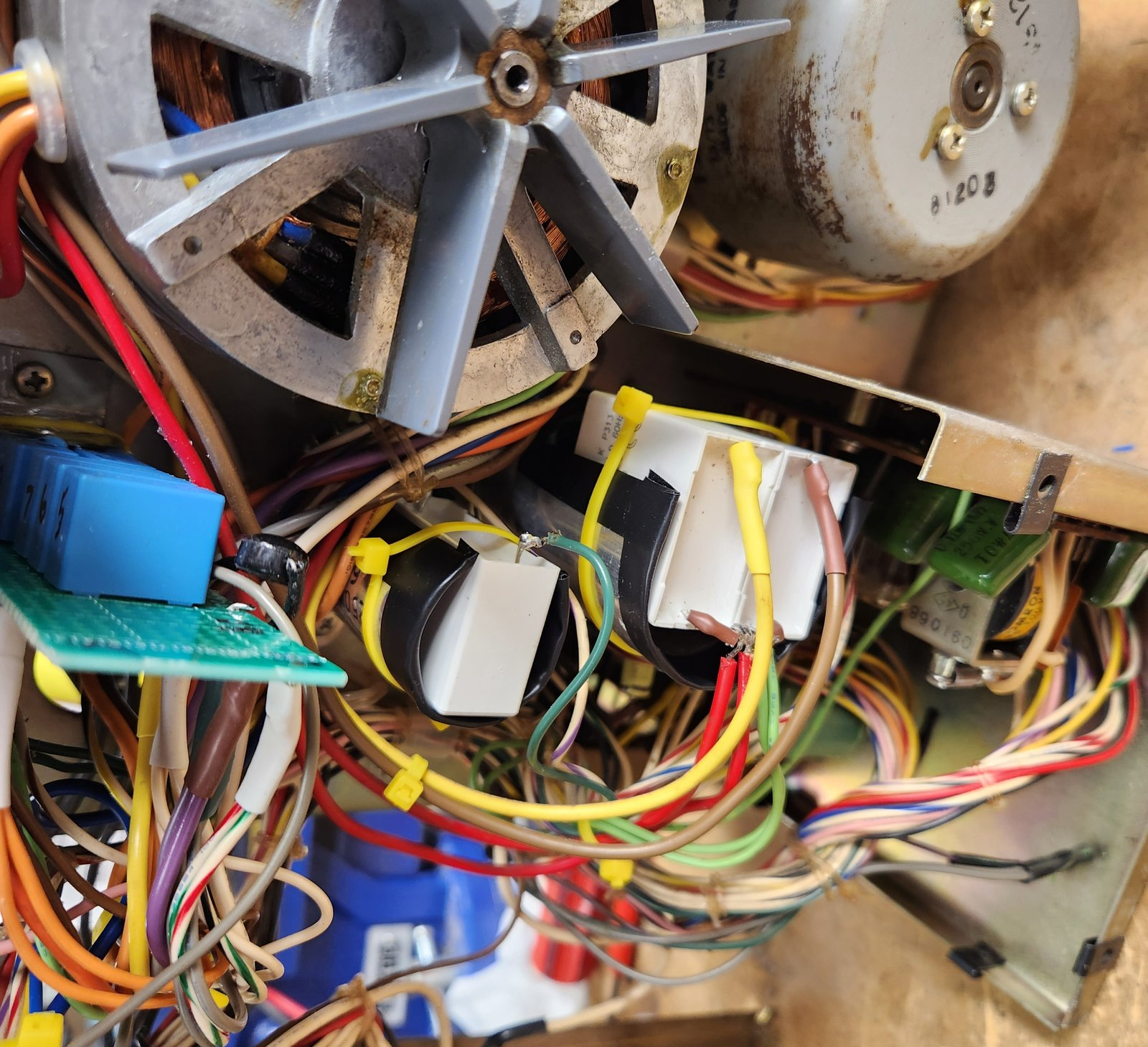
Salk SoundScape 8's * Audio Research Reference 3 * Bottlehead Eros Phono * Park's Audio Budgie SUT * Krell KSA-250 * Harmonic Technology Pro 9+ * Signature Series Sonore Music Server w/Deux PS * Roon * Gustard R26 DAC / Singxer SU-6 DDC * Heavy Plinth Lenco L75 Idler Drive * AA MG-1 Linear Air Bearing Arm * AT33PTG/II & Denon 103R * Richard Gray 600S * NHT B-12d subs * GIK Acoustic Treatments * Sennheiser HD650 * -
Yep, the original motor run cap in this Sony had both 1.5uF and 0.5uF taps. The extra 0.5uF was for 50Hz applications, which I don't need, so I just got a 1.5uF replacement. I would like to by-pass the 50/60 switch altogether, but too many wires going too many places for me to trace, and I still have a few more RTR decks to triage.
I tried going down the ceiling fan motor run cap route, but was still looking for a combo 1.5/0.5uF initially, which was unobtanium (except for one in Australia). In hindsight, I could have easily found a 1.5uF-only ceiling fan cap, but oh well. I will still need to cut that threaded post off the one I have, so that I can use the original mounting bracket.
That's pretty work you did "This may not matter to you, but it does to me for various reasons, many of them illogical or irrational, but the vinyl hobby is not really logical or rational..." - member on Vinyl Engine
"Sometimes I do what I want to do. The rest of the time, I do what I have to." - Cicero, in Gladiator
Regarding collectibles: "It's not who gets it. It's who gets stuck with it." - Jimmy Fallon -
Thanks for the kind words!
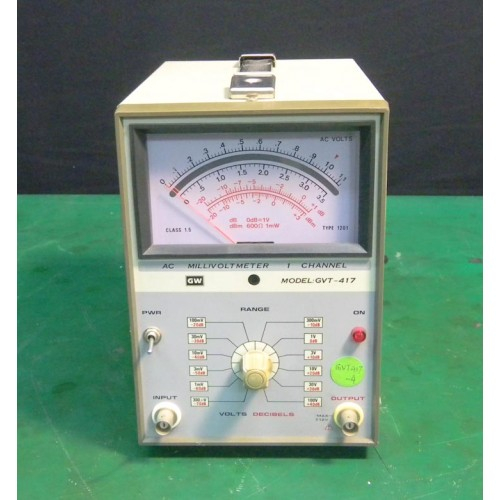
R2R calibration can be the other expensive part repairing them things. I had signal generators and scope but needed an AC millivolt/dB meter. Multimeters are typically not rated for high frequency accuracy. Leader is the most popular but also the most expensive on ebay. I got a Tenma 72-450 for $50. It is a rebadged GW Instek GVT-417. The meter even has GW on it. Seems like folks caught on as the Tenma now sells for $100 or more.
I found an op manual but no service manual for the Tenma. GW is still in business, and they sent me a service manual for the GVT-417/427 so I can calibrate it, if needed. GW stands for Good Will.
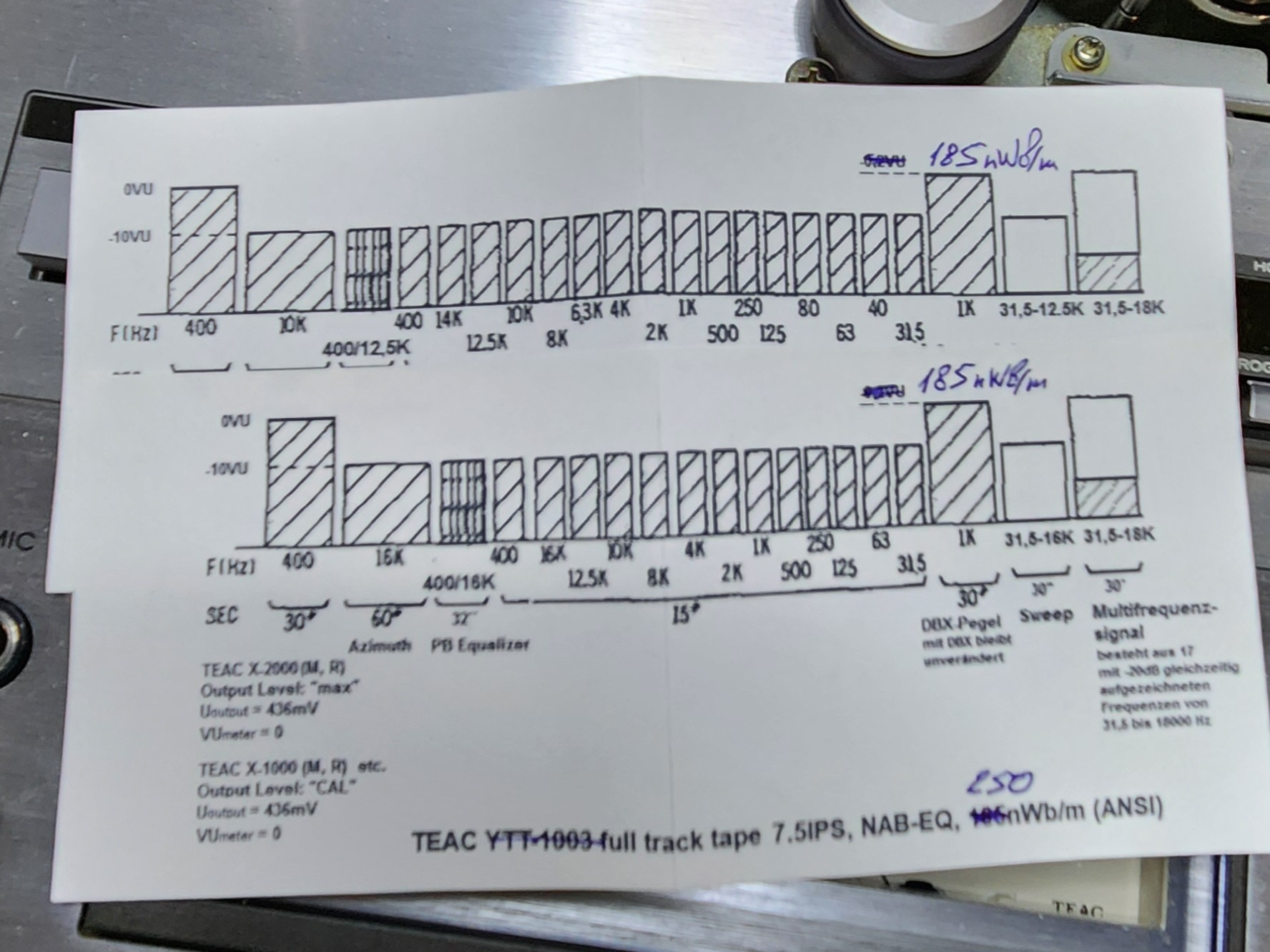
Calibration tapes are pricey. The typical go to are MRL which are expensive. Then you need one for each speed to calibrate. MRL typically have only four frequencies. I purchased Teac replica calibration tapes from ebay seller ural91 (Germany). Those included multiple frequencies so you could test frequency response from 31.5-16kHz. He also put both speeds on one reel to save on shipping.
Purchasing old used calibration tapes is gambling. They could be stretched, partially erased or suffering from "sticky shed syndrome."
Old tape calibration was 185nWb/m. I calibrated the Teac's to 200nWb/m. Playback would calibrate higher (250nWb/m) but I couldn't get record calibration to match. I biased them for newly manufactured tape, RTM LPR35. My calibration tape was done at 250nWb/m so I have to compensate for lower calibration levels.
The Teac replica tape has a 30 second sweep to do it quickly though I prefer manually. Since the dB meter is single channel, I built an RCA switch box so I can quickly flip between R and L channels. They do make two channel meters, but they are more expensive.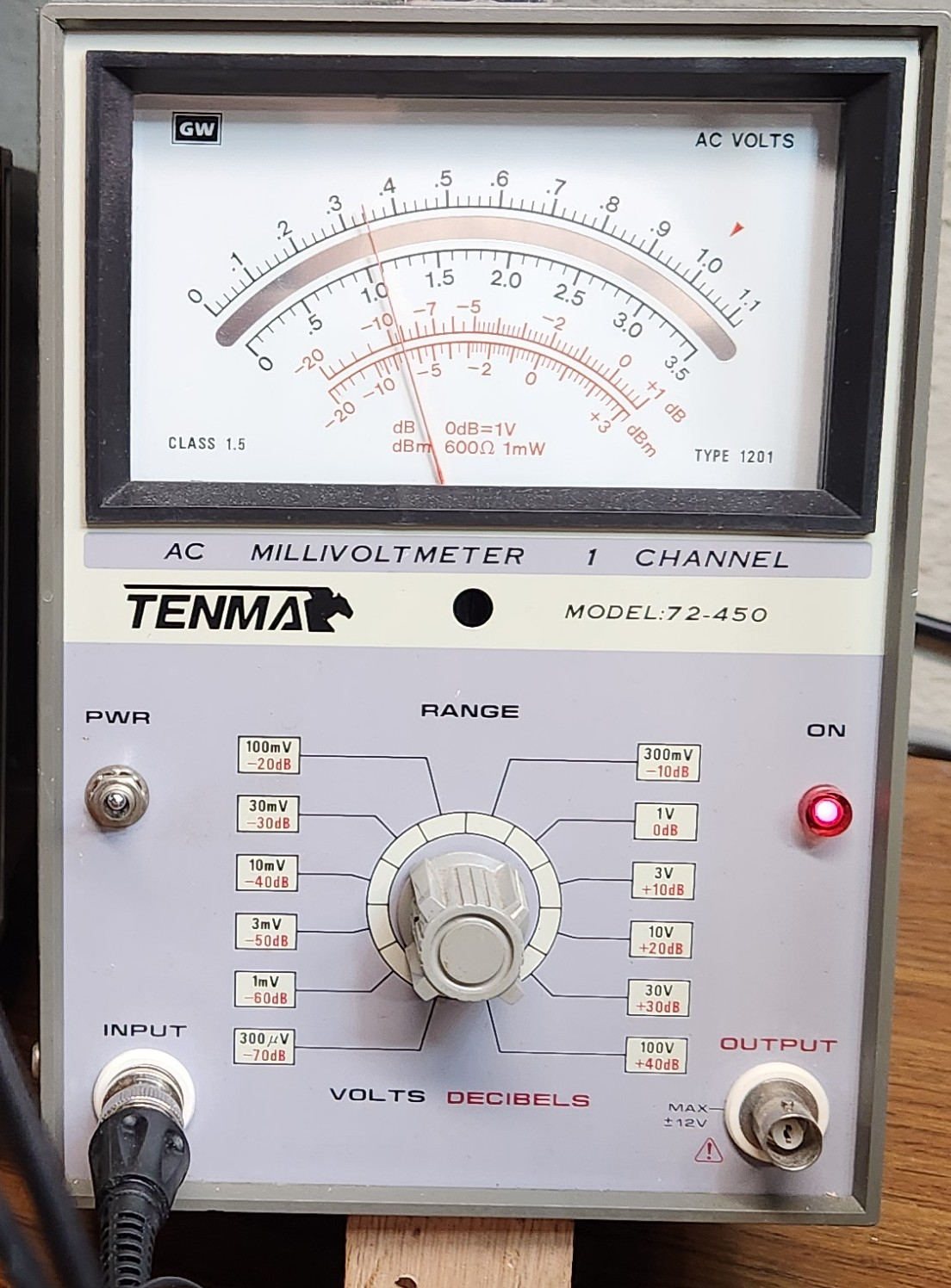
Salk SoundScape 8's * Audio Research Reference 3 * Bottlehead Eros Phono * Park's Audio Budgie SUT * Krell KSA-250 * Harmonic Technology Pro 9+ * Signature Series Sonore Music Server w/Deux PS * Roon * Gustard R26 DAC / Singxer SU-6 DDC * Heavy Plinth Lenco L75 Idler Drive * AA MG-1 Linear Air Bearing Arm * AT33PTG/II & Denon 103R * Richard Gray 600S * NHT B-12d subs * GIK Acoustic Treatments * Sennheiser HD650 * -
For sure, calibration of these old tape decks is a different animal. I can normally get them 'operational', but I don't have the equipment or expertise to calibrate them. I have sold several cassette tape decks on ebay with the disclaimer of them being operational, but not calibrated. Luckily, I've had no complaints or refund issues.
Even with this Sony RTR deck I've been working on, the test recording I recently made sounded terrible during playback on the same tape deck, but actually sounded pretty darn good on another RTR deck."This may not matter to you, but it does to me for various reasons, many of them illogical or irrational, but the vinyl hobby is not really logical or rational..." - member on Vinyl Engine
"Sometimes I do what I want to do. The rest of the time, I do what I have to." - Cicero, in Gladiator
Regarding collectibles: "It's not who gets it. It's who gets stuck with it." - Jimmy Fallon