adcom vs rotel?
Comments
-
H9 and Polka, I am going to raise your pass labs amp with this
http://www.mcintoshlabs.com/products/mcintosh-mc2kw-2000-watt-reference-power-amplifier.asp Trying out Different Audio Cables is a Religious Affair. You don't discuss it with anyone. :redface::biggrin:
 -
a_mattison wrote: »oH YEA.. Me too. I've had a GFA-7000 driving my HT for 2 years'ish and it is rock solid. I haven't tried it with my LSi's, but it drives my Rti's similar to how the GFA-555 did, which is now in my 2-channel system with LSi15's. The GFA-7000 is extremely dynamic for HT. Gunshots have tremendous impact, voices are clear and explosions are awesome. I think the ADCOM would drive your LSi's impressively.
I have not heard the Rotel amps though, so have no opinion in that direction. I don't think you would be dissappointed in the ADCOM, though.
I concur. I had the 7500, and it was a great amp. I should have kept that one too:(Please. Please contact me a ben62670 @ yahoo.com. Make sure to include who you are, and you are from Polk so I don't delete your email. Also I am now physically unable to work on any projects. If you need help let these guys know. There are many people who will help if you let them know where you are.
Thanks
Ben -
H9 and Polka, I am going to raise your pass labs amp with this
http://www.mcintoshlabs.com/products/mcintosh-mc2kw-2000-watt-reference-power-amplifier.asp
But can it stick weld with a sine wave generator?Please. Please contact me a ben62670 @ yahoo.com. Make sure to include who you are, and you are from Polk so I don't delete your email. Also I am now physically unable to work on any projects. If you need help let these guys know. There are many people who will help if you let them know where you are.
Thanks
Ben -
Bryston killer
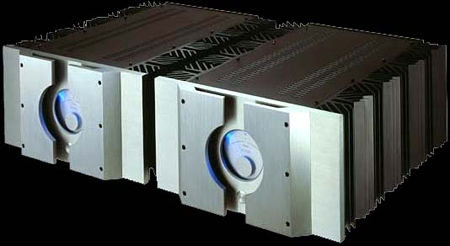
Pass Laboratories' X amplifier series represents the efforts of designer Nelson Pass to prove that simple linear amplifier topologies can be scaled to provide high-quality audio performance at very high power levels. The handsome X1000 monoblock under scrutiny here, the largest and most powerful amp in the Pass stable, makes 1000W into 8 ohms and a mighty 2000W into 4 ohms. The amplifier has no global negative feedback, and only two gain stages: the front-end provides all the voltage gain and feeds a high-current follower stage.
Pass's Supersymmetry Balanced Single-Ended class-A topology was actually granted a US patent in 1994. Using a balanced gain-stage, the distortion and noise are made absolutely symmetric at the two outputs. The signal is amplified, while noise and distortion are canceled. In a nutshell, this is achieved by precise matching of the two halves of the circuit and "cross-coupling" their internal drive signals. (See the "Supersymmetry Explained" Sidebar for details.)
The X1000's power supply begins with a pair of big-boy toroidal transformers, individually rated at 1500VA continuous. From the paperwork, I gather that under actual conditions they'll do about 2000VA continuous per transformer, and at least half that again for short periods. Each transformer has its own circuit breaker and rectifier bridge. The breaker current is set at 20 amps, although the breakers will allow transients on the order of 300A to pass. To avoid a huge inrush of current during charge-up, all four transformer primaries are equipped with inrush suppressors, limiting current to 100A or so.
The transformers are potted in steel cans to minimize mechanical and magnetic noise, and the balance of the amplifier is crafted mostly of aluminum. There are eight computer-grade capacitors (large, old-style cans) at 25,000µF and 75V, making up over 240,000µF of storage capacitance (700 Joules of stored energy). These are used to create the unregulated output rails, at ±75V at 30 amps. A smaller transformer generates the ±99V rail voltages for the front-end circuitry. The voltage rails are passively filtered to produce a ripple voltage of only a few millivolts, "none of which shows up at the output." In his humorous and very engaging manual, Nelson Pass goes on to explain that the extra front-end supply lowers the system's distortion and noise and allows it to "swing the output stage rail-to-rail with losses on the order of only a volt or so, extracting every last possible watt."
The "balanced single-ended" front-end gain stage comprises a differential pair of MOSFETs with local negative feedback. They're biased by a constant-current source and cascoded for best effect. This stage develops the voltage gain and presents it to a large bank of follower MOSFET power transistors. "Originally it was assumed we would have to enclose this output stage in a Supersymmetry loop to get the performance we wanted, but ultimately we found that we could operate it without feedback as long as we put a healthy bias current through it. For the X1000, that's about 500W of dissipation per channel."
The 80 (!) output power MOSFETs are actually HEXFETs from International Rectifier in TO-3 metal cans, each taken from the same lot code (indicating the same wafer) and "hyper-matched" to 0.5% gate voltages. "The output stage can sustain transients of about 12,000W, but it's never allowed to dissipate more than 2400W for any instant, even into a dead short." Most of the front-end transistors, the current sources, and the cascode devices are rated at 200V and 150W, but are run at a low 2.5W each. "The speed-critical gain devices in the front-endthe actual balanced pair of transistorsare rated at 20W, and we run them at 1W each on the same heatsink for perfect thermal tracking."
The circuit is completely DC-coupled, with no capacitors in the signal path. Two film capacitors stabilize the constant-current sources and two more caps filter the Zener diode voltage references, "but that's it!"
Power from the supply caps to the output transistors is conducted through formed sheets of aluminum with a large surface area, the output devices bolted directly to them. Wiring from the transistors to the speaker terminals consists of 24 parallel runs of 10-gauge copper cable. As you'd expect, all PC boards are double-sided, with plated-through holes and double-thickness copper traces.
Each monoblock idles at about 600W, or 1200W for the pairabout the same as a pro-size hair dryer. The X1000 is biased for class-A operation up to 128W peak, beyond which it drops into class-AB. The amplifier typically draws about 5A (continuous RMS) from the wall during normal use, reflecting the idle current running through its output stage. If you're driving a low-impedance load hard it'll draw more, but both channels can be run on a single 20A, 120V AC line "without problems in most cases."
If you're truly power-mad, a number of X1000s can be arrayed to produce up to 2000W per chassis. Two of them can deliver 4000W into 8 or 2 ohms, four can deliver 8000W into 4 ohms, and 16 will do 32,000W into 1 ohm! The mind boggles. "As a practical matter, we would expect peak output levels on the order of 64,000W for such arrays." Yes, as a practical matter. Ahem. Your dealer or Pass can supply you with the interface adapter(s) needed to run the amps in series or parallel.
Each amplifier packs a detachable 20A IEC power-cord with a plug that's larger than the standard 15A item found on many components these days. The IEC-320 power cord (hot blade vertical, neutral blade horizontal) requires a modern, high-current NEMA 5-20 wall socket, so you might have to call an electrician. The amplifier's chassis is connected to ground only through the power cord. It is not attached to the circuit or to the amplifier signal ground. "Under no circumstances should you defeat the ground connection of the power cord. For your safety, the chassis of the amplifier should be earth-grounded. We aren't kidding." He isn't kidding.
The X1000 accepts only a balanced input with pin 1 ground, pin 2 positive, and pin 3 negative. "This is the first amplifier that truly demands balanced operation to obtain high performance. If you don't have a true balanced source, you won't break the amplifier, but you're not getting anywhere near the performance you paid for." The rear panel houses a power breaker switch, two pairs of hefty paralleled output binding posts, and a 5-way connector for remote turn-on.
Flicking the breaker switch on the back panel lights a small blue LED in the meter and keeps the front-end warmed up and ready for use. When the front panel's Operate button is pressed, the eerie blue meter light is activated and the indicator runs up to something just below half-scale. As the amp warms up, the meter drops back a bit; it shows the level of bias current passing through the output stage. No relay, no delay; you're off, then you're on. If the meters bounce at a moderate or low listening level, then you're probably driving a very low impedance load, or perhaps a short. "If your speakers are not known to be very low impedance, say less than 4 ohms, then you should check this out." Yes, do. Basically, the X1000 operates in pure class-A at current levels that don't bounce the meters. Then this gem: "Do everybody a favor and try not to have shorted output cables. It happens accidentally all the time, and the amplifier is designed to survive, but I wouldn't bet the farm on it." He's a riot.
It took about an hour of warm-up for the amp to sound its considerable best. For the record, the blue-eyed beasts got mighty toasty after an evening of frolicking-good musical fun.
My amp is bigger than yours :D.
:D.
Now that's Incredible! Could we ask about cost?
Also, because of the power and current draw would you need to plug something like that into a washer/dryer outlet? Or hook it to a stove-top range circuit! It would seem to defy a 15 amp wall socket, no?
Need its own circuit breaker?
cnhCurrently orbiting Bowie's Blackstar.!
Polk Lsi-7s, Def Tech 8" sub, HK 3490, HK HD 990 (CDP/DAC), AKG Q701s
[sig. changed on a monthly basis as I rotate in and out of my stash] -
Each amplifier packs a detachable 20A IEC power-cord with a plug that's larger than the standard 15A item found on many components these days. The IEC-320 power cord (hot blade vertical, neutral blade horizontal) requires a modern, high-current NEMA 5-20 wall socket, so you might have to call an electrician. The amplifier's chassis is connected to ground only through the power cord. It is not attached to the circuit or to the amplifier signal ground. "Under no circumstances should you defeat the ground connection of the power cord. For your safety, the chassis of the amplifier should be earth-grounded. We aren't kidding." He isn't kidding.
Special wall socket(s) and dedicated line.
Cost is $24,000 pr. Retail."Appreciation of audio is a completely subjective human experience. Measurements can provide a measure of insight, but are no substitute for human judgment. Why are we looking to reduce a subjective experience to objective criteria anyway? The subtleties of music and audio reproduction are for those who appreciate it. Differentiation by numbers is for those who do not".--Nelson Pass Pass Labs XA25 | EE Avant Pre | EE Mini Max Supreme DAC | MIT Shotgun S1 | Puritan Audio PSM136 Pwr Condtioner & Classic PC's | Legend L600 | Roon Nucleus 1 w/LPS - Tubes add soul! -
cnh, yes, you need this beast its own dedicated power hose...
anyways, the OP started of with question on Adcom vs. Rotel, and he ended up with Pass Labs? How that happened? I am sorry, I have no opinion on the matter. I am sure you do. So, don't mind me, I just want to talk audio and pie.
 -
I dunno..............a little off track partly because it's a tired question that gets asked all the time. But that's not why it went off track.
There is some good info in a couple posts. IMO, you can't go wrong with either. For me I'd save the $200 because the Rotel isn't $200 better. Several have owned the Adcom for HT and it does a damn fine job. I'm sure the Rotel does too.
Flip a coin if you can't decide.........if it lands on the Adcom side send me $200 that you saved over buying the Rotel
H9"Appreciation of audio is a completely subjective human experience. Measurements can provide a measure of insight, but are no substitute for human judgment. Why are we looking to reduce a subjective experience to objective criteria anyway? The subtleties of music and audio reproduction are for those who appreciate it. Differentiation by numbers is for those who do not".--Nelson Pass Pass Labs XA25 | EE Avant Pre | EE Mini Max Supreme DAC | MIT Shotgun S1 | Puritan Audio PSM136 Pwr Condtioner & Classic PC's | Legend L600 | Roon Nucleus 1 w/LPS - Tubes add soul! -
I would get the Rotel, if nothing else than to aggravate my Adcom buds, but Rotel sounds better than Adcom.
I still say get a B&K or Parasound.
So ding.
RT1 -
I'm so damn aggrevated right now.HT
RTi70 mains
CSi30 center
RTi28 Rears
Velodyne CHT-12
H/K AVR-247
ADCOM GFA-7000
Samsung PN58B860
Playstation 3
2-Channel
Polk Audio LSi15's
Rotel RCD-1072
Nakamichi CA-5 Pre
ADCOM GFA-555
Signal Cable Analog II IC's
Signal Ultra Bi-Wire Speaker Cables -
reeltrouble1 wrote: »I would get the Rotel, if nothing else than to aggravate my Adcom buds, but Rotel sounds different than Adcom.
I still say get a B&K or Parasound.
So ding.
RT1
Damn, I guess I'm not getting $200 in the mail, BTW I fixed your post..
Atleast the name Adcom sounds like an audio component. Rotel on the other hand reminds me of Mexican cheese dip.
Fries are done
H9"Appreciation of audio is a completely subjective human experience. Measurements can provide a measure of insight, but are no substitute for human judgment. Why are we looking to reduce a subjective experience to objective criteria anyway? The subtleties of music and audio reproduction are for those who appreciate it. Differentiation by numbers is for those who do not".--Nelson Pass Pass Labs XA25 | EE Avant Pre | EE Mini Max Supreme DAC | MIT Shotgun S1 | Puritan Audio PSM136 Pwr Condtioner & Classic PC's | Legend L600 | Roon Nucleus 1 w/LPS - Tubes add soul! -
I was just thinking that Rotel does sound like it belongs in a kitchen. I was thinking food though. I was thinking more along the lines of a food processor, or a fancy toaster oven:p
Rotel. The rotisserie convection oven. Cooks juicy golden brown chicken in half the time with half the fat.
I am not Paul Harvey.
Good DayPlease. Please contact me a ben62670 @ yahoo.com. Make sure to include who you are, and you are from Polk so I don't delete your email. Also I am now physically unable to work on any projects. If you need help let these guys know. There are many people who will help if you let them know where you are.
Thanks
Ben -
If I can eat it I generally want it.
RT1 -
But can it stick weld with a sine wave generator?
No, MC2KW can't but I am sure the one below can. Your desire to stick weld with an amp can be fulfilled by purchasing one of these below at the cost of nearly 60K (new) or half of that for the used one.
Just make sure you have 40A@220V connection to power it and 4-5 man power to move it around.
Krell Master Reference Amplifier
The Master Reference Amplifier brings a new level of performance to sound reproduction. Its tremendous power (exceeding 1,000 W into 8 Ohms, 2,000 W into 4 Ohms, 4,000 W into 2 Ohms, 8,000 W into 1 Ohm, and 16,000 W into .5 Ohm) gives the listener the freedom to enjoy unconstrained sound reproduction. The technological innovations that manage these large amounts of power are transparent to the user.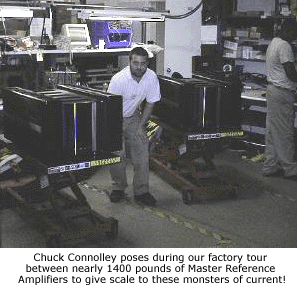 Trying out Different Audio Cables is a Religious Affair. You don't discuss it with anyone. :redface::biggrin:
 -
whoa...I wonder what happened if we use these beast to power a pair of LSi7? at which point in the volume dial it melts the crossover and/or drivers?I am sorry, I have no opinion on the matter. I am sure you do. So, don't mind me, I just want to talk audio and pie.
-
^I don't know^. I haven't come across an amp that can do stick welding before and consumes more power than most industrial Lincoln or Hobart Welder. If you turn up all the way, I guess LSi7 would be crying inside out literally. I think this is the kind of amp suitable for the amp killer speakers such as Kappa 9 or the old Apogees. Now, we'll see which one kills what. Trying out Different Audio Cables is a Religious Affair. You don't discuss it with anyone. :redface::biggrin:
-
Oh...I found a pair of these for 60K on fleabay. Cool....
http://cgi.ebay.com/Krell-Master-Reference-Monoblock-Amplifiers-140-000_W0QQitemZ390025902101QQcmdZViewItemQQptZLH_DefaultDomain_0?hash=item390025902101&_trksid=p3286.c0.m14&_trkparms=72%3A1205%7C66%3A3%7C65%3A12%7C39%3A1%7C240%3A1318%7C301%3A1%7C293%3A1%7C294%3A100Trying out Different Audio Cables is a Religious Affair. You don't discuss it with anyone. :redface::biggrin: -
ummm...kay, got one spare kidney, slightly used otherwise mint, some tiny scratches on the surface, took a few pics but can't really show it, for sale.
I think it is enough for DP on this beast.I am sorry, I have no opinion on the matter. I am sure you do. So, don't mind me, I just want to talk audio and pie. -
^Nah, that's a negative! All you need to do is a drive to Vegas.^ Trying out Different Audio Cables is a Religious Affair. You don't discuss it with anyone. :redface::biggrin: