Tube Shields?
Comments
-
Thanks. I'll try it with and without the stock shields. If they don't make a difference, I'll run nekkid. If they do, I'll look for some IERC shields.SDA 2B-TL (Sonicap/Solen/Mills, Erse Super Q, Rings, Spikes, No-Rez)
1000VA Dreadnought
Dared SL-2000a (Siemens & Halske TM 12AT7WA's, Brimar 5Z4G)
Jolida JD-100a (Sylvania BP TM Gold Brand 5751's), NAD C275BEE, Blue Jeans
RTiA3, Onkyo TX-SR605 -
Quoted from mhardy's post,
"Easy to test tubes for microphonics. Tap the small signal tubes with a Tinkertoy or chopstick and listen for "interesting" (maybe loud) sounds from the loudspeakers -- or just shout at your tubes and listen for your own amplified (likely distorted) voice at the loudspeakers "
"
Very interesting and I have some questions.
Having never owned anything with tubes...
1. If one plays their tunes loud, with a tubed amp, how bad is the Microphonic's with heavy bass material and loud drum attacks?
2. Does that come thru the speakers?
3. If so, does the tube wrap things help to prevent those Microphonic's?
4. And, can vibration isolation help with Microphonic's too?
-
I had the misfortune of seeing Shields and Yarnell on the tube.

-
I have never experienced that. I think the implication is you have to have a defective tube and then physically tapping on it or sending a strong sound wave directly at it would reveal the defective tube.
Brian -
Tubes that ring like church bells get GONE, that is the fix. A proper tube when tapped you hear little to nothing. If anything you hear a very faint dull thud.
-
skipshot12 wrote: »Quoted from mhardy's post,
"Easy to test tubes for microphonics. Tap the small signal tubes with a Tinkertoy or chopstick and listen for "interesting" (maybe loud) sounds from the loudspeakers -- or just shout at your tubes and listen for your own amplified (likely distorted) voice at the loudspeakers"
Very interesting and I have some questions.
Having never owned anything with tubes...
Testing microphonic tendencies with physical interaction requires intense and directed energy. Hence the reason for either percussive interaction or near-field, high intensity, audible discharge.skipshot12 wrote: »1. If one plays their tunes loud, with a tubed amp, how bad is the Microphonic's with heavy bass material and loud drum attacks?
Unlikely unless you have your tube amp placed ahead of your loudspeaker forward baffles. Then it's possible but typically for this to happen you need to have a high powered driver pointed directly at the tubes in question and playing at a high volume. You're more likely to damage the tube amp with excessive vibrations before realizing any microphonic artifacts.skipshot12 wrote: »2. Does that come thru the speakers?
It can but it is often attenuated at very low levels, like -6 dB or less and will be drowned out by the amplified program material. If it does manifest it will sound like echoing or reverb in many cases and it will be quiet and barely noticeable. Usually noticeable enough, though, that you'll feel that something isn't right. The microphonic information is not going through the amplification circuit, though. I mean, it is but it isn't going through the signal path. The microphonic action is essentially physical component vibrations that get picked up by the EM fields in the tube circuits and those vibrations can be turned into electrical impulses by those EM fields which manifest in the loudspeaker as resonant sound. That's essentially how a microphone works, converting vibrations of a diaphragm into oscillating electrical signals that get interpreted as sound when that signal affects the voice coil's position within the motor structure, there by vibrating the driver cone at the same frequencies which makes sound.skipshot12 wrote: »3. If so, does the tube wrap things help to prevent those Microphonic's?
Tube shields can protect against microphonic events but only until the intensity of that microphonic event source gets high enough to overwhelm the tube shield. That's not hard to do. Microphonic events are a physical action, typically, not an EM action. The EM fields within the tubes are usually high enough to stave off external EM interference on their own. EM interference in tube based amplification systems usually manifests due to power circuits and transformers, not the tubes themselves. Tube shields don't really protect the tubes from anything but, instead, protect devices sensitive to EM fields like recording tape decks, reel to reel systems and even TVs from the EM fields the tubes themselves generate. High powered tube based circuits, especially those around stuff like radio transmitters, can degauss tape heads which makes them pretty much unusable. They can also cause monitor or TV screens to lose polarity which negatively impacts picture quality. They can also cause interference on radio receivers which impacts programming material quality. The shields protect other stuff from the tubes.skipshot12 wrote: »4. And, can vibration isolation help with Microphonic's too?
Yes, it can but, typically vibration isolation is done on the tube sockets to protect from physical vibrations that can cause tubes to wiggle in place and cause fatigue and stress fractures on the glass structures that are under pressure stresses. Even the tiniest compromise on a glass tube can cause failure. It's why it's HIGHLY recommended that you handle tubes with gloved hands to minimize the potential of damage from the oil and contaminants on your hands. Vibration isolation on the chassis of the amp itself will not really affect microphonic events because even if the amp chassis is sitting on isolation feet on a stand that has isolated shelves and sitting on it's own isolation feet, all you need to have microphonic events occur is a really loud noise in close proximity to the tubes that will cause the internal tube parts to vibrate enough to create the microphonic event. Vibration isolation won't stop that because the vibrations that cause it circumvent all the isolation efforts and interact directly with the glass tube itself.
Expert Moron Extraordinaire
You're just jealous 'cause the voices don't talk to you! -
All tubes are microphonic to some degree, you don't want to take away all microphonics.
-
Jstas,
Thank you for taking the time.
Skip -
"Or I could paint the ones I have with high temperature black paint - but where would I find some??"
Eastwood has some good black paint used for radiators.
The paint is heat conductive... wouldn't know if that's a good or bad thing for tubes?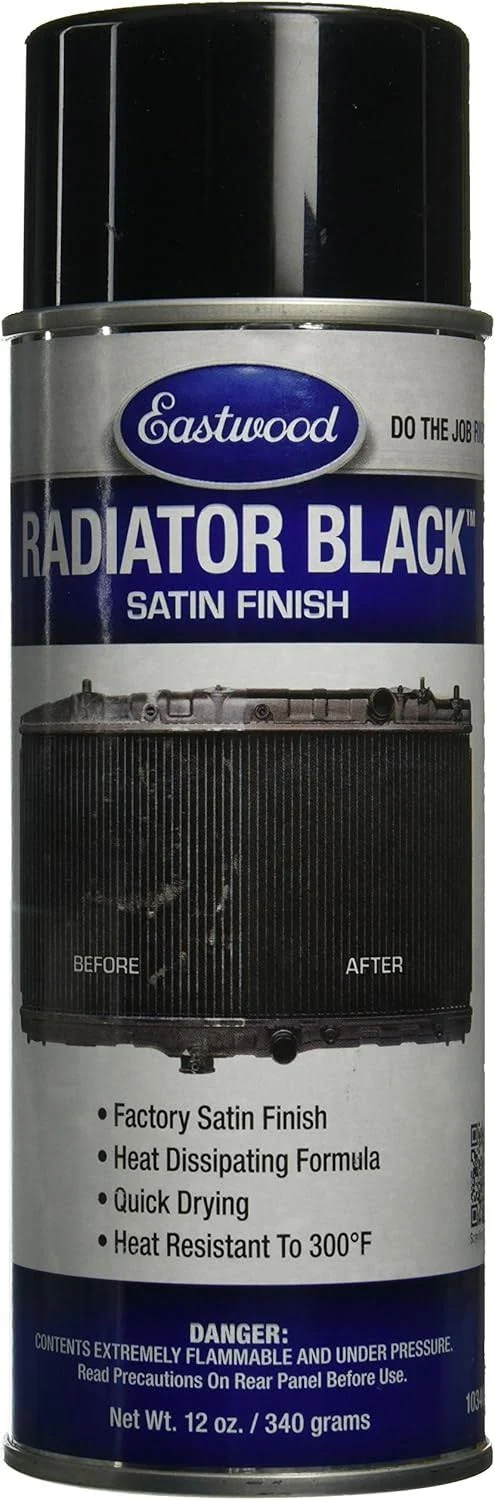
Used this on a Turbo Intercooler and it worked great.